Voter lists and marketing research

Voter Lists were available for a small fee those days and all good market research agencies sourced these lists to create a sampling frame
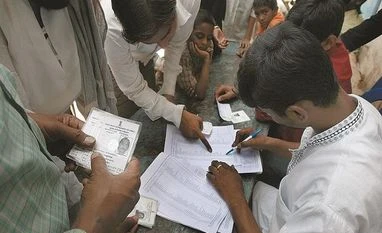
Voter Lists
Ambi Parameswaran
5 min read Last Updated : Feb 08 2022 | 9:54 PM IST
In our digital age, it seems very easy to get consumer feedback on any brand or product. Amazon and Google reviews provide us, with the click of a button, information and customer reviews by the thousands. We can sort them by one star, two star etc. We can read the comments and do AI-powered analysis of the verbal comments. All marketers should now be well versed in the art of scraping and analysing reviews.

In a recent project our team did on image perceptions of diagnostic labs, we discovered that some of the labs were doing a better job of managing customer reviews. Some were even gaming the system by flooding Google reviews with empty five-star reviews. So, as consumers become more and more smart at reading reviews, companies are doing their bit to break the system.

True, online reviews are a great source of information, and it costs very little to do a deep dive. Whatever product or service you are marketing, you will benefit by analysing online reviews of your brand and those of your competitors.

But there is a fundamental issue with these self-reported reviews.

In marketing research, we call this “Selection Bias”. Not everyone is going to post a review about a soap or a toothpaste or a laptop they had bought. It is also a fact that a consumer dissatisfied with a product will tell more people than someone who is satisfied with their purchase. So, while analysing online reviews it makes sense to keep in mind the Selection Bias.

How to overcome the Selection Bias? This is where the Voter List comes in.

The only way to overcome Selection Bias is to interview consumers, selected at random. But where do you start? The process starts, as marketing experts will tell you, with what is known as the “Sampling Frame”, or a listing of all homes and individuals. In the US and other developed countries where landline penetration was almost 100 per cent, the telephone directory became the default sampling frame some decades ago. Surveys were done by telephone and at one time, telephone interviews, just 1,500 of them, could predict, with reasonable accuracy, who would win the US presidential election. In India, we had to find our own solution.

In 1985, I was introduced to the Indian sampling frame by the late marketing research guru, Ramesh Thadani (then head of the Indian Market Research Bureau, or IMRB). Ramesh took me through the way a good quantitative study is structured, and the journey often starts with a robust sampling frame. Voter Lists were available for a small fee those days and all good market research agencies sourced these lists to create a sampling frame. From the voter list, you randomly picked specific zones, and then selected homes (or voters) at random. If the selected home (voter) refused to answer, the investigator was told to move to the next randomly selected home (they were not allowed to replace a respondent at will; better market research agencies monitored this rigorously). It was a laborious process but it almost completely eliminated the Selection Bias. Even now large-scale sample surveys, like the Indian Readership Survey, are probably using the voter list as a starting point.

What was a saviour for the Indian marketing research industry was the availability of the Indian voter list. The list was available in public domain and was easy to obtain.

Interestingly, the process has become even more simple now. Voter lists are available for easy download. When a group of academics at the SP Jain Institute of Management and Research (SPJIMR) wanted to do research on the popularity of names, they were struck at where to get a large data set of names of people. Nate Silver, in his article “How to tell someone’s age when all you know is her name?”, speaks of the US Social Security Administration that has maintained a record of baby names from the year 1880. This data is available for researchers. In India, we don’t have a baby name register (hopefully, the Aadhaar database will serve this purpose one day). The SPJIMR academics decided to look at the Indian voter list as a database for name research. Obviously, the voter list only has adults, or people aged 18-plus, in it but it is a huge database and served the purpose well. All made possible simply because it was available in the public domain, at the click of a button.

The current debate around voter id and Aadhaar linkage does not question the fact that voter list is a public document. It is available for every political party and also to anyone who is doing any kind of research. It is fervently hoped that because of the linkage issue, the voter list does not go behind some kind of a bureaucratic wall.
The writer is an independent brand coach and founder Brand-Building.com; he can be reached at ambimgp@brand-building.com

One subscription. Two world-class reads.

Already subscribed? Log in

Subscribe to read the full story →
*Subscribe to Business Standard digital and get complimentary access to The New York Times

Smart Quarterly

₹900

3 Months

₹300/Month

SAVE 25%

Smart Essential

₹2,700

1 Year

₹225/Month

SAVE 46%
*Complimentary New York Times access for the 2nd year will be given after 12 months

Super Saver

₹3,900

2 Years

₹162/Month

Subscribe

Renews automatically, cancel anytime

Here’s what’s included in our digital subscription plans

Exclusive premium stories online

  • Over 30 premium stories daily, handpicked by our editors

Complimentary Access to The New York Times

  • News, Games, Cooking, Audio, Wirecutter & The Athletic

Business Standard Epaper

  • Digital replica of our daily newspaper — with options to read, save, and share

Curated Newsletters

  • Insights on markets, finance, politics, tech, and more delivered to your inbox

Market Analysis & Investment Insights

  • In-depth market analysis & insights with access to The Smart Investor

Archives

  • Repository of articles and publications dating back to 1997

Ad-free Reading

  • Uninterrupted reading experience with no advertisements

Seamless Access Across All Devices

  • Access Business Standard across devices — mobile, tablet, or PC, via web or app

More From This Section

Disclaimer: These are personal views of the writer. They do not necessarily reflect the opinion of www.business-standard.com or the Business Standard newspaper

Topics :BS Opinionvoting

Next Story



