Will the relaxed NPA norms really benefit lenders?
NBFCs expected to benefit from move as easing of rules is only for loans less than Rs 1 crore
Hamsini Karthik Nearly two weeks after non-banking financial companies (NBFCs) and banks raised concerns equated monthly instalments could be affected on note ban, the Reserve Bank of India (RBI) gave some relief on Monday. It allowed additional 60 days for recognising a loan as non-performing asset or NPA. The grace period would be for working capital loans, term loans, commercial or retail, and loans by banks to NBFCs.
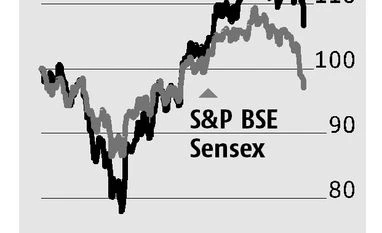
However, banking and NBFC stocks didn’t react too positively. State Bank of India, ICICI Bank, Axis Bank, Bharat Financial Inclusion (earlier SKS Microfinance), HDFC, and Equitas ended 1.5-8 per cent lower on Monday. Grace period would be only for loans under Rs 1 crore. “Not too much leeway banks are getting,” says R Sreeshankar, head of research, Prabhudas Lilladher. Also, relaxation is for dues payable between November 1 and December 31.
Experts say NBFCs may benefit more than banks. Average loan size of house lenders is Rs 10-30 lakh, and Rs 20,000-40,000 for micro lenders. “All vehicle lenders and a lot of home lenders (and also consumer banking) will see major relief,” says Veekesh Gandhi, analyst, Bank of America Merrill Lynch. Most analysts agree with this view and term the move “timely”. Also, if loan-loss provisions are kept in check, a possible reduction in new loans, particularly by micro lenders, could be less of a worry in December quarter.
But, if there is a pronounced slowdown in real estate due to note ban, the 60 days’ relaxation could only be a stopgap for house lenders. Not just that, Parag Jariwala, vice-president, institutional research, Religare Capital Markets, says grace period is a slight let-down as expectations were high. “Stakeholders were expecting slightly higher relaxation such as more than 90 days instead of 60 days as many sectors will take time to get out of the mess. Relaxation could have been a bit longer, like 6-12 months; instead it is only one-time relaxation,” he says.
Experts believe relief is inadequate to move the needle, especially for banks. Even for NBFCs, if demand for loans dips in the next two quarters, any relaxation on NPA norms may not add up to much.
This explains the market reaction. Going ahead, the Street will keep an eye out on the pace at which business/economic cycle normalises and watch pick-up in loan growth.

 "Will the relaxed NPA norms really benefit lenders?")


 Connect with us on WhatsApp