Indian economy is facing an unprecedented contraction in India's GDP in FY21, described as the "worst health and economic crisis in [the] last 100 years," by the RBI Governor
4 min read Last Updated : Aug 31 2020 | 2:38 AM IST
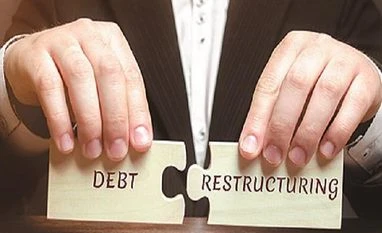
One of the largest loan restructuring exercises in Indian banking history will kick off in September 2020, with banks seeking to restructure Rs 4.5 trillion in loans by March 2021. This is against the backdrop of an unprecedented contraction in the Indian gross domestic product (GDP) in FY21, described as the “worst health and economic crisis in [the] last 100 years,” by the governor of the Reserve Bank of India. To put this in context, banks had restructured Rs 4 trillion loans between 2001 and 2018 under the erstwhile Corporate Debt Restructuring scheme.
Banks will need to make a minimum 10 per cent provisioning of restructured loans — less than the minimum 15 per cent for non-performing loans — as these accounts were viewed as viable and performing, pre-Covid. The regulatory guidelines expect restructuring to involve a tenure extension of up to two years and additional loan sanctions without any commercial compromise by banks. The conversion of debt into equity could enable banks to make changes in the governance structure of viable businesses, if necessary.
As per India Ratings’ assessment, banks are also grappling with another Rs 4 trillion in loans that were stressed before Covid, and these may need to be restructured under the June 2019 guidelines that permit longer resolution periods and haircuts. Fifty per cent of the “Covid-restructured” loan amount could be corporate exposures, with the balance from micro, small, and medium enterprises, and personal loan segments. To ensure that the resolution plan is in sync with the viability of borrowers, banks will need an independent credit evaluation by a credit rating agency for aggregate corporate exposures above Rs 1 billion, and scrutiny by an independent expert committee for exposures above Rs 15 billion.
Restructuring plans are likely to centre around two factors: (i) assessing when consumption will get back to pre-Covid levels, and (ii) whether the borrower is able to maintain business competitiveness during the contraction. At a macro level, overall economic activity may get back to pre-Covid levels earliest by the quarter of March 2022. The experience at the grass-root level is more varied, and an assessment needs to be made based on demand recovery, supply-side constraints and liquidity buffers.
India Ratings in its recovery framework has assessed 35 sectors and has divided them into four buckets, in increasing order of impact. These are: (i) household essentials, steady state and non-cyclical sectors — pharma, healthcare, telecom and city gas distribution fall into this category, having manageable supply disruptions and steady demand; (ii) non-discretionary consumer goods and critical infrastructure, which include healthcare, oil and gas, chemicals, agro-commodities and paper; (iii) industrial goods and services, and cyclical sectors — industrials such as power, iron and steel, logistics, cement, construction, auto and auto ancillaries face weak consumer sentiments; and (iv) discretionary consumer goods, exports and travel-related sectors, including airlines, airports, real estate and luxury and lifestyle products.
India Ratings also considers a corporate’s ease of refinancing, depending on long-term return on capital employed (ROCE) trends, proportion of non-productive assets, liquidity score, credit metrics and business profile. The agency notes that return indicators such as ROCE and Return on Equity are highly correlated to asset quality. Weak returns over a prolonged period could be on account of managerial inefficiencies, an unfavourable business environment or a high exposure to non-core businesses.
After combining the recovery framework and the ease of refinancing analysis, India Ratings believes that a high proportion of debt from real estate, airlines, hotels and other consumer discretionary sectors would come up for restructuring. In addition, exposures to power, construction, iron and steel, telecom, infrastructure, and gems and jewellery may need resolution.
The writer is Managing Director and Chief Analytical Officer, India Ratings
Disclaimer: These are personal views of the writer. They do not necessarily reflect the opinion of www.business-standard.com or the Business Standard newspaper




