Avoid falling prey to card frauds
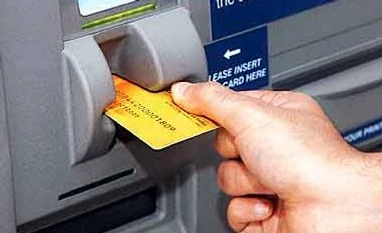
Check the slot that accepts the card; if it's shaky or loose, look for another ATM
Tinesh Bhasin Mumbai The next time you walk into an ATM, check the machine to see if there’s anything unusual. If the card-accepting slot is shaky or loose, don’t use it. And, if the machine swallows your card, block it immediately.
Last week, the Mumbai police busted a major international racket involving three Romanian nationals. When the police raided their upmarket house in Bandra, they recovered cash of Rs 28.5 lakh and 497 cards, among other things. The group would do a recce of ATMs and identify those with no security guards.
Subsequently, under the pretext of withdrawing money, they installed skimmers near the card-reading slots and fixed spy cameras next to those; these would make recordings of customers entering their passwords. In the evening, they would collect their devices, with the data of a bank’s customers. They then used the information to make duplicate cards and withdraw cash from other ATMs.
ALSO READ: Phone frauds gain traction “This is the oldest trick in the book, and the most widely used,” says Rohit Srivastwa, cyber security expert and founder of ClubHack. He says the set-up is so “neat” that a person doesn’t notice any rigging. Another common method is cash-claw machines — a device is attached on top of the area from where cash is dispensed. When a customer withdraws money, he does not receive any cash. The funds are held by the cash claw, which is later collected once the customer leaves.
Though not commonly used in India, another manner in which individuals are tricked is by attaching a device on top of the slot that accepts the card. Once a customer enters the pin and completes the transaction, the card isn’t dispensed. While one assumes the machine has swallowed the card, it’s actually held in the device.
Though such devices are installed deftly, a little caution and some luck could help you ascertain whether an ATM is rigged. Srivastwa says one knock the slot that accepts the card to check if it is loose or shaky, which would mean a skimming device has been installed. As pin numbers are captured using a camera, while entering the code, ensure it cannot be seen. If cash is not dispensed, check the slot. Check with the security guard whether the same problem occurs when others use the ATM. In such cases, the perpetrator will be around to collect the money once a customer leaves. In case the card is stuck in the ATM, immediately call the bank and get it cancelled. Also, never disclose your password while carrying out a transaction.
“If you have a card with a magnetic strip and your bank is offering one with a chip, go for it. These are more secure,” says Rajiv Anand, Axis Bank group executive and head, retail banking. He also adds that to prevent such frauds, banks mobile app has a facility that allows customers to switch international transactions on or off when needed. “Customers can also define their own limit per transaction via app,” Anand says. If you fall prey to such frauds, a bank should compensate you, says Abhilash Panickar, a lawyer. This is because the reason isn’t customer negligence, but the fact that a bank’s asset has been compromised.
“As long as a customer can prove that it’s bank at fault, he or she will be compensated for the loss,” says Anand.

 "Avoid falling prey to card frauds")


 Connect with us on WhatsApp