
Service sector growth hit by elections, PMI at 7-month low in April
On the employment front, buoyed by ongoing improvements in new work and optimistic growth projections, service providers placed more people in jobs during April
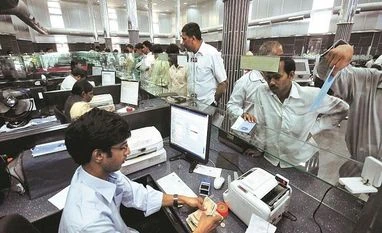 "Service sector growth hit by elections, PMI at 7-month low in April")
WebinarsNew
Deep DiveNew
Explore Business Standard
On the employment front, buoyed by ongoing improvements in new work and optimistic growth projections, service providers placed more people in jobs during April
The country's services sector activity fell to a seven-month low in April owing to softer rise in new business and disruptions arising from the elections, a monthly survey showed Monday.
However, predictions that economic conditions will normalise after the elections underpinned optimism regarding the outlook and supported a stronger upturn in employment.
The seasonally adjusted Nikkei India Services Business Activity Index, fell from 52 in March to 51 at the start of the 2019 financial year, pointing to the weakest upturn in output since last September.
Despite the moderation, the services PMI was in the expansion territory for the 11th straight month. In PMI parlance, a print above 50 means expansion, while a score below that denotes contraction.
"Although the Indian private sector economy looks to be settling into a weaker growth phase, much of the slowdown was linked to disruptions arising from the elections and companies generally foresee improvements once a government is formed," said Pollyanna De Lima, Principal Economist at IHS Markit, and author of the report.
The general election, that began on April 11, is currently underway. Votes will be counted on May 23.
However, poll was not the only reason cited for the slowdown. In the service sector, competitive conditions and a shift towards online bookings among customers reportedly restricted new business gains and in turn growth of activity, Lima said.
On the employment front, buoyed by ongoing improvements in new work and optimistic growth projections, service providers placed more people in jobs during April.
Meanwhile, the seasonally adjusted Nikkei India Composite PMI Output Index, that maps both the manufacturing and services industry, fell from 52.7 in to 51.7 in April, indicative of a slight pace of expansion in aggregate activity that was weaker than seen on average over the series history.
On the prices front, the report said that rates of inflation for input costs and output charges remained weak by historical standards.
"Another key takeaway from the latest results is the lack of inflationary pressures in both the manufacturing and service sectors, which coupled with slower economy growth offers room for a further cut to the benchmark repurchase rate," Lima said.
The next meeting of RBI's Monetary Policy Committee is scheduled on June 3-6.
First Published: May 06 2019 | 11:05 AM IST


 Connect with us on WhatsApp