Indian cancer scientist develops software for cancer patients
Dr Pallavi Tiwari's work is based on GBM cancer
Press Trust of India Washington An Indian scientist in the US has developed a new MRI-based technique to predict survival of patients with aggressive brain tumours and help them provide personalised therapy.
Dr Pallavi Tiwari's work is based on recent clinical findings that 90 per cent of the Glioblastoma Multiforme (GBM) recurrences occur close to the tumour margin, suggesting that malignant cells are present at the periphery of the tumour but are not visually discernible.
GBM is the most common and most aggressive cancer that begins within the brain.
"Less than five per cent of all GBM patients live for more than five years," Tiwari, a leading cancer researcher working at Case Western Reserve University, said.
She said that despite several advances in drug discovery and clinical trials for cancer treatment, all GBM patients still follow the same 'one-fits-all' treatment regimen.
Tiwari, who is from Madhya Pradesh, presented her new research before at the Radiological Society of North America (RSNA) meeting recently.
"With Obama administration's push for personalised therapy, a pressing need in precision medicine is to identify patients with GBM who are suitable for specific clinical trials based on their tumour characterisation, instead of a 'one-size-fits-all' treatment," a media release said.
Unfortunately, this has not been feasible so far in the absence of reliable non-invasive and quantitative measurements regarding patient prognosis (likely outcome of the disease) in GBMs, Tiwari noted.
Tiwari and her team have shown on 62 patients that these computer-extracted features from tumour margins and its surrounding areas on MRI are together predictive of GBM outcomes, the press release said.
So far such an approach of investigating imaging features from normal-appearing areas outside of tumour margins has not been investigated.
Using computer techniques developed by Tiwari and her team, subtle information can be gleaned from normal-appearing regions (at tumour periphery) to allow for the ability to reliably and non-invasively stratify patients based on their survival and can ultimately guide personalised therapeutic clinical trials in GBM.
Tiwari graduated from SGSITS in Indore and moved to United States to get a PhD degree in Biomedical Engineering.
She is currently a research assistant professor in Biomedical Engineering and since 2012 has been working in early diagnosis, prognosis, and treatment evaluation of brain tumours.

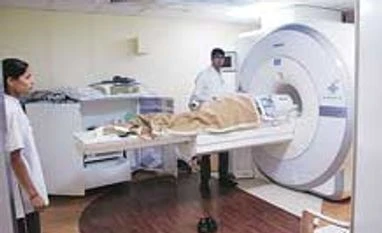 "Indian cancer scientist develops software for cancer patients")


 Connect with us on WhatsApp