Internet.Org can co-exist with Net Neutrality: Zuckerberg
He also said that internet.org will never create 'fast lanes' for a select few by throttling the other services
Press Trust of India New York Finding itself at the receiving end of the net neutrality debate, Facebook on Friday said its Internet.org platform has benefitted “millions” of people on Reliance Communications (RCom) network in India and it is open for all mobile operators.
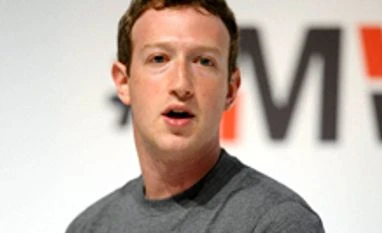
Asserting that universal connectivity and net neutrality “can and must’ co-exist, Facebook Founder & chief executive officer (CEO) Mark Zuckerberg also said he strongly disagrees with the criticism that Internet.org, offering some services for free, goes against the spirit of net neutrality.
He also said that internet.org will never create ‘fast lanes’ for a select few by throttling the other services.
Zuckerberg’s comments, made on his Facebook post, come in the midst of a public uproar in India, especially on social media platforms, that platforms like internet.org and Airtel Zero violate the principle of net neutrality.
Net neutrality calls for equal treatment to all Internet traffic with no priority given to an entity or company based on payment to service providers like telecom companies, which is seen as discriminatory.
Amid a raging debate, both the platforms have already seen some of their partners walking away, including Flipkart from Airtel Zero and entities like Cleartrip.com, Times Group and NDTV from internet.org.
These services are being billed as going against the concept of maintaining equal Internet access for all, although they claim to allow users to access a variety of mobile and Internet applications for free.
The critics allege that these services restrict the 'free' access to a select group of websites and apps and therefore sabotage the entire concept of keeping the Internet free.
Defending his initiative, Zuckerberg said, "Over the past week in India, there has been a lot written about internet.org and net neutrality" and he wanted to present his position on these issues for everyone to see.
Talking about small villages that have got connected through this initiative, he said, “I am proud of this progress. But some people have criticised the concept of zero-rating that allows internet.org to deliver free basic Internet services, saying that offering some services for free goes against the spirit of net neutrality. I strongly disagree with this.”
“We fully support net neutrality. We want to keep the Internet open. Net neutrality ensures network operators don’t discriminate by limiting access to services you want to use. It’s an essential part of the open Internet, and we are fully committed to it.”
He further said net neutrality is not in conflict with working to get more people connected.
Zuckerberg, whose popularity has reached a cult status with Facebook emerging as the world's largest free social networking platform, said it is useful to offer some service for free to give more people access to Internet.
Zuckerberg said internet is not affordable to everyone and Facebook created Internet.org as part of its efforts to connect the whole world.
“By partnering with mobile operators and governments in different countries, Internet.org offers free access in local languages to basic internet services in areas like jobs, health, education and messaging. Internet.org lowers the cost of accessing internet.
“We have made some great progress, and already more than 800 million people in 9 countries can now access free basic services through Internet.org. In India, we have already rolled out free basic services on Reliance network to millions of people in Tamil Nadu, Maharashtra, Andhra Pradesh, Gujarat, Kerala and Telangana. “...Internet.org doesn't block or throttle any other services or create fast lanes -- and it never will. We're open for all mobile operators and we're not stopping anyone from joining. We want as many internet providers to join so as many people as possible can be connected,” he said.
The Facebook founder further said if someone can't afford to pay for connectivity, it is always better to have some access than none at all.
Arguments about net neutrality should not be used to prevent “most disadvantaged people in society” from gaining access or to deprive people of opportunity, he said.
Zuckerberg also warned that “eliminating programmes that bring more people online won't increase social inclusion or close the digital divide”.
"It will only deprive all of us of ideas and contributions of the two thirds of the world who are not connected." While a debate on this issue is going on across various parts of the world, including in the US, the telecom regulator in India has invited public comments on a discussion paper for policy framework on net neutrality and internet-based messaging and calling service providers such as WhatsApp, Skype, Viber and Google Talk.
Petitions to the telecom sector regulator has neared the 8-lakh level to 'keep Internet free'.
Net neutrality advocates claim such initiatives go against the principle and that users should be able to access all websites at the same speed and cost.

 "Internet.Org can co-exist with Net Neutrality: Zuckerberg")


 Connect with us on WhatsApp