South Korea could begin detailed discussions with Washington on bringing in an advanced US missile defence system opposed by China as early as next week, a senior official said today.
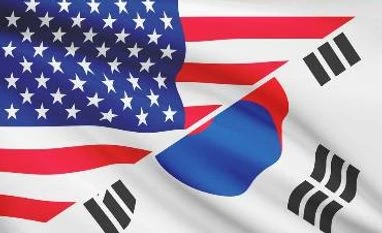
The two allies are setting up a joint task force to look into the rollout of the Terminal High Altitude Area Defence System (THAAD), which would be deployed as a counter to North Korea's growing missile threat.
"The task force will be able to start discussing details concerning the THAAD deployment as early as next week," the senior official told journalists.
On the agenda are issues like location, cost-sharing, environmental protection and a timeline for installation.
The THAAD system fires anti-ballistic missiles into the sky to smash into enemy missiles either inside or outside the Earth's atmosphere during their final flight phase.
The interceptor missiles carry no warheads, instead relying on kinetic energy to destroy their targets.
South Korea and the United States announced their intention to start discussions on THAAD's deployment last Sunday, just hours after North Korea launched a long-range rocket that both condemned as a disguised ballistic missile test.
The Pentagon has since stressed that it would like the system to be deployed in South Korea "as quickly as possible."
China and Russia argue that it would undermine stability and could trigger an arms race in a delicately balanced region, with Beijing voicing its "deep concern" over the deployment.
China is South Korea's most important trade partner and -- in deference to Beijing's sensitivities on the issue -- South Korea had previously declined to formally discuss bringing in THAAD.
But North Korea's continued testing -- and Beijing's resistance to imposing harsh sanctions on Pyongyang -- triggered a change in Seoul's stance.
There is already a THAAD battery stationed in Guam and the other key US ally in the region, Japan, is also considering taking on the system.

 "South Korea, US likely to begin missile shield talks next week")


 Connect with us on WhatsApp