Two-thirds of Indian children are not vaccinated on time: Study
Although India is a leading producer and exporter of vaccines, the country has the greatest number of deaths among children under 5
Press Trust of India Washington India is a leading producer and exporter of vaccines but two-thirds of Indian children do not receive vaccinations on time which makes them susceptible to diseases and contributes to untimely deaths, according to American researchers.
A research conducted by the University of Michigan's School of Public Health found that only 18% of children are vaccinated with the recommended three doses of DPT vaccine, while about a third receive the measles vaccination by 10 months under the government-supported immunisation program.
"This is a systemic problem," said the study's lead author, Nijika Shrivastwa, who recently finished her doctorate in epidemiology at University of Michigan (U-M) and is now at the South Carolina Department of Health and Environmental Control.
"Immunising a child six months after the recommended time period can have dramatic implications for a child's vulnerability to diseases," Nijika said.
Although India is a leading producer and exporter of vaccines, the country has the greatest number of deaths among children under 5, the majority are from vaccine-preventable diseases.
"Every year, 26 million children are born in India, the greatest number by far of any country in the world," said Matthew Boulton, senior associate dean for global public health at the U-M School of Public Health.
"Adding vast numbers of new children who need vaccination, while the older ones remain under or unvaccinated because of immunisation delays, is like walking too slowly on a moving treadmill, you continuously fall further back," he said.
According to University of Michigan, the researchers found that only 12% of children are vaccinated with the measles vaccine by the required age of 9 months, although 75% are vaccinated by age 5.
This delay in vaccination can contribute to frequent outbreaks of measles in India.
"Approximately, 95% vaccination is required in a population to successfully stop measles outbreaks," he added.
India's childhood vaccination rate is simply too low to successfully control transmission of disease and prevent measles-related childhood illnesses and deaths," Boulton said.
The study looked at the vaccination rate of nearly 270,000 children in the District Level Household and Facility survey data from 2008, a nationally representative sample.

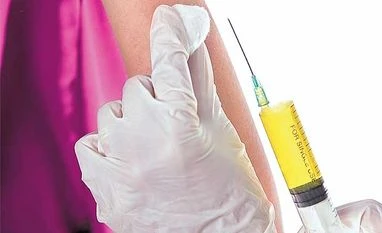 "Two-thirds of Indian children are not vaccinated on time: Study")


 Connect with us on WhatsApp