Will approach India for Balochistan's freedom: Baloch leader
He said PM Modi's was the only voice he heard in a long time coming out of the neighbourhood
Press Trust of India London One of the key voices demanding Balochistan's freedom has said that he would approach friends like India to seek help for their cause.
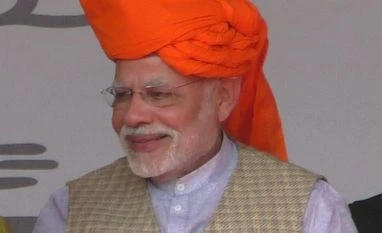
Amir Ahmed Suleman Daud, officially known as His Highness the Khan of Kalat, welcomed Prime Minister Narendra Modi's intervention in favour of Balochistan during his Independence Day address from the Red Fort last year.
"India is one of the powers of the region, the biggest democracy in the world. The Prime Minister's [Modi's] was the only voice we heard in a long time coming out of the neighbourhood and appreciated the intervention. We know we have got a friend," Daud told PTI at a media briefing in London on Thursday.
Pakistan had criticised Modi for mentioning the people of Balochistan in his address, seen as indirect support to the Balochistan freedom struggle.
"In the last few days, people of Balochistan, Gilgit, Pakistan-occupied Kashmir have thanked me, have expressed gratitude, and expressed good wishes for me," Modi had said, in a significant policy shift on the region.
Daud, who has been living in exile in Wales in the UK for the last few years, indicated that he plans to approach India and other friendly countries like the US to seek help for the cause of Balochistan's independence.
"We are confident we will get help from a lot of friends, especially from the West and India. We are happy the Republicans are in power in the US; we have lots of friends in the US Congress. Maybe also China can become a friend. We would like to say to them that they are coming through the wrong actor in this game [Pakistan]," he added.
Earlier on Thursday, Daud addressed a seminar entitled 'Balochistan Re-visited' within the British Parliament complex, organised by the UK-based Democracy Forum, during which he accused Pakistan of "colonising" the sovereign state of Kalat.
"Until August 1947, all treaties state clearly Kalat Balochistan's position as independent and sovereign. Why we lost our independence was the result of a change in British policy and geopolitics," he claimed.
Daud claims that Kalat remained independent until March 28, 1948, when it merged under duress with Pakistan.
He now plans to lobby international organisations, including the United Nations, to "pay the debt to his homeland".
"We will approach parliaments of the world and make our issues known. We are an occupied land; we did not accede," he said.

 "Will approach India for Balochistan's freedom: Baloch leader")


 Connect with us on WhatsApp