
China's new banking regulator vows to tighten supervision, curb risks
China's regulators are working on new rules to reduce risks in the booming asset management industry
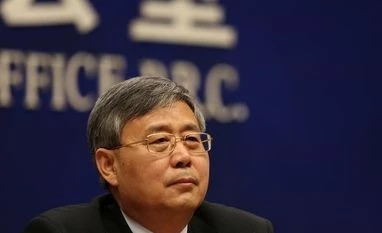 "China's new banking regulator vows to tighten supervision, curb risks")
WebinarsNew
Deep DiveNew
Explore Business Standard
China's regulators are working on new rules to reduce risks in the booming asset management industry
China's newly appointed banking regulator vowed on Thursday to strengthen supervision of the lending sector, underscoring Beijing's determination to fend off financial risks and push forward with reforms this year.
Guo Shuqing, making his first public appearance as chairman of the China Banking Regulatory Commission (CBRC), said he's determined to remove "chaos" from the regulatory system and "safeguard" the health of "the country and the people".
"Different regulators, different laws, different rules have caused some chaos," Guo said.
His comments follow remarks by President Xi Jinping on Tuesday, who told top policymakers that the nation must "unswervingly" crackdown on financial irregularities and illegal behaviour, while improving its market supervision.
Risk prevention is expected to be a key theme at a meeting of China's parliament starting on Sunday, after years of debt-fuelled stimulus led to an explosive growth in debt.
China's regulators are working on new rules to reduce risks in the booming asset management industry, Guo said.
Guo said he will tighten supervision of banks' wealth management products (WMPs), and curb the expansion of banks' off-balance sheet business.
Chinese investors, lured by high yields and expectations of implicit guarantees by the banks or other financial institutions, have poured trillions of yuan into lightly regulated WMPs, the biggest component of so-called "shadow banking" in China.
The value of banks' outstanding WMPs is close to 30 trillion yuan ($4.36 trillion), according to CBRC estimates.
Guo also warned banks need to "prudently" manage loans to property developers and mortgage lending. The leverage ratio of mortgage loans is not too high, but rapid mortgage growth is a concern, he added.
The CBRC will restrict lending that it suspects is being used for property market speculation.
Prices of new homes jumped 12.4 per cent last year, the fastest rate since 2011, prompting more than 20 cities to introduce property curbs to cool the market since October.
China's banking assets over the last five years have more than doubled, even as the economy has slowed, helping to push the volume of non-performing loans (NPLs) at commercial banks to 1.51 trillion yuan by the end of last year, the highest since 2005.
While a sharply higher number of defaults are expected by analysts this year, Guo said progress is being made in reducing heavy corporate debt burdens.
More than 430 billion yuan ($62.5 billion) of debt-to-equity swap deals had been signed as of early February, Guo added.
Separately, China had established 12,836 creditor committees by the end of last year, to help manage credit of 14.85 trillion yuan, said CBRC vice chairman Cao Yu.
Creditor committees, led by the biggest creditor, allows creditors and debtors to negotiate their debt on their own, in order to seek best debt solutions for troubled firms, according to Cao.
China's debt to GDP ratio rose to 277 per cent at the end of 2016 from 254 per cent the previous year, with an increasing share of new credit being used to pay debt servicing costs, UBS analysts said in a recent note.
Some economists argue other countries that accumulated debt as rapidly as China have ended up facing a financial crash soon afterwards. Indeed, the Bank for International Settlements says China's banking sector could face a crisis within three years.
The Reuters graphics team has produced an interactive guide to the major aspects of China's debt issues, including rising household debt, potential property bubbles and rising corporate debt.
First Published: Mar 02 2017 | 2:07 PM IST


 Connect with us on WhatsApp