
Labeling sleight-of-hand lets 86% Indians have 'safe drinking water'
The census considers water supply from handpumps and tubewells as safe as piped drinking water, although these are carriers of diseases
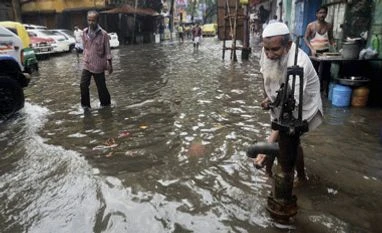 "Labeling sleight-of-hand lets 86% Indians have 'safe drinking water'")
WebinarsNew
Deep DiveNew
Explore Business Standard
The census considers water supply from handpumps and tubewells as safe as piped drinking water, although these are carriers of diseases
About 86% of Indians have access to “safe drinking water”, according to official data, yet diarrhoea—associated with contaminated drinking water —is common across India and the third-most-common cause of death among children under five, killing 13% of the 300,000 who die every year in this age group.
The definition of “safe drinking water” explains this conundrum and helps the government exaggerate the numbers: The census considers water supply from handpumps and tubewells as safe as piped drinking water, although these sources are carriers of water-borne diseases.
The population provided with “safe drinking water” in India increased from 62% in 1991 to 78% percent in 2001 to 86% percent (83% rural and 91% urban) in 2011. However, only 44% of this was tap water, of which no more than 32% was treated.
Caused by a host of bacterial, viral and parasitic organisms–most spread by water contaminated with faeces–diarrhoea is closely associated with lack of access to safe drinking water and poor sanitation. In South Asia, only Afghanistan and Pakistan do worse than India in the proportion of child deaths caused by diarrhoea.
Diarrhoeal diseases are the most prevalent of all water-related diseases in India, worsening every monsoon because of increased flooding and the mixing of sewage with drinking-water sources.
Andhra Pradesh registered the most diarrhoea cases nationwide, followed by West Bengal, Odisha and Uttar Pradesh in 2012.
About half of India’s 1.2 billion people do not have access to sanitation facilities, and this is a major cause in the continuing prevalence of diarrhoeal disease as it can lead to contamination of drinking water sources.
Kerala tops the country in terms of availability of “improved toilets”. The census classifies “improved toilets” as flush/ pour latrines connected to piped sewer systems or septic tanks and pit latrines to slab or ventilated improved pits.
A higher prevalence of diarrhoeal diseases is linked to unimproved toilet facilities within a household, according to this analysis of census data. “Unimproved toilet facilities are flush/ pour latrines routed into the open rather than enclosed with pipes or septic tanks, pit latrines without slabs or cover, “night-soil”—a euphemism for human excreta—routed into open drains and service latrines with “night-soil” removed by humans or animals. All these can lead to unhygienic conditions thus increasing the risk of contamination and diarrhoeal diseases.
It is clear that providing toilets is not enough to combat diarrhoeal disease. What appears to be more important is the availability of improved, working and hygienic toilets with better mechanisms to dispose the sewage, so it does not contaminate the environment and water sources.
(IndiaSpend is a data-driven, public interest journalism non-profit)
First Published: Oct 08 2015 | 11:16 AM IST


 Connect with us on WhatsApp