A crusader on the high road: Sunitha Krishnan's book exposes trafficking
I Am What I Am is not merely a linear recounting of a life in service. In parts, it reads like an action-packed thriller
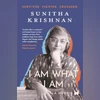
Akankshya Abismruta I Am What I Am
Author: Sunitha Krishnan
Publisher: Westland
Pages: 294
Price: Rs 699
In her searing and page-turning memoir I Am What I Am Padma Shri awardee Sunitha Krishnan has shone the spotlight on a malign reality that society either ignores or accepts with a shrug: Prostitution. As the title of her memoir suggests, this story of her efforts to rehabilitate prostitutes and offer them an alternative livelihood through the foundation of Prajwala in 1996, one of the world’s largest anti-sex trafficking organisations, is uncompromising and often harrowing in its detail.
I Am What I Am is not merely a linear recounting of a life in service. In parts, it reads like an action-packed thriller. Ms Krishnan jumps into life-threatening situations to rescue children and women from brothels and traffickers without much thought for her safety. Written in simple, matter of fact prose, the book is at once uplifting in its demonstration of the power of the human spirit and depressing in its revelation of the depredations of humankind.
Ms Krishnan developed a penchant for service and leadership at a young age, initially teaching marginalised people in her neighbourhood. At age 15, she was gang-raped. She was an academically brilliant child who excelled at everything she chose to do. Suddenly, she was blamed for all the activities that people were proud of earlier. She learnt that society likes to shame the victim rather than the perpetrator. She then channelled her inner angst into service, thinking that women in commercial sexual exploitation undergo rape multiple times a day. She resolved to work towards the abolition of prostitution. “I will do everything in my power to help women quit prostitution, not just in the first instance, but practically, by providing them with the capacity for alternate livelihood means,” she writes.
She made her first rescue at the age of 17 from Majestic, the red-light area in Bengaluru. When she met the prostitutes in Mehboob ki Mehndi area in Hyderabad to understand how she could help, they asked her to help their children instead. Soon, she made it her mission to rescue children from traffickers and brothels and prepare them for schools against formidable odds.
Prajwala began in a small room in Mehndi and has now rescued 28,600 survivors. In moments of despair and hopelessness, unexpected help often arrived from known and unknown people in the form of money orders, donations, and an invitation to the first TED talk in India.
Ms Krishnan brings the reality of the crime of prostitution as close to the reader as can be done in the written word, depicting the sexual violence against children as young as three years old. She is fiercely protective about her people and calls out the stigma associated with rape survivors and the world’s inability to look at people beyond that fact. This memoir thoughtfully questions the roles of researchers who tend to record the little that prostitutes reveal “as absolute truth and build theories around it.” Having worked with former pimps in her initial days of rescue, and direct interaction with victims of such commercial sexual exploitation, she offers nuances about prostitution that may not otherwise reach a reader or even an armchair activist.
It is noteworthy that in these politically correct times, Ms Krishnan sticks to using the term “prostitute” over “sex worker”. The difference, she explains, is in nuance. Prostitution has a legal definition, addressing the trafficking and exploitation of the body for commerce; “sex worker” comes from labour movements in which the agency to choose the labour of the body is emphasised. This isn’t the case for children and women who are coerced into brothels; “sex worker” tends to normalise the exploitation and their inability to escape. Despite opposition by pro-choice activists, Ms Krishnan remains undeterred in her mission to abolish rather than legalising prostitution. She states, “If even one-tenth of the health ministry’s resources that focus on harm reduction are directed towards rescue and rehabilitation efforts, a huge world of change will be seen.”
The first significant win for Prajwala was the establishment of first-ever anti-trafficking policy in India. Her prompt responses to oppression led to long-term changes (despite the online backlash). For instance, when she saw a viral video of gang rape, she worked towards revealing the offenders through the same video with the help of her filmmaker husband, Rajesh Touchriver. This led to establishment of a sex offenders’ registry and a cybercrime reporting portal. When a child was caught by her trafficker in court, she insisted on the introduction of video-conferencing to record evidence of a trafficked victim.
With as many as 18 direct attempts at her life, Ms Krishnan appears to be an other-worldly being who has unlimited supply of grit and resilience to see her mission through. She makes the grim realities of prostitution and actionable rehabilitation steps accessible in this easy-flowing prose. Though written with humility and largely focusing on the work of Prajwala over the past 30 years, Ms Krishnan shines as a trailblazer. She began her journey to change the world alone and slowly learned the power of communities, sharing the roles and partnering with various stakeholders. Today her efforts are known for creating survivor-centric policies and manuals, and she works rigorously to provide avenues where survivors can reflect on their lives, form opinions, and become leaders.
The reviewer is an independent writer based in Sambalpur. She is @geekyliterati on Instagram and X

 "A crusader on the high road: Sunitha Krishnan's book exposes trafficking")


 Connect with us on WhatsApp