MONEY, MYTHS AND MANTRAS: The ultimate investment guide
Author: Devina Mehra
Publisher: Penguin Business
Pages: 316
Price: Rs 399
Few practising fund managers in India write books. When a successful one shares her insights, serious investors should take note.
Devina Mehra is the founder, chairperson, and managing director of First Global, an asset management firm. She studied mathematics, statistics, and English literature at Lucknow University and then attended the Indian Institute of Management, Ahmedabad (IIM-A), earning a gold medal at both institutions. She began her career at Citibank, working in investment banking and credit analysis.
In 1992, when Manmohan Singh opened the Indian market to foreign institutional investors (FIIs), she realised that professional stock research would become invaluable. She resigned from Citibank and founded her own stockbroking firm. Since securities analysis was not taught extensively in B-schools then, she learnt it on the job, requesting FII clients to recommend books on various aspects. First Global’s rigorous and forthright research reports soon found takers among the major FIIs present in India.
In the wake of the East Asian crisis of 1997-98, Ms Mehra decided to expand First Global’s presence internationally, becoming a member of the London Stock Exchange in 1999 and the National Association of Securities Dealers (NASD), USA, in 2001.
Ignoring advice to start with smaller emerging markets, she targeted the top ones—the US, Europe, China, and Japan. Critics doubted whether an Indian firm could compete with Wall Street institutions. But Ms Mehra was convinced that if she was skilled at securities analysis, she would succeed in any market.
Next, First Global adopted a human-plus-machine approach to securities analysis. Then came the launch of a global asset management product in 2015, followed by an India-focused portfolio management service (PMS) in 2020.
In this book, Ms Mehra strongly advocates global diversification to counter single-market, single-currency risk. The 1997-98 East Asian crisis brought home to her the risk of concentrating investments in one region, as these markets collapsed 50-90 per cent in a year despite their strong economic performance. The Indian rupee’s long-term depreciation against the US dollar also reinforces the case for international exposure. The author suggests allocating at least 30 per cent of one’s portfolio to global assets, particularly for those with financial goals that require spending in hard currencies, like children’s foreign education or international travel.
She says that merely investing in an S&P 500 or Nasdaq 100 exchange-traded fund (ETF) does not constitute global diversification. Since different markets outperform at various times, a well-diversified portfolio must span several geographies and asset classes.
Ms Mehra warns investors against the “storification” bias — the tendency to blindly embrace compelling narratives. Storytelling has always captivated humans, but investing in it can be misleading. She cites Warren Buffett’s long-standing faith in Coca-Cola — a stock he praised for its brand strength, predictable cash flows, and competitive moat. However, as consumer preference shifted away from sugary sodas, the stock underperformed. Mr Buffett, deeply invested in his own narrative, failed to reassess his position.
The author advises investors to question if a story will remain valid over time and whether they are ignoring inconvenient facts and data that don’t fit into the story. Instead of accepting a single narrative, she urges them to weigh the probability of alternative outcomes.
The author also challenges the conventional wisdom that fund managers should focus only on their area of competence, arguing that sticking to familiar stocks can result in underperformance as markets evolve and begin to favour other stocks and sectors.
Ms Mehra is also a firm believer in data-driven investing. She emphasises that all stories must be validated by hard numbers. She encourages going back many years while analysing a company’s figures, and taking into account survivorship bias.
Another eye-opening point in the book is how artificial intelligence and machine learning (AI-ML) have transformed investing. Earlier, fund managers benefited from information arbitrage, accessing data unavailable to retail investors. Regulatory changes have taken away that advantage. Today, the challenge is to process an overwhelming volume of data. AI-ML systems address this by analysing massive datasets efficiently, free from the biases humans are prone to. The AI-ML model at First Global covers 25,000 companies globally, processing a humongous amount of information. While human analysts assess only a handful of factors per security, machines can analyse hundreds.
Experienced fund managers, however, remain crucial for coding AI models correctly. Moreover, machines rely on historical data. They cannot, for instance, take pre-emptive action against an approaching catastrophe, such as a pandemic in its incipient stage, making human intervention necessary.
The book has many more interesting ideas to offer: Asset allocation’s high contribution to portfolio returns, why investing has turned into a loser’s game, how investors should use sentiment as a contra-indicator, and so on.
Ms Mehra’s book is a must-read for investors looking to refine their investment approach in a vastly altered and increasingly complex financial landscape.

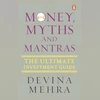 "Devina Mehra challenges investment myths with data-driven insights")


 Connect with us on WhatsApp