by S Hussain Zaidi with Velly Thevar
From the co-author of Mafia Queens of Mumbai comes a new anthology on women who “ruled rackets, outsmarted dons and bent entire systems to their will.” Mafia Queens of India expands the geographical scope of the previous book, but follows similar beats, taking readers from one audacious story to another.
Some of the stories in Mafia Queens of Mumbai inspired film adaptations, such as Gangubai Kathiawadi, directed by Sanjay Leela Bhansali. Mafia Queens of India, too, seems poised for the screen. Written by crime writer S Hussain Zaidi with his wife Velly Thevar, an investigative reporter, it features women of many stripes, all fierce and single-minded. The book reads like a non-stop potboiler, moving from one dramatic chapter to another, from The Queen of Numbers: Jaya Chheda, to The (Not So) Bholi Punjaban.
This meeting with Cleopatra sparks in Mr Zaidi memories of other women crime bosses across the country — from an ingenious drug queen to an indomitable “madam” of GB Road, leading to a second volume of Mafia Queens.
Of the 11 stories in this book, some will be familiar to readers. Many of these crime queens have had their exploits, courtroom battles and arrests documented in the media over the decades. One chapter traces how the case of convicted “lady don” Iqra Qureshi unfolds in court. Another details an undercover operation to expose Saira Begum and her associates, including husband Afaq Hussain, who were running large-scale human trafficking networks.
The chapter on Kusuma Nain, the bandit of the ravines, takes us back to the 1970s, when she was first drawn into a gang and went on to become a dreaded dacoit, and a rival of Phoolan Devi. It follows the arc of a woman once notorious for brutal massacres, who died quietly earlier this year of tuberculosis, just as she was nearing the end of her prison term and had turned spiritual.
Then there’s Nowhera Shaikh of Heera Group, a businesswoman and a political figure accused of duping thousands of investors of hundreds of crores of rupees in fraud schemes. The idea of such schemes was planted during her days as a madrassa principal, write the authors, “where she’d learnt how faith can move mountains and also open wallets.” In another, we revisit the case of Jayalakshmi, once a “simple woman” from Sivakasi, who eventually became the most feared con-woman of Tamil Nadu who accused several police officials of exploitation, exposing widespread corruption upon her arrest.
Beyond their high-profile crimes, these stories are also tales of troubled childhoods, ambition, love, greed and power. At the centre are women who lived on the margins or underground, yet wielded considerable power and built entire empires. Mr Zaidi admits he felt conflicted about writing this book, worried about inadvertently glorifying them. To the authors’ credit, the book neither condones their choices nor sensationalises their exploits.What it attempts is constructing a fuller narrative by digging deeper into their lives and motivations. With barely any direct access to these women, some of the compelling details that appear on the page have clearly been unearthed through dogged persistence, decades of building networks in the underworld and a labyrinth of investigative work; no easy feat.
The storytelling, however, is uneven. While some parts unfold like scenes from a fictional book, or an action thriller, others are recreations of courtroom or investigative proceedings. The book moves between chapters that have a clear arc with vivid detailing and others that are just snapshots told in broad strokes. Within a few chapters, the women begin to blend into the other, lacking distinct personalities, with only their crimes to tell them apart. This is partly because the book adopts the tone of a busy, action-driven narrative rather than studied, reflective storytelling.
As a result, while readers gain an insight into what these women did, how they rose to power, and why they were feared, detested, or even admired, we never truly come to understand who these women were — or why they became who they did.

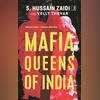 "Power, crime, survival: The women who define Mafia Queens of India")











