Home / Book / 'Casting the Buddha': How Buddhism's ties to power shaped its survival
'Casting the Buddha': How Buddhism's ties to power shaped its survival
The chronological approach-from the time of the historical Buddha to the present moment with a Bharatiya Janata Party-run government at the Centre-makes the book easy to follow
premium
CASTING THE BUDDHA: A Monumental History of Buddhism in India
5 min read Last Updated : Mar 04 2025 | 10:55 PM IST
Don't want to miss the best from Business Standard?
CASTING THE BUDDHA: A Monumental History of Buddhism in India
Author: Shashank Shekhar Sinha
Publisher: Macmillan
Pages: 448
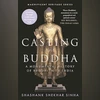
Price: ₹599 A Gupta period image of Gautama Buddha, dating back to the late sixth century or early seventh century, adorns the cover of Shashank Shekhar Sinha’s book Casting the Buddha: A Monumental History of Buddhism in India. Made of a copper alloy, it shows the Buddha in a standing position holding out his right hand in the abhaya mudra —a gesture offering protection and fearlessness. While the physical artefact is on display at the Metropolitan Museum of Art in New York, the museum’s website mentions that it is originally from India—probably Bihar—and was bought from Belgian art collector Claude de Marteau.
This cover, designed by Haitenlo Semy, the well-known Indian design director, ties up the various threads in the book—the widespread influence of the Buddha’s teachings, the evocative nature of iconography, the significance of tangible heritage in shaping people’s relationship with their past, the colonial demand for material culture to make the foreign familiar, and the ethical concerns around establishing provenance for museum objects that were uprooted from their cultural contexts.
Mr Sinha, who taught history to undergraduate students at the University of Delhi for a decade, and is now an independent researcher specialising in the study of heritage, has written a book that will be of interest to anyone who is keen to join him on “the remarkable and monumental journey of a faith that began during the sixth and fifth centuries BCE”. It is a serious book that rewards careful reading but it is not so dense that one would need to consult a dictionary, encyclopaedia or search engine every few minutes. It also contains maps and photographs.
The book opens with an introduction titled “Framing Buddhist Monuments” and is followed by three sections: Monuments, Artefacts and Connected Histories; UNESCO World Heritage Sites; and The Return of the Buddha. It ends with an author’s note. Mr Sinha writes, “As veteran art historian Frederick M Asher would ask, how does one reconstruct the past between the ‘truth of the devout’ and the ‘truth of the historian’?” Mr Sinha prioritises the latter.
The chronological approach—from the time of the historical Buddha to the present moment with a Bharatiya Janata Party-run government at the Centre—makes the book easy to follow. The Unesco world heritage sites under discussion are (1) Bodh Gaya and the Mahabodhi Temple Complex; (2) Sanchi and the Hilltop Stupa Complex; (3) Ajanta Caves; (4) Nalanda Mahavihara. Mr Sinha’s ability to draw from scriptural, archaeological, philosophical and architectural sources, and to address social, economic and political issues, makes it engaging.
The author notes, for instance, “The Buddha saw the Vedic varna hierarchy as man-made and lacking divine sanction. Members of all four varnas—Brahmans, Kshatriyas, Vaishyas and Shudras—could join the sangha if they fulfilled its requirements.” While this information could lead one to view him as an anti-establishment figure, the author is quick to point out that slaves were not allowed to join the monastic order without the permission of their masters. Moreover, “it was with great hesitation that the Buddha allowed women to join the sangha”. This book takes a balanced view of the enlightened one. It depicts him as a man of his time who was revolutionary in some ways but supported the status quo in other cases.
In addition, the author challenges the stereotypical understanding of Buddhist monks and nuns as people who have nothing to do with monetary exchange. He writes, “The earliest donative inscriptions found on the railings of Bharhut and Sanchi, dating from c. 120 to 80 BCE, indicate that a substantive proportion of the donors were monks and nuns.” Several monks and nuns made donations to earn “punya” or merit for their deceased parents.
The greatest achievement of this book is that it unpacks the economic and political reasons behind the transmission of Buddhist ideas and images across the Indian subcontinent and Southeast Asia, and their resurgence after a period of decline. While Emperor Ashoka and B R Ambedkar’s role in propagating Buddhism is huge, Mr Sinha also factors in overland trade routes to Central Asia and China and maritime networks with Europe and Southeast Asia, the development of colonial archaeology and print culture, the emergence of a discourse positioning Bodh Gaya as “the Buddhist equivalent of Muslims’ Mecca and Christians’ Jerusalem, Pandit Jawaharlal Nehru’s consistent deployment of Buddhist symbols and vocabulary in statecraft, and the Dalai Lama’s exile in India after China occupied Tibet.
This book also enables the reader to understand that India’s Act East policy, which uses Buddhism to project and consolidate its soft power in the Asia-Pacific region, did not materialise out of thin air. While the Buddha may have given up his throne, Buddhism has maintained close ties with powerful people and institutions to ensure its survival.
The reviewer is a journalist, educator and literary critic. He is @chintanwriting on Instagram and X