Lōal Kashmir: Stories of love and longing in a conflict-ridden land

Lack of connectivity and communication breakdown is not a novel occurrence in the Kashmir Valley
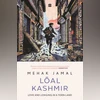
book
Areeb Ahmad
5 min read Last Updated : Feb 26 2025 | 11:34 PM IST
Lōal Kashmir: Love and Longing in a Torn Land
Author: Mehak Jamal
Publisher: HarperCollins India
Pages: 364
Price: Rs 599
  Although the waves of unrest in Kashmir have been well-documented, the lived experiences of the people who went through those troubled times remain obscure. For Mehak Jamal, the seed for her first book was sown after the abrogation of Articles 370 and 36A in August 2019, when the valley was blanketed under a months-long communication clampdown. “In that stifling silence,” she writes, “I kept hearing stories of how Kashmiris reached out to each other in dire times and how they found ingenious ways to keep in touch.” She quickly realised that the best way to preserve the memories of the Kashmiri people was through the lens of love and set out to collect stories of love, longing, and loss.
 
Pronounced like whole and soul, “lōal” is the Kashmiri word for love and affection. In Lōal Kashmir,  Ms Jamal brings together 16 stories based on real narratives of actual people. As she explains in the introduction: “I wished to understand how living in a place of conflict had shaped these lovers’ lives for better or for worse.” When she put out a call for the project, the response was overwhelming: “Since the Kashmir conflict dominates all talk around the Valley, the participants were eager to say—this is not all we are.  They wanted the world at large to remember how bravely they had fought, but equally how fiercely they had loved.” Born to a Kashmiri Muslim father and a Maharashtrian Hindu mother in Srinagar, the book also reaffirmed Ms Jamal’s connection to her homeland.
 
Lack of connectivity and communication breakdown is not a novel occurrence in the Valley. Militant clashes, politician visits, national days, civic protests, natural disasters — many reasons have precipitated curfews, lockdowns, and network outages in Kashmir in the last few decades. Though Kashmiris are now used to being cut off from their loved ones, it is still a debilitating experience. Speaking of the events after the abrogation of Article 370, one person puts it succinctly: “You could have been talking to your friend, or your beloved, or a cousin you loved so much, or somebody who had just given birth ... and it was all stolen from you. Someone may have said, ‘I’m going to call you after five minutes,’ and cut the call. Five minutes later, their phone would have been dead. The feeling in itself is devastating.”
 
In 2019, as before, Kashmiris found unique ways of communicating. Some visited the houses where their beloved lived to catch a glimpse of them. Others wrote long letters that were then exchanged through complicated systems via friends and siblings. They texted through Bluetooth. They somehow managed to meet in secret. For those not in Kashmir or even the country when the phones went silent, they got hold of neighbours and family friends with landlines, random shopkeepers in the area who could transmit messages, policemen and officials with satellite phones that still worked. They messaged each other via Facebook with spotty internet. They managed to connect through conference calls and intermediary phones. It might seem that their world had come to a standstill, but they continued to impatiently dream of a future where they could reunite.
 
Most stories in this collection are tales of romantic love; there are a few instances of familial and platonic love, though to a lesser extent. Perhaps the book’s only weakness is how most stories fall into quite a heterosexual and heteronormative framework where relationships seek socio-cultural legitimacy through marriage. Of course, it can be difficult to find narratives that break these norms, especially in conservative societies with bigger existential concerns, but a more concerted effort could have been made. With this in mind, “Roohani” stands out as the only story that features queerness. Asad, a trans-man assigned female at birth, comes to terms with his gender identity even as he tries to maintain a relationship and stay connected with his supportive girlfriend.
 
Two more stories also break out of the conventional romance mould to explore other kinds of love. “Doraemon” revolves around Mahak who is gearing up for a family wedding taking place, as events unfold, on the same day as the abrogation. Busy with preparations, she ignores calls from her best friend only to realise that they cannot communicate anymore after the communication blackout. In the second story, “Fight or Flight”, Batul is a flight attendant with Saudi Airlines and left home to go back to Riyadh after a break the night before the abrogation. She always calls her mother before and after every flight but this is the first time she skips the ritual and finds out she cannot get in touch with her only after her flight lands.
 
On the whole,  Lōal Kashmir has a vibrant outlook on love and life. A character says: “Love is humanity, it is everything, existing beyond borders, beyond language. We have seen curfews and lockdowns—and each of them leads to a curfew on love. Love gets caged. A lock is put on it. And yet—here’s the miracle—despite the obstacles that do exist, people continue to love, they don’t forget each other.”
 
Still, not all relationships documented in this book survive. Distance, familial opposition, and societal mores contribute to break ups and partings even when people have loved each other for years, sometimes from childhood. Nevertheless, most of the time, steady love transforms into marriages and arranged marriages generate love. Mehak Jamal’s book is a testament to the human spirit that thrives in one of the world’s most militarised, conflict-heavy zones. 
 
The reviewer is a Delhi-based writer, critic, and translator who likes to champion indie presses and experimental books
 

One subscription. Two world-class reads.

Already subscribed? Log in

Subscribe to read the full story →
*Subscribe to Business Standard digital and get complimentary access to The New York Times

Smart Quarterly

₹900

3 Months

₹300/Month

SAVE 25%

Smart Essential

₹2,700

1 Year

₹225/Month

SAVE 46%
*Complimentary New York Times access for the 2nd year will be given after 12 months

Super Saver

₹3,900

2 Years

₹162/Month

Subscribe

Renews automatically, cancel anytime

Here’s what’s included in our digital subscription plans

Exclusive premium stories online

  • Over 30 premium stories daily, handpicked by our editors

Complimentary Access to The New York Times

  • News, Games, Cooking, Audio, Wirecutter & The Athletic

Business Standard Epaper

  • Digital replica of our daily newspaper — with options to read, save, and share

Curated Newsletters

  • Insights on markets, finance, politics, tech, and more delivered to your inbox

Market Analysis & Investment Insights

  • In-depth market analysis & insights with access to The Smart Investor

Archives

  • Repository of articles and publications dating back to 1997

Ad-free Reading

  • Uninterrupted reading experience with no advertisements

Seamless Access Across All Devices

  • Access Business Standard across devices — mobile, tablet, or PC, via web or app

Topics :BS OpinionBOOK REVIEWBook

Next Story


