SHOOTING STRAIGHT: A military biography of Lt Gen Rostum K Nanavatty
Author: Arjun Subramaniam
Publisher: HarperCollins
Pages: 400
Price: Rs 699
The subject of this biography, Lt General Rostum “Rusty” Kaikhrushru Nanavatty, was born in 1943. In December 1962, as a newly-commissioned Second Lieutenant, he was posted to Charlie Company, 2nd Battalion, 8th Gorkha Rifles (2/8GR) in Along, NEFA (now Arunachal Pradesh), just weeks after the Indo-China War ended. He retired in 2003, as the General Officer Commanding, Northern Command.
As it chanced, his unit was not involved in action during the 1965 War and he was attending a course in Fort Benning, USA, when the Bangladesh War broke out in December 1971. So he missed out on action during those two conventional wars.
However, due to India’s turbulent history, General Nanavatty was deep in the “grey zone” of unconventional conflict and internal security operations throughout his career. In the 1960s, he served a stint in Nagaland. This was his first taste of counter-insurgency. He also served in Bengal as a young officer during the Naxalite period of the 1960s.
General Nanavatty’s later career was shaped by several key assignments and some of the courses he attended. At Fort Benning, he learnt how Americans studied war. He also spent time as liaison officer to the British School of Infantry at Warminster. There, he learnt how the British had tackled terrorism and Irish Republican Army guerrillas in Northern Ireland, and he also gleaned a fair amount of information about the training and tactics of the SAS. He had always been fascinated by infantry small unit tactics and a stint as Brigade Major to 1 Armoured helped him sharpen his understanding of mechanised warfare, which he had studied in theory.
General Nanavatty was in charge of the Para Commandos task force during the Indian Peace Keeping Force (IPKF) expedition to Sri Lanka and helped to develop India’s Special Forces (SF) doctrine. He also commanded 129 Infantry Brigade during the 1980s, which meant he was in charge of Siachen when it was a ferocious high-altitude conflict zone.
As a Corps commander in Northern Kashmir in the mid-1990s, he handled the challenges of counter-terrorism yet again. Then he was posted back to Eastern Command when the troubled states of Nagaland, Manipur and Tripura became part of his Area of Responsibility, as the army calls it. His last posting as GoC, Northern Command involved not only overseeing counter-terrorism operations in J&K, but also being point man during a long, tense standoff with Pakistan after the attack on Parliament in December 2001.
Soldiering in India has never been a peacetime profession as that brief description of General Nanavatty’s career indicates. More than two decades after his retirement, India continues to face versions of the same challenges. Kashmir is still a conflict zone. Manipur burns. Sundry Naga rebels run parallel administrations. There is still tension on the Line of Control, and on the Line of Actual Control (which was not so tense during much of General Nanavatty’s career). Indian and Pakistani troops still face-off on the glacier.
These tensions have led to a stream of new, fast-evolving challenges for the defence forces (and the police and paramilitary). These are issues of domestic politics and geopolitics that cannot be solved by military actions alone. The inability of successive governments to find holistic solutions is a failure of policy over a period of eight decades.
But while an analysis of that failure is well beyond the scope of this book, men like General Nanavatty have had to handle these challenges on the ground. The army as an organisation has had to evolve and change doctrines, training and processes to cope. Through its examination of General Nanavatty’s career, this book presents a longitudinal history of the army’s transformation.
General Nanavatty had a reputation within the services for being a straight shooter and “soldier’s soldier”. He eschewed the spit-and-polish of parade grounds and fancy cutlery in the officers’ mess and instead spent his time on the ground with his troops, platoon level up. He made recommendations and wrote annual confidential reports without fear and favour.
He conceptualised some of India’s SF doctrine and helped create the concept of the Ghatak Platoon that is part of every infantry battalion. This is not to say he didn’t make mistakes. He admitted to the author that he was wrong in his opposition to the building of the fence on the LoC, for example. And, of course, he rubbed plenty of people the wrong way with his no-nonsense attitude.
The general took copious notes in all his postings, and sought concrete solutions to the issues the army faced. The author says he found those notes invaluable and indeed, some of the examples given in the appendices (for example, the notes during the IPKF campaign) are truly impressive in depth and detail. The last chapter, which carries the general’s thoughts on soldiering, also offers an insight to his thought processes.
The book mentions General Nanavatty created and pigeonholed elaborate plans for waging conventional war during Operation Parakram, as well as a template for combating cross-border terrorism with more limited punitive actions. Although these were not implemented, it would have been fascinating if they were expounded in more detail.
The book is meticulously researched and the narrative is carefully constructed. The author interviewed multitudes of people who served with General Nanavatty, ranging from junior commissioned officers to Army chiefs. He also spoke extensively to the family, and adds details about the lives of army “brats” and fauji wives.
This biography will give readers a well-rounded picture of the life and mindset of an exemplary soldier and of the way soldiering has evolved in the face of the security challenges India faces.

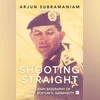 "Lt General Nanavatty's biography explores evolution of soldiering in India")


 Connect with us on WhatsApp