Devbhasha: G N Devy's book tells the phenomenal story of Sanskrit's rise

Devy's book also examines Sanskrit's flaws, such as the phenomenon of Sanskritisation
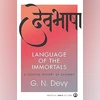
Devbhasha: Language of the immortals: A concise history of Sanskrit
Arundhuti Dasgupta
5 min read Last Updated : Sep 05 2025 | 10:49 PM IST
Devbhasha: Language of the immortals: A concise history of Sanskrit
by G N Devy 
Published by Aleph
₹399, 84 pages        
 
One of the oldest languages in the world, Sanskrit has never been short of admirers and laudatory epithets. Scholars across disciplines have marvelled at its structural elegance, honey-toned vocabulary, and the scholarship that it has enabled. Over the years, the use of Sanskrit has dwindled, but the aura around the language has been burnished into a halo.
 
How did Sanskrit, often called the language of the gods, carry such heft even a millennium after it has ceased to be the primary language of literary production in India? What led to its formidable reputation, given that it was never the language of the masses, not even in its heyday?
 
These are some of the questions that this slim history of the langua­ge tackles. Author and academic Ganesh Devy traces the spidery web of connections that a small but powerful group of early speakers built, which consequently led to Sanskrit’s abiding and outsized influence upon the world. He examines the origins, adaptive capabilities, and the sociological and cultural environment that fostered its rise and power.
 
The most unique creation of Sanskrit, Devy writes, was an oral tradition. It did not grow by committing itself to the written word, rather by creating a code of memorisation and recitation around its speakers. While most languages sought perpetuity by committing their words to a script, Sanskrit chose to focus on its speakers even though contemporaneous and older languages in the region had developed rudimentary writing capabilities. For example, the Indus script, which is still to be deciphered, was in use at the time.
 
Orality built a community that valued the process of remembering the past. It enabled a social struc­tur­e that set a high price on the con­­ti­nuity and preservation of the language and the ideas that it held. Devy writes that the Rig Veda gave the cosmological ideas, the myths and rituals of a group, an unparalleled mechanics of memory. Sanskrit did not seek validation from the surety of the written word. It relied on verbal corroboration instead.
 
The language became an aspirational state of being and engendered a social system of order and privilege. Those who spoke the language were on top of the hierarchical order and their work — that of care and conservation of the language — became holy work.
 
The language was also associated with education and learning. It channelised new ideas and discov­eries, which in turn created a vibrant ecosystem of debates and discussions. In this way, Sanskrit was not just a language one communicated in, but a language that took one closer to a higher plane of existence.
 
The social capital of the language grew alongside its literary development. Between the 5th century BCE and the 10th century CE, when Sanskrit found itself in written texts, a huge set of philosophical works was created in the language, which were then preserved in manuscripts. Preserving these manuscripts was seen as the sacred duty of teachers and poets.
 
Devy writes: “Thus, through networks of places or pilgrimage and the residential schools, literary manuscripts were replicated and preserved. This method was in use till the beginning of the 13th century CE when paper replaced traditional materials used for writing manuscripts.”
 
The manuscripts were perpetuated down the generations in different literary forms. Scholars used them to create shastras and kavyas, writes Devy. “It built an amazing mnemonic enabling generations to access its very first poetic opus, the Rig Veda. Its worldview provided the basis of a social order, though legitimising severe discrimination, which brought nearly the entire society of the subcontinent within its fold.”
 
Historically, Sanskrit was not the first language to be used in the region. Devy writes that Sanskrit came to India around the 14th century BCE, which was long after the decline of the Indus civilisation. But through its unique system of oral transmission and the social structures that it created, it became the language of esteem. 
 
Sanskrit’s rise tells a phenomenal story but it is not without flaws, and the book examines these too, such as the phenomenon of Sanskritisation whereby the speakers of the language were seen as the superior caste and the rest of society would emulate their behaviour to achieve the same status. This phenomenon was first detailed and studied by sociologist M N Srinivas. It also looks at the arguments around antiquity and relevance that have raged endlessly around the language, but most importantly, it offers readers an entirely new way of looking at the legacy of one of the world’s oldest languages.
 
The reviewer is a Mumbai-based journalist and co-founder of The Mythology Project, a centre for the study of mythology, legends, and folklore

One subscription. Two world-class reads.

Already subscribed? Log in

Subscribe to read the full story →
*Subscribe to Business Standard digital and get complimentary access to The New York Times

Smart Quarterly

₹900

3 Months

₹300/Month

SAVE 25%

Smart Essential

₹2,700

1 Year

₹225/Month

SAVE 46%
*Complimentary New York Times access for the 2nd year will be given after 12 months

Super Saver

₹3,900

2 Years

₹162/Month

Subscribe

Renews automatically, cancel anytime

Here’s what’s included in our digital subscription plans

Exclusive premium stories online

  • Over 30 premium stories daily, handpicked by our editors

Complimentary Access to The New York Times

  • News, Games, Cooking, Audio, Wirecutter & The Athletic

Business Standard Epaper

  • Digital replica of our daily newspaper — with options to read, save, and share

Curated Newsletters

  • Insights on markets, finance, politics, tech, and more delivered to your inbox

Market Analysis & Investment Insights

  • In-depth market analysis & insights with access to The Smart Investor

Archives

  • Repository of articles and publications dating back to 1997

Ad-free Reading

  • Uninterrupted reading experience with no advertisements

Seamless Access Across All Devices

  • Access Business Standard across devices — mobile, tablet, or PC, via web or app

Topics :BOOK REVIEWSanskrit languagelanguages

Next Story


