Sanjaya Baru's new book tracks the journey of the 'Non-Returning Indian'

How a seven-fold growth in nominal gross domestic product will change migration patterns
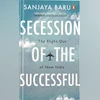
Secession of the successful: The Flight out of New India
Sanjeev Ahluwalia
5 min read Last Updated : Aug 25 2025 | 11:22 PM IST
Secession of the successful: The Flight out of New India
by Sanjaya Baru
Published by 
Penguin
320 pages  ₹799
  The author is a journalist with a difference. He opted for professorial roles in key public policy institutions in India and abroad, served as media advisor to Prime Minister Manmohan Singh and was chief editor of two business papers, including this one.

Also Read

 
Possibly, the journalist in him, won when he catchily, albeit narrowly, titled the book around the ongoing flight of the moneyed — unlike the poor or professionals earlier. The bulkier section on the three earlier migratory waves, starting from the colonial period are fascinating. The first wave was driven by the abolition of slavery in 1861, which led to labour shortages across the British Empire. Surplus Indian labour was exported to fill the gap. Indebted disadvantaged castes became bonded labourers abroad to pay off their loans. Few returned. Many went back because they faced no caste prejudice there with better employment prospects, even after Indian independence in 1947.
 
The author evokes the fragile environment around Independence, when the loyalty of citizens to the tricolour clashed with their traditional loyalty to the 550-odd princes who ruled one half of India till then. Add to that the pain of 10 million refugees flooding India, from Pakistan — the largest human migration in history. No wonder the Constituent Assembly rejected a proposal for dual passports, demanding that citizens remain loyal only to one country.
 
The second phase was voluntary migration by workers from the west coast looking for opportunities in the Gulf and West Asia, followed later by labour from north India to feed the construction boom after the 1970s oil price shock. In the third phase from the mid-1980s, doctors responded to the growing demand of the UK National Health Service and engineers, to the easing of US immigration laws in 1965 and after 1999, to the Y2K demand spike in the US. The fourth, ongoing, wave is the wealthy following their globally diversified investments driven by the 1991 liberalisation, loosening exchange controls, and freeing crossborder flow of capital. In 2022, there were 19 million PIOs (persons of Indian origin) — including the children of Gujarati immigrants in East Africa, the UK and the US, as well as second-round immigrants in the UK, British passport holders, offspring of Punjabi and Gujarati emigrants expelled in 1972 from Uganda along with other South Asians. In comparison, there are only 13 million Non-resident Indians (NRIs) — slightly more than one per cent of the adult Indian population. NRIs are Indians with an Indian Passport but live or work abroad for at least 180 days in a calendar year. In the Gulf, where only long-term work and investment visas are available, generations of NRIs have grown up clutching the navy-blue Indian Passport, but comfortable in their West Asian skins.
 
A total of 32 million Indian PIOs and NRIs compares favourably with the estimated 10 million Chinese nationals living overseas and another 40 million naturalised abroad. Sadly, no data on migration trends is available for China, unlike India, which is transparent. Despite near similar populations, fewer Indians need to escape abroad compared to China, even though the latter is more than five times richer in per capita terms. People vote with their feet. Our “laid back” governance style and dismal record on public goods, might cramp business and “ease of living.” But the average Indian is happy migrating  within the country for better prospects — less of an option in China. India will be “Viksit Bharat” by 2047. Will a seven-fold growth in nominal gross domestic product or GDP and per capita income levels near high-income economies, change migration patterns? More wealthy people will migrate than workers. One half of the top 5 per cent or 30 million could opt for globalised lifestyles. Conversely, more employment at home on better terms, could temper the flight of workers and professionals. Inward immigration might increase as the powerful, the aged and global citizens relocate to a culturally attractive, politically stable, cheaper economy. Every departing Indian might be replaced by two foreigners —- an inflow of 60 million foreigners or 3 per cent of the Indian population — six times the share of foreigners in colonial times. That spells happy times for the services industry.
 
The author shuns futuristic fantasies and faithfully repeats past laments about the lack of “nationalism” amongst “Non-Returning Indians.” But outward emigration has its advantages via inward remittances, which in 2023-24 met 55 per cent of the goods trade deficit of $211 billion versus only 25 per cent met by
 
the surplus from services trade. Inward remittances stabilise India’s external account (key in the recent S&P ratings upgrade), without any incentives or support from the government, though recently proactive counsellor support for stranded Indian migrants, was exceptional.
 
This is a deeply referenced book. It lays out the facts on migration trends and shares the author’s insights on the political economy drivers behind these trends in India and the recipient countries. Recommended for all existing and prospective Indian migrants, to know their “tribal” history and all in-bound tourists, who are increasingly likely to have new Indian origin neighbours back home.
 
The reviewer is distinguished fellow at Chintan Research Foundation, and was previously in the IAS and the World Bank
 

One subscription. Two world-class reads.

Already subscribed? Log in

Subscribe to read the full story →
*Subscribe to Business Standard digital and get complimentary access to The New York Times

Smart Quarterly

₹900

3 Months

₹300/Month

SAVE 25%

Smart Essential

₹2,700

1 Year

₹225/Month

SAVE 46%
*Complimentary New York Times access for the 2nd year will be given after 12 months

Super Saver

₹3,900

2 Years

₹162/Month

Subscribe

Renews automatically, cancel anytime

Here’s what’s included in our digital subscription plans

Exclusive premium stories online

  • Over 30 premium stories daily, handpicked by our editors

Complimentary Access to The New York Times

  • News, Games, Cooking, Audio, Wirecutter & The Athletic

Business Standard Epaper

  • Digital replica of our daily newspaper — with options to read, save, and share

Curated Newsletters

  • Insights on markets, finance, politics, tech, and more delivered to your inbox

Market Analysis & Investment Insights

  • In-depth market analysis & insights with access to The Smart Investor

Archives

  • Repository of articles and publications dating back to 1997

Ad-free Reading

  • Uninterrupted reading experience with no advertisements

Seamless Access Across All Devices

  • Access Business Standard across devices — mobile, tablet, or PC, via web or app

Topics :BOOK REVIEWNRInon resident indiansIndian Economy

Next Story



