Lesley Downer's new book offers a grand panoramic tour of Japan's history

Japan has received far more than its share of natural disasters, most massive earthquakes, volcano eruptions, gigantic tsunamis and ravaging fires
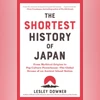
book
Shreekant Sambrani
6 min read Last Updated : Jul 18 2025 | 9:50 PM IST
The Shortest History of Japan
by Lesley Downer
Published by Picador India
xiv+258pages ₹599 
A grand panoramic tour
of Japan’s history
Shreekant Sambrani

Also Read

 
For the rest of the world, Japan conjures up a vision of unique sensual images and experiences: exquisite cherry blossoms, the ever-so delicately flavoured sushi, the highly stylised Noh and kabuki performances, the elaborately coiffed geisha dressed in an ornate kimono, the ethereal 17-syllable haiku, the ritualistic tea ceremony, aesthetic bamboo pavilions with tatami covered floors, extremely courteous, disciplined and equally industrious people worshipping their emperor (though no longer divine) — the list is endless.  Even a veteran traveller is mostly unable to decode this enigma of exotica, leave alone explain how they have come to signify the Land of the Rising Sun for so long. 
That link is what the journalist-historian Lesley Downer’s magnificent little book so authentically and refreshingly provides. She has spent decades in Japan, which she so obviously adores, and written extensively on the country including a Shogun quartet of novels. She gained recognition when she published her account of the journey on foot, retracing the path of the great haiku master Matsuo Basho (1644-1694) from Edo (now Tokyo) to the northeast, when he wrote some of the most celebrated haikus of all times. In a 1989 review of her book, On the Narrow Road, Journey into a Lost Japan, the renowned scholar John David Morley wrote: “The literal translations that Ms Downer herself sometimes offers seem to me to come closer to its spirit than the lapidary approximations” (sample: Old pond-/Frog jumps in/Sound of water, from the book under review).
 
Downer paints her vast canvas of the archipelago from prehistoric times to current headlines with deft, broad yet delicate, brush strokes. Her writing has all the allure of a roman á clef, which is what it really is in more ways than one.  She begins with the charming myth of gods dancing to draw out Amaterasu, the sun goddess, hiding in a cave (the Japanese is one of a handful of cultures that has this divinity as female; she is the mother divine of all the Japanese, including, especially, the emperor). She beamed and the world began. Big Bang, anyone? 
From the fifteenth millennium BC era onwards, the Jomon hunter-gatherers of Hokkaido — forbears of the present-day Ainu indigenous people — moved gradually southward to more hospitable, rainy climates, became rice farmers and started barter trade. By the start of the Christian Era, numerous small and some not-so small fiefdoms had sprung up, mostly at war with each other for more territory. Waves of taller Koreans from across the Sea of Japan gradually settled in the islands, becoming, after intermingling, what we now call the Japanese. 
China was the reigning superpower, with high culture, learning, religion, arms and political domination. The Japanese learnt many of these skills and tools of life and governance, imported Buddhism to create their own variant, and continued in their various pursuits, largely ignored by and, in turn, ignoring the world outside the islands. 
That began changing around the start of the second millennium, when ambitious warlords took on the task of unifying the country. What emerged was a small central territory under the nominal control of the emperor but effectively ruled by his Minister of the Left or regents. The court positions became hereditary and intense competition for power led to intrigue and conspiracies. But somehow, all through this period, the powerful lords built magnificent castles, encouraged painting and other forms of decoration, and recognised poets and artists. A culture distinct from the Chinese not just emerged but flourished. 
The Tokugawa regents (shoguns) reigned long, for nearly 250 years. And before we know it, the author has transported us to the overthrow of the Tokugawa and the Meiji restoration of the nineteenth century. At the turn of the century, a newly resurgent Japan inflicted a defeat on the Tsarist Russia and established a footprint on the Asian mainland as an equal member of global powers. If stunned readers look back at what they have missed in this passage (as I did), they will find that the author has covered all relevant details in her powerful yet terse narrative. 
We then come to the rise, fall, and rise again of Japan in the last century, along with its relentless modernisation in all spheres. Its industry mastered new technologies of munitions, steel-making, ship-building, automotive manufacturing and electronics in what is a proverbial wink of time. By the turn of the century, Japan was the unquestioned global leader in all these areas.  Politics, too, changed with Westminster-type democracy, elections, corruption, revolving-door ministries and a few stalwart, if controversial, leaders: Kishi Nobusuke, Abe Shinzo, and Koizumi Junichiro. The wartime emperor Hirohito died, his reluctant son, Akihito, abdicated and the modern Naruhito and his outspoken former diplomat wife, Masako, have failed to produce a male heir to the Chrysanthemum Throne. 
Japan has received far more than its share of natural disasters, most massive earthquakes, volcano eruptions, gigantic tsunamis and ravaging fires. It has been the worst sufferer of man-made disasters — the devastating atomic bomb attacks on Hiroshima and Nagasaki in 1945 and the meltdown of the Fukushima nuclear reactor in 2011, the only nation to suffer such catastrophes. Yet it picked itself up smartly after each cataclysm, holding the Olympic Games in 1964 and in 2020 (postponed to 2021 due to Covid) with great aplomb. Downer aptly observes: “Japan remains an extraordinarily prosperous and successful society. Most people enjoy comfortable lives and crime rate is enviably low. It’s a well-ordered, efficient place where skyscrapers continue to mushroom and bullet trains run strictly on time. Japan has found a unique way of reconciling past and present, being a hugely successful modern nation while also nurturing its ancient traditions, customs and culture. The emperor is perhaps the most potent link with the past.” 
Bravo, Downer, you not only distil thousands of events of the millennia past into a most pleasurable read of less than 250 compact pages, but also outdo yourself by providing a 70-word succinct precis of your own narrative!
 
The reviewer is a Baroda-based economist
 

One subscription. Two world-class reads.

Already subscribed? Log in

Subscribe to read the full story →
*Subscribe to Business Standard digital and get complimentary access to The New York Times

Smart Quarterly

₹900

3 Months

₹300/Month

SAVE 25%

Smart Essential

₹2,700

1 Year

₹225/Month

SAVE 46%
*Complimentary New York Times access for the 2nd year will be given after 12 months

Super Saver

₹3,900

2 Years

₹162/Month

Subscribe

Renews automatically, cancel anytime

Here’s what’s included in our digital subscription plans

Exclusive premium stories online

  • Over 30 premium stories daily, handpicked by our editors

Complimentary Access to The New York Times

  • News, Games, Cooking, Audio, Wirecutter & The Athletic

Business Standard Epaper

  • Digital replica of our daily newspaper — with options to read, save, and share

Curated Newsletters

  • Insights on markets, finance, politics, tech, and more delivered to your inbox

Market Analysis & Investment Insights

  • In-depth market analysis & insights with access to The Smart Investor

Archives

  • Repository of articles and publications dating back to 1997

Ad-free Reading

  • Uninterrupted reading experience with no advertisements

Seamless Access Across All Devices

  • Access Business Standard across devices — mobile, tablet, or PC, via web or app

Topics :Book ReviewsBookJapan

Next Story



