By Jennifer Szalai
COLLISIONS: A Physicist’s Journey From Hiroshima to the Death of the Dinosaurs
by Alec Nevala-Lee
Published by Norton
338 pages $31.99
The physicist Luis Alvarez is one of those 20th-century figures whose life was so eventful that it should be catnip for a biographer.
Consider even a partial list of his activities: working on explosive detonators for the Manhattan Project; flying in a B-29 observation plane to witness the bombing of Hiroshima; testifying as a government witness in the hearings to revoke the security clearance of his former colleague J Robert Oppenheimer (who had invited Alvarez to Los Alamos); searching via X-rays for hidden chambers in an Egyptian pyramid; and arguing, in a paper with his geologist son, that an asteroid had wiped out the dinosaurs. After the assassination of John F Kennedy, Alvarez pored over the Zapruder film and conducted experiments involving firing bullets at melons to conclude that the president was killed by a lone gunman. In 1968, his work on bubble chambers and elementary particles won him a Nobel Prize.
“Charismatic, physically agile and daring, Alvarez was one of the last representatives of an era that could still see physics as a heroic enterprise,” Alec Nevala-Lee writes in Collisions, his new book about the man. It’s a tantalising characterisation. Just don’t get too excited. “Alvarez has been described as a scientific Indiana Jones, but his reputation as a maverick was built on a foundation of patience and discipline.”
The assessment is entirely fair, though it’s only as the biography progressed that I realised how the word of caution also serves as a warning sign. Nevala-Lee, a novelist and the author of a biography of Buckminster Fuller, is eminently qualified to get to know such a lively and complicated subject. Yet in seeking to deflate the myth of the audacious Alvarez, he has overcorrected, jettisoning drama and tension in favour of diligent explanation. The result is a thorough, dutiful parsing of Alvarez’s work in the laboratory and a strangely pallid portrait of the man himself.
Alvarez was born in 1911 in San Francisco, and enjoyed a privileged upbringing. His father, Walter, was a physician who also wrote popular books like How to Live With Your Ulcer and Live at Peace With Your Nerves. Luis’s maternal grandparents had been missionaries in China; his paternal grandfather had emigrated to the United States from Spain.
Luis, pronounced “Lewis,” never learned Spanish; blond-haired and blue-eyed, he was known in college as “the Spanish Swede.” When, after graduating from high school, he almost got himself killed in a mountaineering accident, he decided that he needed to balance his brash sense of adventure with meticulous preparation.
Nevala-Lee recounts the succession of events that followed: degrees from the University of Chicago and a long, illustrious career, most of it at Berkeley. Alvarez was ambitious, arrogant and often prickly.
For the most part, the Alvarez of Collisions is in the lab, while his long-suffering first wife is at home, raising their two children. So much of his work was top-secret that he could not confide in her. Not that this stopped him from being comically indiscreet with almost anyone else. During a family ski trip to Idaho, he struck up a conversation with another vacationing couple in the hotel lobby and talked loudly about his classified work. A government inquiry into his “bragging campaign” noted his eagerness to be seen as “quite the big shot.”
Such a big mouth was especially surprising for someone who tended to deploy “his talents in defence of an authorised narrative,” Nevala-Lee says, elsewhere describing Alvarez’s political attitude as mostly conservative. After the bombing of Hiroshima and Nagasaki, Alvarez complained that the other scientists at Los Alamos had become “almost neurotic,” while he stayed unwaveringly supportive of the decision to use atomic weapons.
Wading into the Kennedy assassination discourse, he selectively reported his results on the melon experiment to shut down arguments about a second shooter. When he X-rayed the pyramids, he kvetched about all the “pyramidiots” who annoyed him with their pet theories about telepathy and psychokinesis. He kept all the conspiratorial letters he received in his “nut file.”
I pulled most of these tidbits from Collisions ; the morsels are there, but they’re drifting in a sea of detail. Such an emphasis might be deliberate, a wilful refusal to indulge Alvarez’s self-serving self-presentation in order to focus the reader’s attention on what truly mattered: how his laboratories worked. As Nevala-Lee puts it, “Alvarez’s own impact consisted less of any one discovery than of the culture that he passed down to his protégés.”
Bringing such a culture to life would be a challenge for any biographer. I appreciated Nevala-Lee’s careful research and his sense of obligation. But I finished the book bleary-eyed and worn out — and wanting something more.
The reviewer is non-fiction book critic for The Times
©2025 The New York Times News Service

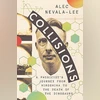 "Luis Alvarez deserved a livelier biography than Collisions offers")


 Connect with us on WhatsApp