Tibet at one remove: Little Lhasa maps a people's emotional geography

How, by a historical accident, India, despite her own poverty and exploding population, became an ideal home for exiled Tibetans
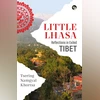
Little Lhasa
Little Lhasa: Reflections on Exiled Tibet
Chintan Girish Modi
5 min read Last Updated : Jun 30 2025 | 4:05 PM IST
Little Lhasa: Reflections on Exiled Tibet
by Tsering Namgyal Khortsa
Published by Speaking Tiger 
264 pages ₹499
  Tibetans living under Chinese occupation and in various other parts of the world are waiting with bated breath for July 6, the 90th birthday of their leader Tenzin Gyatso, the 14th Dalai Lama. As China shows no indication of relinquishing its control over Tibetan territory, the monk’s advancing age is a cause for concern for his people who have been yearning to return to a free Tibet. The question of succession is a critical one, and a public statement clarifying his plans for the future is expected to put to rest all the anxiety and speculation in this regard.
 
Gaden Phodrang, the office that provides him with secretarial assistance, is located in Dharamsala. Tsering Namgyal Khortsa, author of Little Lhasa: Reflections in Exiled Tibet, describes this once picturesque town in the Kangra Valley of Himachal Pradesh, now sadly scarred by over-tourism, as “the beating heart of exiled Tibet”. The book is a must-read for Indians who are curious about the lives of Tibetan refugees, their culture, their freedom struggle, and their relationship with India.
 
The book is shaped by the Dehradun-based author’s personal connection with the subject. After his father was “elected as a member of the Tibetan parliament-in-exile” in 2001 and moved to Dharamsala, he began to develop “a deeper connection” with the town where the Dalai Lama moved six and half decades ago with support from Pandit Jawaharlal Nehru. The author’s mother died in 2003, and the grief that engulfed him during this time pushed him to explore his “heritage” and “its complex layers of displacement and resilience”. 
 
With an MA in journalism from the University of Iowa, the author has written on the subject in an engaging manner that combines interview-based and archival research with heartfelt storytelling. He provides the big picture without compromising on emotion. The town comes alive as a place where Tibetan refugees have rebuilt their lives from scratch, and where their descendants — who have never been to Tibet—are trying to find their place in the world, piecing together their personal answers to the eternally baffling question “Who am I?”
 
This book offers a quick introduction to a number of Tibetan poets, artists, novelists, musicians, journalists, filmmakers, playwrights, activists, intellectuals, publishers, and institutions in this town that has become a cultural, spiritual and political hub for the Tibetan diaspora. They are all attempting to do the best that they can to hold China accountable.
 
The author also looks at Dharamsala as a tourist attraction and a pilgrimage centre that draws people keen to have an audience with the Dalai Lama or listen to Buddhist teachings. “The arcane rituals of Tibetan Buddhism may have captured the world’s imagination but that is not who, or all, that we are,” he declares, while also acknowledging ironically that the time “has certainly come for us Tibetans to take classes on our own religious tradition from foreigners.”
 
He is candid in his admission of how he felt “almost ashamed to be a Tibetan” when he met people who had travelled long distances to learn about beliefs and practices that he had taken for granted. His perspective is humbling because he does not try to cover up his own lack of knowledge by blaming these non-Tibetans for cultural appropriation. He appreciates them for the genuine interest, attentiveness, discipline and joy in their seeking.
 
It is surprising, however, that the book does not say much about the Israelis who throng Dharamsala after completing their mandatory military service, and the impact of their presence on the local economy. It also stays silent about the Gaddis—the indigenous pastoralists of Dharamsala—and the occasional conflicts between them and Tibetans. 
 
“By dint of historical accident, India, for all her own poverty and exploding population, has become a perfect home for the exiled Tibetans. For many of us, India is like our collective mother,” he writes, perhaps with rose-tinted glasses, given the complex and sometimes fractious relationship between Indians and Tibetans, who are sometimes seen by locals as interlopers. He recalls hearing some elderly Tibetans say that exile has been “a blessing in disguise” for them because living in India has given them a chance to visit “the most sacred of Buddhist temples and pilgrimage sites, which the average Tibetan would not have ever dreamed of visiting if it was not for the invasion by the People’s Liberation Army”.
 
Readers who are not familiar with Buddhist teachings on dealing with adversity might write off this approach as toxic positivity but it is completely aligned with the Dalai Lama’s own reframing of exile as an opportunity for Tibetans to build and nurture democratic institutions.
 
The reviewer is a journalist, educator and literary critic. Instagram/X:@chintanwriting

One subscription. Two world-class reads.

Already subscribed? Log in

Subscribe to read the full story →
*Subscribe to Business Standard digital and get complimentary access to The New York Times

Smart Quarterly

₹900

3 Months

₹300/Month

SAVE 25%

Smart Essential

₹2,700

1 Year

₹225/Month

SAVE 46%
*Complimentary New York Times access for the 2nd year will be given after 12 months

Super Saver

₹3,900

2 Years

₹162/Month

Subscribe

Renews automatically, cancel anytime

Here’s what’s included in our digital subscription plans

Exclusive premium stories online

  • Over 30 premium stories daily, handpicked by our editors

Complimentary Access to The New York Times

  • News, Games, Cooking, Audio, Wirecutter & The Athletic

Business Standard Epaper

  • Digital replica of our daily newspaper — with options to read, save, and share

Curated Newsletters

  • Insights on markets, finance, politics, tech, and more delivered to your inbox

Market Analysis & Investment Insights

  • In-depth market analysis & insights with access to The Smart Investor

Archives

  • Repository of articles and publications dating back to 1997

Ad-free Reading

  • Uninterrupted reading experience with no advertisements

Seamless Access Across All Devices

  • Access Business Standard across devices — mobile, tablet, or PC, via web or app

Topics :Book ReviewsBookTibet

Next Story



