Insight Edge: Crafting Breakthroughs in a World of Information Overload
Information overload is that awful state in which we all find ourselves today, overwhelming us with the vast amount of information with which we are forced to deal. This sense of helplessness occurs when the volume and speed of incoming data exceed our cognitive processing capacity, leading to stress, reduced productivity and poor decision-making. With the internet, social media, and constant notifications, individuals and organisations face excessive choices and data streams, often struggling to identify what is relevant or true. Information overload can dilute focus, hinder learning, and reduce the ability to think deeply, requiring strategies such as filtering, prioritisation, and digital minimalism to manage effectively.
The focus of this book is to provide the reader with what the author considers the most critical skill a person needs to navigate through a career: The skill to generate “insights” from this flood of information. By “insights” he means uncovering hidden patterns in the data that the person has about a problem or challenge and opening up entirely new possibilities based on these findings.
Vivek Banerji provides examples of this from his work experience at several companies, including PepsiCo India, McKinsey & Company in New York and London, and a company he founded called Insight Dojo. He has provided insight to help the UK’s National Health Service reduce smoking rates, an Asia-based entrepreneur in launching a line of innovative climate control devices in the US, and South America’s largest beer company in building a stronger brand strategy from its base in Colombia. He has also helped World Health Organization members develop insights on obesity reduction strategies, and contributed to the development and launch of breakthrough oncology treatments in the US and Europe. He says his target audience could be a chief executive officer, a research head in a technology company, a market research manager, or an investment professional. The key qualification is that the person is keen to generate insights that can make a positive difference to their organisations or businesses.
He illustrates the principles he espouses with real-world case studies from the consumer goods, technology, healthcare industries as well as non-profit organisations. He covers both B2C and B2B settings.
He takes the view that today’s complex environment makes it practically mandatory for decision-makers to develop insights. He lists some of the complexities confronting us today: Covid-19, the Russia-Ukraine War, a recession, and the emergence of generative artificial intelligence. He points out and lists the modern-day paradoxes where, despite the abundance of information, eliciting truth has become challenging.
He has several suggestions on how to make “truth” more reliable. Here is just one of his several suggestions: “We must actively cultivate a mindset of not knowing. We need to be aware of our biases and overcome them. That’s how we create the space for insights to appear,” he writes.
He also has many suggestions on how organisations can get greater and more impactful insights that can transform their businesses. An example: “The easiest way to break siloed thinking is to set up a small cross-functional team that works throughout a project. Thoughts related to strategy, insight, creativity, and execution flow seamlessly, connections are made, and the process moves along nicely. Also, small teams have skin in the game. They own the success of the innovation and commit to making it work. They are not detached observers”.
The book combines a philosophical perspective with a practical list of steps to follow, concluding with a chapter on “A Checklist
for Building Your Aha! Insight Quotient.”
All in all, in Insight Edge, Mr Banerji argues that in today’s flood of data, true breakthroughs come not from more information but from cultivating human-centred insight and shows that curiosity, analytical thinking, creativity, and empathy are essential to cutting through noise and identifying what truly matters. Mr Banerji blends psychology, cultural analysis and decision sciences, illustrating each framework with clear, real-world examples from corporate and societal challenges. Rather than relying on intuition alone or drowning in data dashboards, he proposes a structured yet human approach to insight generation. Insight Edge is a guide for professionals seeking to create breakthroughs in business, policy, or social initiatives, transforming information overload into clarity and action.
What I found inspiring is that in an era where everyone is touting AI and mathematical models to gain insights about complex data, his statement that it’s not algorithms and statistical insights that we need to draw on to get great insights. In his case, he says, he gets his breakthrough insights because of his deep involvement with his hobbies — music, karate, yoga, literature and extensive reading related to a variety of subjects.

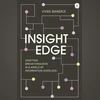 "Vivek Banerji's book shows how to reap insight from information overload")












 Connect with us on WhatsApp