Michael Sheridan's book explores the Xi enigma and China's power dynamics

It is hard to shake the feeling that the book fails at multiple levels, principally because of the author's biases
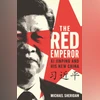
The Red Emperor: Xi Jinping and His New China
Gunjan Singh
5 min read Last Updated : Feb 25 2025 | 11:08 PM IST

Don't want to miss the best from Business Standard?

The Red Emperor: Xi Jinping and His New China
Author: Michael Sheridan
Publisher: Hachette India
Pages: 368
Price: Rs 999 
  Ever since Xi Jinping came to power in 2013, there has been a rush among scholars and policymakers to understand him. This is no surprise. The man in command of the world’s second-largest economy with one of the largest armies and populations will inevitably be the focus of global attention. Mr Xi sustains this interest by cultivating a mysterious persona, constantly surprising the world with his policies, a pattern that sets him apart from the last two generations of leaders.
  This book by Michael Sheridan is the latest addition to the expanding body of literature that attempts to demystify the enigma of Chinese president-for-life. Given the volume of literature devoted to this enterprise, the challenge before any new Xi analyst is to present a new argument. Mr Sheridan attempts to do so by promising a biographical account of Mr Xi rather than just an exposition of his reign. 
Even so, it is hard to shake the feeling that the book fails at multiple levels, principally because of the author’s biases. To be sure, the author lays out a proper timeline of events and appointments that played a crucial role in the eventual rise of Mr Xi. There is a description of his family and of him being purged during the Cultural Revolution, his challenges with obtaining a party membership, his move to Fuzhou, Zhejiang and to Shanghai. All this is well documented elsewhere too. 
The author has painted a personality brimming with self-worth and narcissism and sees every personal move and policy Mr Xi adopted as a means to smooth his path to absolute power in China. For instance, Discussing Mr Xi’s second marriage to Peng Liyuan, a major general in the Cultural Division of the People’s Liberation Army who came from humble origins, the author concludes that, “It may have been a love match but it was also a stroke of political genius. Xi’s second wife was an asset, not a risk.”
  He describes Mr Xi’s early campaign against corruption as a “populist move that also served as a mask for Xi Jinping’s war on his foes”. What Mr Sheridan overlooks in this analysis is that corruption was one of the major challenges for the legitimacy of the Chinese Communist Party (CPC) when Mr Xi became general secretary. In fact, anti-corruption drives have been a tool used by every leader in this Leninist party set-up to strengthen their control and manage the image of the party in the past.
  Mr Sheridan also indicates that Mr Xi believed from the start that he would be the leader one day. “Many see in Xi’s life a quest for restoration. He came from a group indoctrinated through school and home to believe that they were destined to rule. They were told that one day they would inherit their rightful places at the top of the party. The consciousness of being members of an “entitled, elite generation of future rulers” remained with them, he writes. Anyone with a passing knowledge of Chinese politics knows that being born a “princeling”, or descendent of senior CCP leaders, doesn’t guarantee the assumption of the top leadership position in China. But the author ascribes to Mr Xi a sinister hidden ambition. As a young man, he writes, Mr Xi foreshadowed the mature politician he became, being “supremely pragmatic, a realist, driven not by ideology but by a combination of ambition and self-protection”. Apparently, “from day one, he never showed his hand.”
  The discussions on family wealth are also interesting. The author says, “Xi Jinping’s family was the greediest” and managed to accumulate and hide enormous amounts of money. In any political system, families and people close to the levers of power gain certain unfair advantages. Families of prominent CPC members were no exception. To argue that the gains in Mr Xi’s family wealth were an aberration and highlight a lust for power and money seems unduly biased.
  In addition, Mr Sheridan has offered sensational facts such as illicit affairs and illegitimate children. But the lack of proper referencing beyond hearsay detracts from the veracity of this information. When talking about the gains that Mr Xi made from his controversial zero-Covid policies, the author argues, “The psychological and political gains for the regime were so great that its leading figures boasted that China now controlled its people more efficiently than the totalitarian system in North Korea.” First, this statement ignores the fact that China has one of the most sophisticated surveillance systems in place, physical as well as virtual. Second, it is incontrovertible that the zero-Covid policy ended as a result of people’s protest and a fear that the party may not be able to control the growing anger and resentment.
  This book reads more like a long piece that serves to strengthen preconceived notions about Xi Jinping. As all historians know, things look different in hindsight. So it is challenging to determine with finality what Xi Jinping is thinking and what the impact of past purges would have had on his young mind. That said, his policies do provide clues to his idea of strengthening the party and the nation. Amendments to the Constitution have made him the leader for life and raised questions about his lust for power and the future of the CPC. But to say with finality that he is the last emperor seems far-fetched. 
The reviewer is associate professor, Jindal Law School, O P Jindal Global University

One subscription. Two world-class reads.

Already subscribed? Log in

Subscribe to read the full story →
*Subscribe to Business Standard digital and get complimentary access to The New York Times

Smart Quarterly

₹900

3 Months

₹300/Month

SAVE 25%

Smart Essential

₹2,700

1 Year

₹225/Month

SAVE 46%
*Complimentary New York Times access for the 2nd year will be given after 12 months

Super Saver

₹3,900

2 Years

₹162/Month

Subscribe

Renews automatically, cancel anytime

Here’s what’s included in our digital subscription plans

Exclusive premium stories online

  • Over 30 premium stories daily, handpicked by our editors

Complimentary Access to The New York Times

  • News, Games, Cooking, Audio, Wirecutter & The Athletic

Business Standard Epaper

  • Digital replica of our daily newspaper — with options to read, save, and share

Curated Newsletters

  • Insights on markets, finance, politics, tech, and more delivered to your inbox

Market Analysis & Investment Insights

  • In-depth market analysis & insights with access to The Smart Investor

Archives

  • Repository of articles and publications dating back to 1997

Ad-free Reading

  • Uninterrupted reading experience with no advertisements

Seamless Access Across All Devices

  • Access Business Standard across devices — mobile, tablet, or PC, via web or app

Topics :BS OpinionXi JinpingChinaBS ReadsBook readingBOOK REVIEWChina Communist Party

Next Story



