Associate Sponsors

Co-sponsor

Made in India: DBG, Lupin's generic risk-taker with a remarkable journey

Even among rags to riches stories of entrepreneurship, Desh Bandhu Gupta's life and achievements stand out
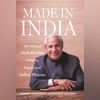
Made in India: The Story of Desh Bandhu Gupta, Lupin and Indian Pharma
Prosenjit Datta
5 min read Last Updated : Feb 25 2026 | 10:01 PM IST
Made in India: The Story of Desh Bandhu Gupta, Lupin and Indian Pharma
by Manish Sabharwal and Sundeep Khanna
Published by Juggernaut
310 pages  ₹799
  India is often called the pharmacy of the world for good reason. It operates a third of the US Food and Drug Administration-authorised medicine factories in the world, exports drugs and vaccines to over 200 countries and is the number one supplier of inexpensive generics and vaccines.
 
A handful of entrepreneurs — Yusuf Hamied (Cipla), Anji Reddy (Dr Reddys), Parvinder Singh (and to a lesser extent his father, Bhai Mohan Singh), Habil Khorakiwala (Wockhardt), Ramanbhai Patel (Zydus-Cadila), Dilip Shanghvi  (Sun Pharma) and Desh Bandhu Gupta (Lupin) — were responsible for turning India into a global generics powerhouse. Cyrus Poonawalla (Serum Institute) would do the same for vaccines.
 
Made in India: The Story of Desh Bandhu Gupta, Lupin and Indian Pharma by Manish Sabharwal and Sundeep Khanna is a detailed biography of the late Desh Bandhu Gupta and the creation of Lupin. The title is a nod to Lupin’s advertisement in 1992 — which had the book cover of the bestseller Made in Japan: Akio Morita and Sony placed next to a similar cover design stating: Made in India: The Lupin Story.
 
The late Desh Bandhu Gupta (or DBG as most people called him) was a truly remarkable entrepreneur. Even among rags to riches stories of entrepreneurship, his life and achievements stand out. Born into a family that had seen better times—his great-grandfather, Bhawani Sahay Gupta, was the first person from Alwar to obtain a college degree and had been given a jaagir of two parcels of land in Rajgarh by the then king of Alwar.
 
But by the time DBG was born, the eldest son to a school teacher, much of the family fortune had been lost. DBG’s father, Peareylal Gupta was the eldest son of Bhawani Sahay’s only daughter, Jamna, who had been widowed early and had returned to Rajgarh. She had persuaded her elder brother, Mahesh, a railway guard, to adopt Pearylal. The Gupta family, Marwaris, were not traders, a profession followed by many of their community. They set great store by education.
 
DBG was the first of Peareyal’s seven offspring. He was a good student, and ended up with a Master’s degree in chemistry. He taught in colleges briefly before joining a small pharmaceutical company, run by another Marwari. He would later work briefly with May & Baker, a multinational drug firm.
 
DBG was not happy in May & Baker. He wanted to set up his own business but had no capital. His marriage to Manju, while working for May & Baker, would finally give him the means to start out on his own. Not only did she support DBG’s entrepreneurship dream, a fixed deposit of ₹5,000 that she had received from her father, provided the seed capital. (₹5,000 then is close to ₹300,000 currently). Later, she pledged her jewels to raise more money when DBG needed more capital. She was also responsible for advising DBG to choose Lupin, instead of another company, when he got an opportunity from both. (Lupin was started by the Shroff brothers but they were disillusioned by the business and offered it to DBG). All this while she was raising five children, taking care of the extended family, and helping out in the business. DBG was both persistent and persuasive. He managed to get even recalcitrant government officials to give him advice on how to navigate the tortuous licence raj. He made many good friends, several of whom would help him in his business later.
 
The authors note that the Indian pharma industry benefitted from the economic policies of the 1970s, which are generally blamed for the stunting of most Indian industries. When the then government decided that India would follow process patents and not the product patent regime, it allowed Indian pharma entrepreneurs, many of whom were from chemistry backgrounds, to flourish. Other policies — such as differential treatment for Indian entrepreneurs vis-a-vis their foreign counterparts if they manufactured bulk drugs (APIs) as well as formulations gave them another boost. Indira Gandhi’s move to nationalise banks and ensure that a certain percentage of bank loans were to be given to small and medium enterprises helped DBG greatly when he was finding it difficult to raise capital.
 
The Hatch-Waxman Act in the US would give a huge boost to Indian generic manufacturers and DBG was one of the beneficiaries, along with his peers. The authors have done a great job of contextualising Lupin and DBG’s rise with the policies that aided them.
 
While DBG was the driving force behind Lupin, and his wife rolled up her sleeves and joined in, his siblings would also be pulled into the company in its initial phases. Later, DBG made sure they exited the main business by helping them set up their own businesses. This was done to ensure that there would be no succession battle for control after him.
 
Not every decision of DBG worked out. Lupin had a decade of troubles because of bad financial decisions. Three of his five children would help deal with the crisis and put it back on the track.
 
The book is an important addition to Indian business history. The authors — Manish Sabharwal is an entrepreneur (he runs TeamLease) and DBG’s son-in-law, and Sundeep Khanna is a veteran business journalist — have done a great job in terms of both research as well as making it an easy read.
The reviewer is former editor of Businessworld and Business Today magazines, and author of Will India Get Rich Before It Turns 100? A Reality

One subscription. Two world-class reads.

Already subscribed? Log in

Subscribe to read the full story →
*Subscribe to Business Standard digital and get complimentary access to The New York Times

Smart Quarterly

₹900

3 Months

₹300/Month

SAVE 25%

Smart Essential

₹2,700

1 Year

₹225/Month

SAVE 46%
*Complimentary New York Times access for the 2nd year will be given after 12 months

Super Saver

₹3,900

2 Years

₹162/Month

Subscribe

Renews automatically, cancel anytime

Here’s what’s included in our digital subscription plans

Exclusive premium stories online

  • Over 30 premium stories daily, handpicked by our editors

Complimentary Access to The New York Times

  • News, Games, Cooking, Audio, Wirecutter & The Athletic

Business Standard Epaper

  • Digital replica of our daily newspaper — with options to read, save, and share

Curated Newsletters

  • Insights on markets, finance, politics, tech, and more delivered to your inbox

Market Analysis & Investment Insights

  • In-depth market analysis & insights with access to The Smart Investor

Archives

  • Repository of articles and publications dating back to 1997

Ad-free Reading

  • Uninterrupted reading experience with no advertisements

Seamless Access Across All Devices

  • Access Business Standard across devices — mobile, tablet, or PC, via web or app

Topics :BookBook readingBOOK REVIEWBS Reads

Next Story



