Reinventing capitalism for the digital age

Ro Khanna's book reveals the dual nature of the Digital Revolution, urging policymakers to decentralise growth and ensure inclusivity in the face of its transformative impact
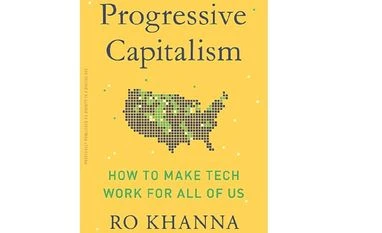
Book cover
Ajit Balakrishnan
4 min read Last Updated : Jun 06 2023 | 9:53 PM IST
Progressive Capitalism: How to Make tech Work for All of Us
Author: Ro Khanna
Publisher: Simon & Schuster
Pages: 384
Price: Rs 799

Is the Digital Revolution that we are all enjoying — with its social networks where we have fun with our friends, shopping with a range of products at unbelievably low prices, online movies from anywhere in the world that we can watch on our mobile phones and the boom in jobs for techie youngsters — all good and positive with no negative side to it?

Also Read


There is one negative side, says the author of Progressive Capitalism Ro Khanna: That it can also exclude, upend and uproot many, many other people other than a few who are in its core. He describes how such uprooting and exclusion happens with many examples and he also suggests what policymakers can do to mitigate such negative effects.

He draws our attention to one of the major effects of the Digital Revolution in America. While places like the Silicon Valley saw an immense gain in income, wealth and jobs, he pointed to another side: Many other American towns “hollowed out” under the double impact of the digital age. One is disappearing local jobs in manufacturing, with supply chains moved to places like China. The other is local retail stores in the downtown areas of these small towns have also disappeared as they could not compete in prices and range of goods with online giants. Nearly 50 per cent of the new jobs created are in a mere 10 major cities while 60-plus other cities in America saw their share of jobs decline.

When I was reading this, I realised that while the author was describing these economic events in America, the situation is not much different in India. We have also seen new tech jobs boom in places like Bengaluru, Chennai, Hyderabad, Pune and perhaps Delhi and Mumbai, while other major cities and towns in India have had to witness their young talent, finding no jobs in their own towns, migrating to a handful of cities.

He points out, correctly, that the Covid-19-induced work-from-home era has opened our eyes to the fact that concentrating people in centralised offices is no longer a necessity. It is possible for policymakers and industry leaders to think of the prospect of setting up offices in decentralised smaller cities.

While the central idea of Mr Khanna’s book is to decentralise growth by ensuring that it takes place across multiple cities and towns, he also discusses many other revolutionary ideas: Giving employees the right in the way digital automation is used in their workplace; taking care to ensure that the benefits of the digital economy flows independent of race and gender; protection to citizens from the abuse of their personal data by private firms or governments; protect the online discussion space from misinformation or the spreading of hate and violence, among other things. He describes his work in introducing legislation in these areas in the US.

His main message, which he illustrates through many American examples, is that instead of depending on the “hidden hand” of capitalism, that is to say, the power of markets, it is time for policymakers to play a more active role in making sure that a wide range of towns become locations for digital economy enterprises and jobs. He calls this “Progressive Capitalism”. He also adds that a lot of his thinking is shaped by discussions with people such as Amartya Sen.

Mr Khanna was born in 1976 to Indian parents who emigrated to the US. If you are wondering how this “NRI” (as we Indian call our Indian brethren who have embraced other citizenships) has come to hold such radical ideas, you only need to look at his maternal grandfather, Amarnath Vidyalankar, who  worked for the welfare of Harijans, taught history in a Lahore college where Bhagat Singh was his student, was the secretary to the All India Congress Committee, and served two years in jail during the Quit India movement among other things.

Mr Khanna represents America’s technology centre, the Silicon Valley, in the United States Congress. Silicon Valley, as we know, is the district that is the home to Apple, Google, Intel, Yahoo, eBay, LinkedIn and Tesla besides several hundred tech innovator companies.

This shows that the author’s radical views on decentralised economy are not merely the views of a theoretician but that of a person who is in the middle of the action. How do we make sure that our own policymakers and digital era tycoons get to learn the revolutionary insights of this book?

ajitb@rediffmail.com

One subscription. Two world-class reads.

Already subscribed? Log in

Subscribe to read the full story →
*Subscribe to Business Standard digital and get complimentary access to The New York Times

Smart Quarterly

₹900

3 Months

₹300/Month

SAVE 25%

Smart Essential

₹2,700

1 Year

₹225/Month

SAVE 46%
*Complimentary New York Times access for the 2nd year will be given after 12 months

Super Saver

₹3,900

2 Years

₹162/Month

Subscribe

Renews automatically, cancel anytime

Here’s what’s included in our digital subscription plans

Exclusive premium stories online

  • Over 30 premium stories daily, handpicked by our editors

Complimentary Access to The New York Times

  • News, Games, Cooking, Audio, Wirecutter & The Athletic

Business Standard Epaper

  • Digital replica of our daily newspaper — with options to read, save, and share

Curated Newsletters

  • Insights on markets, finance, politics, tech, and more delivered to your inbox

Market Analysis & Investment Insights

  • In-depth market analysis & insights with access to The Smart Investor

Archives

  • Repository of articles and publications dating back to 1997

Ad-free Reading

  • Uninterrupted reading experience with no advertisements

Seamless Access Across All Devices

  • Access Business Standard across devices — mobile, tablet, or PC, via web or app

Topics :BOOK REVIEWBS Readscapitalism

Next Story



