Thomas Mathew's book explores the legacy of Indian business icon Ratan Tata

Politeness is to human nature what warmth is to wax.
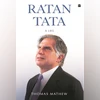
book
R Gopalakrishnan
6 min read Last Updated : Nov 15 2024 | 10:32 PM IST
Politeness is to human nature what warmth is to wax
 
RATAN TATA: A Life
Author: Thomas Mathew
Publisher: HarperCollins

Also Read

Pages: 712   
Price: Rs 1,499
 
Arthur Schopenhauer’s statement above is unquestionably appropriate for Ratan Tata. This book is about a great modern Indian business leader, Ratan Tata. The narration is authentic, based as it is on several hours of taped interviews by author Thomas Mathew with Ratan Tata and with important personalities in India and abroad. It is not clear whether the manuscript received Ratan Tata’s approval. However, having been an insider to the Tata firm during the latter period of the book, I find that the facts pertaining to that period are generally correct, though individual interpretations of facts would differ. 
The travails, personality, philosophy, and actions of Ratan Tata emerge as he truly was—understated and shy, but firm and consistent. Just as everyone is strongly influenced by family and upbringing, the strong influence of Ratan’s grandmother, Navajbai Tata, is described in the early part of the book. Ratan refers to her as his “guiding light”, who taught him the virtues of humility, and the courage to admit mistakes. The book also states that, “Lady Tata’s empathy for the poor and her earnestness to alleviate their suffering left a lasting impression on Ratan Tata…. This philosophy of philanthropy still largely guides Ratan, the chairman of Tata Trusts.” 
He also showed early signs of speaking truth to power in a constructive manner. In his 1983 Strategic Plan to the Tata Sons board, Ratan commented on the lack of cohesion among group companies. It was a relevant but bold message to send to accomplished leaders such as J R D Tata, Nani Palkhivala and his father, Naval Tata, who were decades older than Ratan. Tata Chemicals’ Darbari Seth disagreed with Ratan and opined that individual company autonomy was the correct way forward.  However, Indian Hotels’ Ajit Kerkar concurred by writing, “All individual Tata companies are nothing but branches of the same tree with a common trunk and common roots.” The book reveals, however, that Kerkar’s subsequent behaviour was at variance with what he had written. 
There is a back-story as to how the Tata companies became centrifugal. It was a response to the demoniac Monopolies and Restrictive Trade Practices legislation of 1969. There was a conscious dilution of companies’ inter-relationships. Viewing future needs, Ratan argued that group spirit and synergy would, in fact, be an asset, and when empowered, he worked persistently at reversing dilution within the group. His skills of advocacy, overcoming objections, showing flexibility, and achieving the principal goal bore fruit when “The House” (as Tata is often called) implemented the Brand Equity and Brand Promotion, the Code of Conduct, and the Tata Business Excellence Models. Tata became a well-knit and cohesive group, rich with “Tata-ness,” by the time he departed. Even a critic must grant that this was a great, if not the greatest, contribution of Ratan Tata.
 
Ratan’s public esteem developed gradually. By 1985, a MARG survey rated Ratan as India’s most respected CEO with 6.8 points, a whisker ahead of Russi Mody of TISCO (now Tata Steel), Dhirubhai Ambani of Reliance, and Ashok Ganguly of Hindustan Lever. The book is 700 pages, covering Ratan’s childhood, his education, his challenges and his contributions. It is effusive with praise for Ratan; the author does not hide his deepest admiration, which he must have developed after researching the facts for the book. 
The truth is that no human being is perfect, so Ratan must have had flaws. There is little reference to this aspect in the book. Serious readers who study this book as a leadership chronicle could find this aspect to be weak. It is correct that Ratan practised and deployed sterling positives, hence glossing over his human blemishes could be considered pardonable. 
Most readers would not have had personal or first-hand experience with Ratan. After reading this book, they would certainly get the impression that he was a highly effective leader, but also, a rare one who led with competence and humility. In a world where leadership is characterised by avarice, hubris, ego, power, and personal agendas, the reader would surely be curious to learn how seemingly opposite virtues such as competence and humility were combined into one individual.  
This is not explicit in the book, but there is enough material to give the reader food for thought.   
Walter Isaacson’s two majestic books on Apple’s Steve Jobs and biochemist Jennifer Doudna could well have inspired both the author and publisher. The pagination, size of the book, white cover design, and the deliberate separation between the protagonist and the author are similar. Of course, it could be sheer coincidence. Isaacson emphasised that his books were based on many hours of honest and frank interviews given by the protagonist willingly. So does Thomas Mathew. 
Isaacson was not required to submit the manuscript to the protagonist for approval. In this book, this aspect is not clear, and it begs the question — is it likely that Ratan would have approved the manuscript? Knowing Ratan as I did, I feel that he might well have hesitated to formally agree to the content of this book. In his opinion, his achievements may have been overstated.
To strengthen this view, it is noteworthy that the book was released so soon after his death. I must recall a separate incident from 20 years ago. An over-enthusiastic board colleague had installed a painting of Ratan in the Bombay House board room alongside those of Jamsetji, J R D and earlier chairmen. Ratan roared an uncharacteristic instruction to a hapless peon,  “Kaun bola laganeko? Hum marne ke baad lagao.”  
It is important to note that the author did not receive funding or hospitality for the book. He emphatically states, “I was determined to undertake the project as an independent research work, without taking any assistance, financial or otherwise from Ratan, lest the work should lose its credibility.” 
Most Indian biographies are commissioned by the family and turn out to be hagiographies. In this case, the author has invested his time, personal funds, research resources, and writing skills to produce a different kind of biography. 
The reviewer is an author and corporate commentator

One subscription. Two world-class reads.

Already subscribed? Log in

Subscribe to read the full story →
*Subscribe to Business Standard digital and get complimentary access to The New York Times

Smart Quarterly

₹900

3 Months

₹300/Month

SAVE 25%

Smart Essential

₹2,700

1 Year

₹225/Month

SAVE 46%
*Complimentary New York Times access for the 2nd year will be given after 12 months

Super Saver

₹3,900

2 Years

₹162/Month

Subscribe

Renews automatically, cancel anytime

Here’s what’s included in our digital subscription plans

Exclusive premium stories online

  • Over 30 premium stories daily, handpicked by our editors

Complimentary Access to The New York Times

  • News, Games, Cooking, Audio, Wirecutter & The Athletic

Business Standard Epaper

  • Digital replica of our daily newspaper — with options to read, save, and share

Curated Newsletters

  • Insights on markets, finance, politics, tech, and more delivered to your inbox

Market Analysis & Investment Insights

  • In-depth market analysis & insights with access to The Smart Investor

Archives

  • Repository of articles and publications dating back to 1997

Ad-free Reading

  • Uninterrupted reading experience with no advertisements

Seamless Access Across All Devices

  • Access Business Standard across devices — mobile, tablet, or PC, via web or app

Topics :Ratan TataBOOK REVIEWBS Reads

Next Story


