We Are Eating the Earth: Future shocks in the global food economy

We Are Eating the Earth is research-heavy and Mr Grunwald has spoken to many people in the course of the book
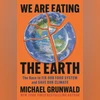
We Are Eating the Earth: The Race to Fix Our Food System and Save Our Climate
Sneha Pathak
5 min read Last Updated : Jan 19 2026 | 10:51 PM IST
We Are Eating the Earth: The Race to Fix Our Food System and Save Our Climate
by Michael Grunwald
Published by
Simon & Schuster
371 pages  ₹699
  It is generally believed that the fossil fuel problem is the greatest issue plaguing the earth’s future. Solve it, and we will have saved the earth. But what if this isn’t completely true? What if there’s another equally urgent yet overlooked subject that needs our attention? This other subject — the land problem — lies at the heart of Michael Grunwald’s We Are Eating the Earth. Our land problem, he claims, is mostly an agriculture problem because humans are constantly shrinking green spaces for producing more food. Leaving this pattern unchecked means that even if we reduce our dependence on fossil fuels, we will still not have saved the earth. 
Mr Grunwald is an American journalist who has written books on the Obama era and the destruction of the Everglades in southern Florida. In We Are Eating the Earth, Mr  Grunwald turns towards agricultural practices, something often left out when talking about saving the earth. He argues that agriculture plays a major role in deforestation, water loss, water pollution as well as biodiversity loss. Only a massive overhaul, including rethinking of agricultural policies, can change this scenario. To prove his point, he makes use of the research and personality of Tim Searchinger, a senior research scholar at Princeton who is also affiliated with World Resources Institute in Washington, and has been working on environmental change and conservation for more than two decades. 
Mr Grunwald takes his readers on a tour of the technologies and ideas that have been employed to find a solution to the land problem. These include, but are not limited to, plant-based and other meat alternatives as well as practices such as vertical farming. Some of them were heralded as the next big thing when they were first introduced, but, for various reasons, none of these have yet proven sufficient, given the large scale needed today. Many of these ideas, particularly in the field of alternative meat, faced massive backlash or apathy from policymakers, consumers and the agriculture and meat industry. However, Mr Grunwald ends the book on a hopeful note as these setbacks don’t mean that experiments in this direction have come to a standstill. But there’s a need to come up with changes on a large scale to save the earth before it is too late. 
We Are Eating the Earth is research-heavy and Mr Grunwald has spoken to many people in the course of the book. His lengthy “Notes” section informs his readers that he interviewed more than 2,000 people, visited 10 US states and four foreign countries for research. He also “carried on a five-year conversation with Searchinger” and Mr Searchinger’s ideas heavily influence his writing. In fact, it wouldn’t be wrong to say that Mr Searchinger becomes the intellectual anchor of the book. To ensure that the book doesn’t get weighed down under all this research, Mr Grunwald uses a conversational and informal tone in his writing.
But there are times when he seems slightly too dependent on Mr Searchinger’s ideas. This is markedly present in the first few chapters where he provides details of Mr Searchinger’s work in the field of biofuels and bioenergy, the sector in which he worked before turning to the food problem. And while there’s no doubt that Mr Searchinger’s work and credentials give his opinions a certain heft, these chapters can read like a long introduction to the book’s central thesis. 
Mr Grunwald goes into details of the policies made, the steps taken (or not taken) and the people involved in these manoeuvres. This can be a double-edged sword. While it will interest readers with an appetite for details of policymaking and policy journalism, readers looking for a book with a straightforward narrative might find themselves losing their way in the labyrinthine structure of the book. 
And while Mr Grunwald is talking of a problem that affects the entire planet, he mostly uses an American/ Eurocentric lens to talk about it. Meticulously and in great detail, he takes us through the changes and shifts in mostly American policies about climate and biofuels and talks about the ongoing debates about food choices and regenerative agriculture techniques often using examples from America, though other nations also find mentions. That he is of the opinion that America has to play a key role becomes clear when he writes, “How do we win a global war against an invisible enemy when the president of the United States won’t fight?” 
Overall, We Are Eating the Earth is a timely eye-opener of a book. Its writing style might not appeal equally to every reader, but it does a commendable job of bringing to light the issues related to land, leaving its readers with food for thought.
 
The reviewer is an independent writer and translator

One subscription. Two world-class reads.

Already subscribed? Log in

Subscribe to read the full story →
*Subscribe to Business Standard digital and get complimentary access to The New York Times

Smart Quarterly

₹900

3 Months

₹300/Month

SAVE 25%

Smart Essential

₹2,700

1 Year

₹225/Month

SAVE 46%
*Complimentary New York Times access for the 2nd year will be given after 12 months

Super Saver

₹3,900

2 Years

₹162/Month

Subscribe

Renews automatically, cancel anytime

Here’s what’s included in our digital subscription plans

Exclusive premium stories online

  • Over 30 premium stories daily, handpicked by our editors

Complimentary Access to The New York Times

  • News, Games, Cooking, Audio, Wirecutter & The Athletic

Business Standard Epaper

  • Digital replica of our daily newspaper — with options to read, save, and share

Curated Newsletters

  • Insights on markets, finance, politics, tech, and more delivered to your inbox

Market Analysis & Investment Insights

  • In-depth market analysis & insights with access to The Smart Investor

Archives

  • Repository of articles and publications dating back to 1997

Ad-free Reading

  • Uninterrupted reading experience with no advertisements

Seamless Access Across All Devices

  • Access Business Standard across devices — mobile, tablet, or PC, via web or app

Topics :BookBS ReadsReadingBook readingBOOK REVIEW

Next Story


