The Echo Machine: Why democracy depends on citizens, not perfect leaders

Democracy's survival does not hinge on perfect leaders or policies, but on cultivating citizens who can tell the difference between what their feeds confirm and what evidence actually supports

The Echo Machine
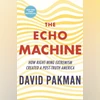
The Echo Machine: How Right-Wing Extremism Created a Post-Truth America
Amritesh Mukherjee
5 min read Last Updated : Jan 14 2026 | 12:13 AM IST
The Echo Machine: How Right-Wing Extremism Created a Post-Truth America
by David Pakman
Published by Beacon Press 
208 pages ₹2,558
  What use is infinite information if no one can tell truth from performance? We’ve built a world where everyone has access to everything and understands almost nothing. The age of information has produced an epidemic of ignorance. Not because facts are unavailable — they’ve never been easier to access — but because the capacity to weigh them against lies has been methodically destroyed.
 
This collapse is anything but incidental. It was engineered across decades, through education systems hollowed out, media ecosystems designed for profit over truth, systemic incentives to keep the masses occupied, platforms optimised to show us only reflections of what we already believe. A population trained to memorise answers rather than interrogate questions is a population primed for authoritarian capture.
 
David Pakman’s The Echo Machine dissects how America trained its citizens out of reality. If schools no longer taught how to question, the media would teach what to believe. Talk radio hosts learned that anger was more profitable than analysis. Cable news quickly realised certainty beat complexity in the ratings war.
 
Social media simply automated what decades of policy and media consolidation had already accomplished, i.e., the segmentation of reality into personalised loops where consensus within the feed becomes indistinguishable from fact.
 
There’s a certain efficiency to how the right operates. Liberals spent decades believing truth would win because truth is true, that flawed institutions would eventually self-correct, that education and argument could shift fundamental beliefs. But the right understood that politics isn’t about what’s verifiable but what’s emotionally compelling. Rather than asking whether a claim was accurate, they would rather ask whether they were useful, tribally reinforcing,  emotionally satisfying.
 
The liberal response, for long, has been to accept everything as debatable. When climate science is treated as requiring equal time for “both sides,” when vaccine efficacy becomes a matter of personal opinion, when fundamental rights are framed as philosophical puzzles demanding endless re-litigation, the damage comes as the normalisation of a corrosive idea. That every empirical fact must sit opposite an ill-informed counterview, that expertise is just bias in professional clothing, that “doing your own research” means scrolling until you find confirmation. This is the trap.
 
As Mr Pakman writes, “When a party to a disagreement falsely believes that the question of whether a vaccine is effective could be a matter of opinion, productive discussion about vaccine policy becomes impossible.” Engaging in good-faith debate over settled questions treats bad-faith actors as though evidence might change their position. But winning the argument was never the goal, for the goal was establishing that an argument exists at all, that all claims are equally valid because all claims are equally performative.
 
The contradictions are everywhere. Mr Pakman notes how, “while emphasizing Christian charity, compassion, and the teachings of Jesus, many Republican-led policies seem to contradict these very principles. This includes opposition to health care expansion for the needy, policies that separate immigrant families at the border, or a reluctance to accept refugees fleeing persecution who are seeking legal asylum — actions seemingly at odds with the Christian teachings of love, compassion, and sheltering of the oppressed.”
 
Often, political books diagnose without prescribing. As Mr Pakman writes, “Too frequently, nonfiction political books take a decidedly pessimistic tone, presenting societal problems as both insurmountable and inevitable while spending very little time proposing a list of solutions.”
 
His solution is infrastructure-level investment in critical thinking. Train citizens to reflexively ask, “How do you know?” Refuse partisan affiliation as acceptable evidence. Build media that challenges audiences instead of validating them. Support local journalism, defend school boards. The book is accessible and action-oriented, rejecting the pose of neutral observation. “Without the protective barrier of critical thought, society becomes increasingly susceptible to misinformation, especially in an era where media, both genuine and fake, floods our daily lives,” he further notes. Rebuilding that barrier demands unglamorous work, one question at a time.
 
The American case is instructive because the pattern can be seen globally with an exceptional consistency. Defund education, delegitimise expertise, build alternative media ecosystems that operate on loyalty, deploy algorithms that reward simplicity and heightened emotions.  Democracies across continents are losing the ability to distinguish knowing from believing.  What use is democracy if citizens cannot tell truth from fiction? The echo machine has spent decades destroying that foundation. Democracy’s survival, rather than finding perfect leaders or perfect policies, depends on building citizenries that can distinguish what their feeds confirm from what evidence actually supports.
 
The alternative is what we’re watching unfold: Democracies talked out of existence, one algorithm at a time, one gutted curriculum at a time, one unopposed lie at a time.
 
The reviewer is a journalist, writer, and editor fascinated by the stories that shape our world. Instagram/X: @aroomofwords
 

One subscription. Two world-class reads.

Already subscribed? Log in

Subscribe to read the full story →
*Subscribe to Business Standard digital and get complimentary access to The New York Times

Smart Quarterly

₹900

3 Months

₹300/Month

SAVE 25%

Smart Essential

₹2,700

1 Year

₹225/Month

SAVE 46%
*Complimentary New York Times access for the 2nd year will be given after 12 months

Super Saver

₹3,900

2 Years

₹162/Month

Subscribe

Renews automatically, cancel anytime

Here’s what’s included in our digital subscription plans

Exclusive premium stories online

  • Over 30 premium stories daily, handpicked by our editors

Complimentary Access to The New York Times

  • News, Games, Cooking, Audio, Wirecutter & The Athletic

Business Standard Epaper

  • Digital replica of our daily newspaper — with options to read, save, and share

Curated Newsletters

  • Insights on markets, finance, politics, tech, and more delivered to your inbox

Market Analysis & Investment Insights

  • In-depth market analysis & insights with access to The Smart Investor

Archives

  • Repository of articles and publications dating back to 1997

Ad-free Reading

  • Uninterrupted reading experience with no advertisements

Seamless Access Across All Devices

  • Access Business Standard across devices — mobile, tablet, or PC, via web or app

Topics :BOOK REVIEWbooksIndian democracyvoting

Next Story