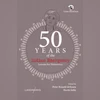
50 Years of the Indian Emergency: Lessons for Democracy
By Peter Ronald deSouza and Harsh Sethi (edited)
Published by Orient Blackswan
The Emergency was a defining moment in India’s history. It has been justified: The Communist Party of India was the only political party that supported it. David Lockwood’s 2016 book, The Communist Party of India and the Indian Emergency describes why. It has been explained extensively: More than a dozen books, ranging from David Selbourne’s An Eye to India to Christophe Jaffrelot and Pratinav Anil’s deeply researched work. It has been recalled by many through their experiences, such as in L K Advani’s My Prison Diaries and the latest, The Conscience Network by Sugata Srinivasaraju, and analysed in books too numerous to cite.
The book explores the administrative, judicial, political, economic and international scaffolding that kept the Emergency alive. A sparkling introduction says failure of institutions was responsible for the Emergency. From this, we learn that institutions can fail again and how all the forces that routinely criticise the “black period” in India’s history have either done nothing to repeal the conditions that led to it or have actively collaborated to reinforce them. “Many of these tendencies are apparent today. In this sense, 2025 represents a continuity,” the book warns.
Over time, myths have been created about what caused the Emergency and who resisted it. Anand Kumar says the Rashtriya Swayamsevak Sangh (RSS) was banned and its members were sent to prison. But Sarsanghchalak Balasaheb Deoras wrote three letters to Prime Minister Indira Gandhi between August 22, 1975 and July 16, 1976. In November 1976, over 30 leaders of the RSS led by Madhavrao Mule, Dattopant Thengadi and Moropant Pingle wrote to Indira Gandhi, promising support for the Emergency if all RSS workers were released from prison. No one from the Sangh has contested this assertion.
In his essay, “The economic roots of the Emergency” Errol D’Souza goes beyond the “ship to mouth” PL 480 wheat that kept Indians fed, to describe India’s economic crisis from the mid-1960s to 1976. The oil shock in 1973, resultant high prices and inflation contributed to an overall sense of betrayal, especially as “Garibi Hatao” was the slogan of the day but poverty continued. Dr D’Souza says amid the strikes and demonstrations, the Nav Nirman movement in Gujarat was triggered after chief minister Chimanbhai Patel lifted regulation on the price of groundnut oil to “help” oil traders who transferred a substantial part of their profits to the Congress party —which in turn had won 83 per cent of the seats in the 1972 Assembly elections. This hike in prices led to an increase in food prices in college canteens and dining halls — hence the rebellion of the youth that became a potent force in the decision to impose the Emergency. This was only part of the larger economic crisis that had India in its grip as a result of the mismanagement of banking regulations, the strangulation of private business, and the lack of industrial growth. Pamela Philipose’s essay of fetters on journalism is interesting. The chapters on the poetry and literature of this period have a fragrance all their own. Varun Sahni’s detailed essay on geopolitics investigates if there was ever a “foreign hand”, and concluding this was “an artful fabrication”. A chapter on a centre of resistance: Jawaharlal Nehru University (JNU) is included.
The most provocative chapter has to be by Gopal Guru who argues that from the Dalit point of view, a strong state means a greater guarantee of freedom from local structures of exploitation and discrimination: Whether in terms of caste exploitation or through a crackdown on moneylenders. The Emergency was an exceptional moment for Dalits. Gyan Prakash’s essay, based on letters exchanged between India’s former railway minister, Madhu Dandavate and his wife, Pramila, when they were both prisoners introduces an element of tenderness. Peter deSouza’s essay, “Why did She Impose It and Why Did She Lift It?” is masterful.

 "The Emergency revisited: What it still tells us about power in India")











