S Mahendra Dev: Budget, a win-win for rural economy; implementation a challenge
The finance minister has not disappointed in focusing on rural India, despite several fiscal challenges in 2016-17
S Mahendra Dev Rural India has been under distress for the last two years. The crash in global commodity prices and deficit rainfall for two years in a row were largely responsible for the distress in agriculture. Similarly, the rural non-agriculture sector is also suffering, owing to the lack of demand for manufacturing and rural services. Real rural wages also declined.
In this context, one expected a big push for agriculture and the rural areas. The finance minister has not disappointed in focusing on rural India, despite several fiscal challenges in 2016-17. The Budget could be ranked 7 on a scale of 10 for its focus on the rural economy. Of course, one has to see the fine print to know whether the allocations are sufficient to revive the rural economy and how the finance minister has managed to stick to the 3.5 per cent fiscal deficit target.
The Budget has allocated Rs 35,984 for the welfare of farmers. The focus on irrigation and soil health management is in the right direction. An area of 28.5 lakh hectare will be brought under irrigation under the Pradhan Mantri Krishi Sinchai Yojana. One problem in irrigation projects is that the area under irrigation increased only marginally in spite of large expenditures. Attention has also been paid to groundwater. Apart from that, soil health cards will be given to 140 million farm holdings by the end of the financial year 2017. Farmers will also benefit from the measures involving crop insurance, a unified agricultural marketing e-platform, land records, the dairy sector and food processing. However, institutional mechanisms should be undertaken to start crop insurance, since they take time to implement.
One bold measure is the pilot programme that aims to give fertiliser subsidies directly to the farmers. This reform was long overdue and should be taken to its logical conclusion.
The measures on minimum support prices, such as decentralised procurement and online procurement, are also in the right direction. Most importantly, measures on procurement of pulses are a welcome step; the focus on pulses is important for soil health, human nutrition and reduction in food inflation.
Agricultural credit has been increased to Rs 9 lakh crore. It is important to note, however, that, every year, the Budget announces higher agricultural credit, but it is not clear who receives it. A large part of that credit even goes to urban areas.
The Budget, however, did little in terms of technology, producer organisations, legalising land tenancy and climate-resilient agriculture. Particularly higher allocations for research are needed to increase productivity.
Apart from farm-related measures, the Budget contains several proposals aimed at raising rural demand. Rural development was allocated Rs 87,765 crore. The Mahatma Gandhi National Rural Employment Guarantee scheme was allocated Rs 38,500 crore. The allocation to the Pradhan Mantri Gram Sadak Yojana has been increased to Rs 27,000 crore. Besides, measures related to rural electrification, Swachh Bharat Abhiyan, self-help groups, the social sector, education and skills development are expected to boost rural demand. Moreover, Rs 2.87 lakh crore have been allocated to local bodies. Besides, allocations to panchayats would significantly help increase demand in rural areas.
However, the outcome depends on effective implementation. The 14th Finance Commission increased the share of central tax revenues from 32 per cent to 42 per cent. States should also spend more on rural areas, since there are cutbacks in funds under centrally sponsored schemes. However, states may take some time to adjust to the new changes. Till then, it is the responsibility of the central government to work towards stimulating agriculture and the rural sector.
The writer is the director and vice-chancellor of the Indira Gandhi Institute of Development Research

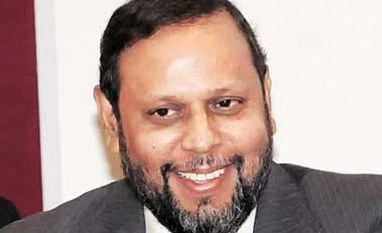 "<b>S Mahendra Dev:</b> Budget, a win-win for rural economy; implementation a challenge")


 Connect with us on WhatsApp