Cloud over private players barrier to growth

India has significantly reduced the number of public sector undertakings by privatisation
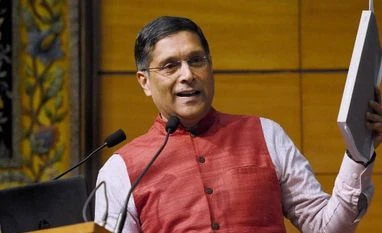
Arvind Subramanian
Arvind Subramanian, Chief Economic Adviser (CEA) at a Press Conference at National Media Centre in New Delhi after laying of Economic Survey 2016-17 in Parliament (Photo: PTI)
Arindam Majumder
Last Updated : Feb 01 2017 | 3:32 AM IST
An environment of suspicion towards the private sector, mainly due to political compulsion, has held back the Indian economic sector for a decade. That seems to be the message from Chief Economic Advisor Arvind Subramanian. 

Such an unfavourable perception towards the private sector has led to problems such as an unprofitable airline, twin balance sheet problems for banks and the exit of government from loss-making fertiliser plants.

Citing civil aviation as an example, the Economic Survey on Tuesday said privatisation of public enterprises remains difficult even for firms with a strong case to be privatised, though the reform talks in the sector is animated by discussions of as much “an interventionist as liberalising spirit”, as reflected in restrictions on pricing.

The Survey used the example of state-owned Air India to point out that there was difficulty in privatising public enterprises, even for firms that economists have argued should belong in the private sector. But the commitment to make the perennially unprofitable public sector airline “world-class” remained. 

Air India is functioning on a government stimulus of Rs 33,000 crore. The carrier was back in the red in 2014-15 after making an operational profit of Rs 105 crore last financial year, for the first time in a decade.

The Survey said over the past decade, India has significantly reduced the number of public sector undertakings by privatisation.

The Survey also pointed out that regulation has hindered the prospect of private players. This is similar to the situation in the agriculture sector, where regulations such as mandatory selling to middlemen under the APMC Act are used to increase problems in some states. 

“The agriculture sector is entwined in regulation, a living legacy of the era of socialism.” 

The government had promised to not act retroactively on tax and other issues. “But the legacy issues of retroactive taxation remain mired in litigation, with uncertain prospects for early resolution."

One subscription. Two world-class reads.

Already subscribed? Log in

Subscribe to read the full story →
*Subscribe to Business Standard digital and get complimentary access to The New York Times

Smart Quarterly

₹900

3 Months

₹300/Month

SAVE 25%

Smart Essential

₹2,700

1 Year

₹225/Month

SAVE 46%
*Complimentary New York Times access for the 2nd year will be given after 12 months

Super Saver

₹3,900

2 Years

₹162/Month

Subscribe

Renews automatically, cancel anytime

Here’s what’s included in our digital subscription plans

Exclusive premium stories online

  • Over 30 premium stories daily, handpicked by our editors

Complimentary Access to The New York Times

  • News, Games, Cooking, Audio, Wirecutter & The Athletic

Business Standard Epaper

  • Digital replica of our daily newspaper — with options to read, save, and share

Curated Newsletters

  • Insights on markets, finance, politics, tech, and more delivered to your inbox

Market Analysis & Investment Insights

  • In-depth market analysis & insights with access to The Smart Investor

Archives

  • Repository of articles and publications dating back to 1997

Ad-free Reading

  • Uninterrupted reading experience with no advertisements

Seamless Access Across All Devices

  • Access Business Standard across devices — mobile, tablet, or PC, via web or app

Next Story



