In what marks a new chapter in Indian cricket’s leadership journey, Shubman Gill registered his first Test series win as captain, leading India to an emphatic 2-0 clean sweep over the West Indies. India chased down a modest target of 121 runs on the morning of Day 5 at the Arun Jaitley Stadium in New Delhi, winning the second Test by seven wickets.
The series victory started India's new unbeaten run at home after losing against New Zealand 3-0 in 2024. It also gave Gill an ideal send-off before he departs for Australia on Wednesday, where he will take charge of the Indian side as ODI captain for the first time, starting October 19 at the Perth Stadium.
Speaking to mediapersons after the Delhi Test, India head coach Gautam Gambhir, who is celebrating his 44th birthday on Tuesday said that Gill has already passed his toughest test.
"I think he’s already passed his toughest test as a Test captain—that was in England: five matches away from home, tough conditions, real quality," Gambhir said.
India chase down 121; Gill’s team wrap up win in the morning session
India needed 58 runs to win when play resumed on the fifth morning, with KL Rahul and Sai Sudharsan resuming confidently after Yashasvi Jaiswal (8) fell late on Day 4. However, Roston Chase did get the wicket of Sai Sudharsan, who scored 39 runs. Gill followed Sudharsab back to pavillion shortly as he tried to wrap up the chase as soon as possible. He scored 13 runs off 15 balls, hitting a four and a six. Rahul (54 off 107 balls) hit the winning run while Dhruv Jurel remained unbeaten on 6 off six deliveries.
While the chase was straightforward, it capped off a contest in which India’s bowlers had to display endurance and discipline on an unresponsive pitch that offered little to either spin or pace.
Bowlers stand tall on docile Kotla pitch
On a surface that tested patience more than skill, India’s bowlers showcased collective resilience. Jasprit Bumrah (3/44 in 17.5 overs), Kuldeep Yadav (3/104 in 29 overs), Ravindra Jadeja (1/102 in 33 overs), Mohammed Siraj (2/43 in 15 overs) and Washington Sundar (1/80 in 23 overs) toiled relentlessly for over 118 overs in West Indies’ second innings.
The visitors, who followed on after being dismissed for 248 in their first innings, fought hard to post 390, thanks to a defiant 79-run last-wicket stand between Justin Greaves (50 not out) and Jayden Seales (32).
India’s persistence eventually paid off when Bumrah dismissed Seales to wrap up the innings late on Day 4, setting the stage for a comfortable chase.
Hope and Campbell shine for West Indies
For the West Indies, there were glimmers of revival. John Campbell (115 off 199 balls) and Shai Hope (103 off 214) produced their team’s best partnership of the tour — a 177-run stand for the third wicket — showcasing grit and determination.
The duo’s efforts ensured West Indies avoided an innings defeat after being forced to follow on, with both scoring their first centuries of the series. Campbell’s maiden Test ton came in his 25th appearance, brought up with a slog-swept six off Ravindra Jadeja.
However, just as the visitors looked set to challenge India with a formidable target, a series of poor shot selections and the new ball’s introduction after 80 overs turned the tide. Bumrah and Siraj softened up Hope with short deliveries, before Kuldeep ran through the lower middle order.
Bowlers battle fatigue, but India dominate
India’s bowling unit had to work overtime — 200 overs across both innings — on a surface that offered minimal assistance. The dead Kotla pitch, with its uneven bounce but negligible turn, left the bowlers grinding through long spells. Yet, their discipline and ability to create pressure stood out.
Kuldeep, India’s most successful spinner in the match, displayed remarkable control despite limited help from the wicket. His subtle variations and relentless probing earned him key breakthroughs, while Bumrah’s reverse swing and pace control ensured India stayed in the contest when it mattered most.
Gill’s leadership shows maturity
For Shubman Gill, this triumph goes beyond numbers. Leading in only his second Test as captain, the 25-year-old exhibited a calm and assertive brand of leadership, handling bowling changes with composure and backing his spinners to operate deep into long sessions.
His decision to enforce the follow-on on Day 3 — a move that drew mixed reactions — ultimately paid off, as India clinched victory without the need for another batting collapse from the visitors.
Gill’s proactive field placements and encouragement to bowlers in demanding conditions reflected a maturity beyond his years. The series win now makes him India’s youngest Test captain to secure a series whitewash at home since 2010.
A fitting prelude to ODI captaincy debut
The 2-0 series win serves as perfect preparation for Gill’s first ODI captaincy assignment. India will fly to Australia on October 15, with Gill taking charge for the three-match ODI series beginning October 19 in Perth.
With stalwarts Rohit Sharma and Virat Kohli returning to the setup, Gill’s leadership will be tested under the spotlight against the reigning world champions. But his confident handling of this Test series — particularly his ability to motivate a tired bowling unit on a lifeless track — offers encouraging signs for the future.
West Indies show heart, but India too strong
For the visitors, this was a tour of lessons. Despite being whitewashed, West Indies showed glimpses of progress under adversity. Hope’s century — his first in eight years — and Campbell’s maiden ton were silver linings, while their bowlers continued to toil gamely on unhelpful surfaces.
However, consistency remains a concern. While their batting showed resistance in phases, their inability to capitalise on good starts and maintain partnerships cost them dearly in both Tests.
India eye bigger challenges ahead
With another home series win secured, India’s focus now shifts to tougher assignments abroad. Gill’s early success as Test captain sets a confident tone for a busy international schedule — one that will see India compete in Australia, England, and South Africa over the next 18 months.
For now, though, the Delhi win cements Gill’s standing as India’s next-generation leader — calm under pressure, tactically astute, and unflinching in belief.

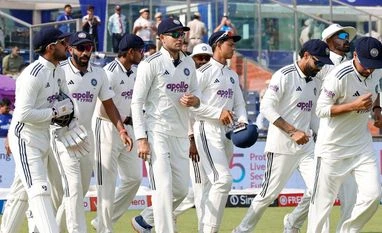 "Captain Gill registers first Test series win; India whitewash Windies 2-0")



