Bangladesh on Monday secured a reduced 19 per cent tariff under a trade agreement with the United States that allows zero tariff on textiles and garments manufactured with US materials. The latest deal brings Dhaka's total tariff down from the earlier 20 per cent.
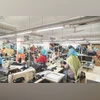
The agreement is set to provide Bangladesh's textile sector, one of India's major competitors, a significant boost. Here is a closer look at the deal and what it means for India’s textile industry.
What does the US–Bangladesh deal say?
According to the trade agreement, Bangladesh's key export-earning ready-made garments made from cotton and synthetic fibres imported from the US will enjoy zero reciprocal duty.
How large is US–Bangladesh textile trade?
According to the US Trade Department, US goods imports from Bangladesh stood at $8.4 billion in 2024. More than half of the US’s total imports from Bangladesh comprised textiles.
Data from Trading Economics shows that articles of apparel (not knit or crocheted) accounted for $4.78 billion, while articles of apparel (knit or crocheted) stood at $2.63 billion in 2024. Other textile articles and worn clothing items together accounted for $190.22 million during the same period.
What does this mean for India’s textile sector?
India has also recently concluded a trade deal with the US under which tariffs on Indian textile and apparel exports have been reduced to
18 per cent from 25 per cent earlier. Textiles are among India’s major exports to the US, along with diamonds, pharmaceuticals and auto parts, and the sector was among the worst hit when 50 per cent US tariffs were imposed from August last year.
While India’s overall tariff rate is marginally lower than Bangladesh’s 19 per cent, Bangladesh will enjoy tariff-free access for certain categories, making it more competitive in those segments. Bangladesh’s lower labour costs also provide an additional competitive advantage.
At the same time, India’s textile industry is larger and more diversified, spanning cotton yarn, fabrics, home textiles, technical textiles and apparel, while Bangladesh’s exports are heavily concentrated in ready-made garments. Also, the US zero-duty access is not for all Bangladeshi garments but only those made using US-produced cotton and man-made fibre.
The revised 18 per cent tariff also gives Indian exporters a two percentage point advantage over another major rival, Vietnam, which faces a 20 per cent tariff.
India has also inked a trade deal with the European Union last month, helping diversify export markets beyond the US. Under the India–EU agreement, zero-duty access for textiles and clothing across all tariff lines, with tariff reductions of up to 12 per cent, would open up the EU’s $263.5 billion import market.
The European Union is India’s second-largest export destination for textiles and apparel after the US, with exports showing steady growth over the past five years.
How is India placed in US apparel imports?
India’s share of the $80 billion US apparel import market rose from about 5 per cent to nearly 7 per cent over the past two years, before dipping temporarily in November due to short-term disruptions.
According to data shared by the Confederation of Indian Textile Industry, US imports from India dipped by 5 per cent, 30.1 per cent and 31.4 per cent in September, October and November last year, respectively. However, imports from India during January–November 2025 rose by 2.3 per cent.
India’s overall goods exports to the US are also significantly higher than Bangladesh’s. Data from the United States Trade Representative shows India exported goods worth $87.3 billion to the US in 2024, compared with Bangladesh’s $8.4 billion.
The share of India's textile exports to the US was slightly higher than that of Bangladesh in 2024. According to Observatory of Economic Complexity (OEC) data, India exported textiles worth $9.88 billion to the US in 2024, while Bangladesh exported $7.62 worth of textiles during the same period.
What role does India play in Bangladesh’s textile supply chain?
The tariff changes also matter because India plays an important role in Bangladesh’s textile ecosystem. Bangladesh imports raw materials such as cotton, yarn and fabrics from India.
While the US–Bangladesh deal encourages the use of US cotton to qualify for zero tariffs, Indian raw materials remain a key input for many Bangladeshi producers, particularly for exports to markets other than the US.
Latest data shows Bangladesh imported $684,105 worth of cotton (not carded or combed) from India in 2024, up from $492,534 in 2023. In contrast, its cotton imports from the US declined to $356,931 in 2024 from $422,529 a year earlier.
Imports of carded or combed cotton from India rose to $18,675 in 2024 from $5,351 in 2023, while similar imports from the US remained negligible at $83.
Indian companies also supply machinery, equipment and intermediate goods that support Bangladesh’s broader textile manufacturing ecosystem, underlining continued interlinkages between the two industries.
India's textiles exports to Bangladesh
According to the data from OEC, cotton yarn formed the top export of India to Bangladesh, worth $109 million in November 2025.
The year-on-year decline was driven mainly by exports of petroleum products (down 47.9 per cent), fresh vegetables (-92.1 per cent), and cotton yarn (-27.5 per cent).

 "Bangladesh textile exports to US go 'tariff-free': What it means for India")


