Associate Sponsors

Russian oil sanctions look porous as India, China absorb excess supply

Shipping and production data show Russian crude exports since November exceeding available non-sanctioned supply, with Indian and Chinese refiners absorbing most of the excess flows

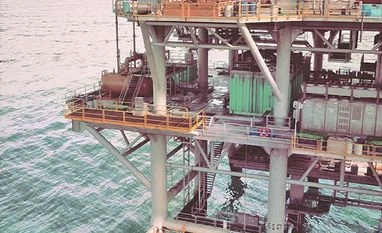
Oil imports constituted 89 per cent of India's total expenditure on Russian fuels, with coal making up the rest.  (Representative Image)
Representative image from file.
S Dinakar Amritsar
6 min read Last Updated : Jan 26 2026 | 11:05 PM IST
A substantial flow of Russian oil to large state-run refiners in India and Chinese teapots (independent refiners not controlled by the state) in November had been observed. Those exceeded non-sanctioned volumes on offer, according to an analysis of the data available from international forecasters and ship-tracking agencies, and interviews with industry officials.
 
Concern over the provenance of the oil supplied in the last two months led private-sector refiners Reliance Industries Ltd (RIL) and HPCL-Mittal Energy (HMEL) to pause fuel purchases from Russia this year, an official from a private-sector refiner said. But Indian Oil and Bharat Petroleum, both state-run, continued their purchase.
 
The distance maintained by RIL, HMEL, Mangalore Refinery and Petrochemicals, and Hindustan Petroleum from Russian oil sent purchases down by 34 per cent this month to date from November, the data from market intelligence agency Kpler shows. This is something that United States (US) Treasury Secretary Scott Bessent last week said when he spoke of possible relief to India from the 25 per cent penalty imposed by US President Donald Trump on Indian exports to America for buying Russian oil.
 
But an analysis of the shipping and production data shows that Russian crude oil flows globally since November far exceeded available non-sanctioned volumes. For instance, India imported 1.85 million barrels per day (bpd) in November, 1.26 million bpd in December and 1.2 million bpd to date in January. This was led by Indian Oil and Nayara Energy, the Kpler data showed.
 
China bought 1.2 million bpd in November, 1.4 million bpd in December and around 1.7 million bpd in January. (In addition, Turkey imports 280,000-400,000 bpd.)
 
After adding Chinese and Indian imports, Russian oil flows averaged around 2.9 million bpd in December, when non-sanctioned output available for export was only 1-1.5 million bpd, according to Business Standard calculations and the shipping and analyst data.
 
Leading global forecasters say 70-80 per cent of Russia’s oil production is sanctioned by Washington, the United Kingdom, and the European Union (EU). Action by Washington and the EU has led to sanctions on 80 per cent of Russian oil production affecting the production of over 8 million bpd, said Craig Kennedy, an associate with Davis Center, Harvard University, in a note. 
 
Russia produced around 9.24 million bpd, of which around 38 per cent, or 3.5 million bpd, was exported.
 
Isaac Levi, head of Europe-Russia Policy & Energy Analysis Team Lead, Centre for Research on Energy and Clean Air, told Business Standard Russia’s top four producers in 2024 made up 71 per cent of the country’s crude oil exports. It was 62 per cent in 2025. 
 
“This (export ratio) may be higher. Kpler does not know some of the exporting companies as well as some of the crude oil-selling companies having part ownership by the larger sanctioned companies, e.g. Rosneft or Lukoil,” Levi said. 
 
Going by Levi’s estimates, Russia’s top four sanctioned producers accounted for exports of around 2.5 million bpd, leaving only 1 million bpd available from non-sanctioned producers in 2024. Last year, around 1.5 million bpd were available from non-sanctioned producers, the data showed.

Russian oil flows

RIL last year was arguably the world’s biggest buyer of seaborne Russian oil, at around 600,000 bpd, exceeding that of Chinese refiners, according to the industry and ship-tracking data.
 
In China, all large state-run companies have stopped imports of seaborne Russian oil, according to maritime intelligence agency Vortexa and the UK’s Energy Intelligence. Only “teapots” continue to buy sanctioned Russian oil. They are also regular buyers of sanctioned fuel from Venezuela and Iran, at deep discounts.
 
Indian Oil and Bharat Petroleum bought a combined 750,000 bpd of Russian oil during January 1-25. That is around 14 per cent of Indian oil import. Nayara Energy, an EU-sanctioned Indian private refiner, was the only other buyer, the Kpler data showed. Indian Oil and Bharat Petroleum have said they do not buy sanctioned fuels. Their representatives were not available for comment.
 
“Political leaders in China, India, and Turkey do not want to be seen as bending over backward before US sanctions,” said Johannes Rauball, an analyst with Kpler.
 
“At the same time, Russian barrels remain highly cost-competitive, and workarounds to maintain flows are likely to emerge.”
 
The question is whether this workaround still includes the oil produced by Rosneft and Lukoil --because non-sanctioned oil is a minority in Russia’s export basket.
 
The Joe Biden administration had sanctioned Gazpromneft and Surgutneft in January last year and the Donald Trump administration debarred exports from Russia’s top two producers Rosneft and LukOil, in November.

Sanctioned flows

Kpler’s data has cited Rosneft or Lukoil supplying Indian state-run refiners in the past few months. Kpler analyst Sumit Ritolia said that while the ship-tracking data might in some cases have showed Rosneft and Lukoil supplying India and China, Indian refiners had said the oil was sold by non-sanctioned intermediaries.
 
A Kpler spokesperson told Business Standard: “While we cannot divulge the sources of information, generally for all buyers/sellers we rely on various sources of information such as market reports.”
 
Indian refiners have pointed to Redwood Global, Alghaf Marine, a Lukoil-linked unit, Ethos Energy, Slavyansk ECO and Vistula Delta, Neftisa, Dakkor, MorExport, Grewale Hub Fze, and East Implex Stream FZE as those that are reselling Russian oil cargos, this newspaper reported early December.
 
“Marketing agents can broaden demand by falsely claiming that sanctioned cargos were produced by unsanctioned Russian companies,” Kennedy said in a note, explaining Russia’s strategy for sanction evasion.
 
“Expanding producer sanctions from 80 per cent to 100 per cent of Russian output would eliminate it completely.”
 
While intermediaries selling Russian oil may change, it does not absolve refiners from violating sanctions because intermediaries are allocated output by the biggest Russian oil producers, an official from a private refiner said.
 
If the producers are themselves sanctioned, then the oil produced from their fields and allotted to traders is also sanctioned, the official added. He said it was difficult to know which field the oil comes from.
 
“As long as Washington is not going after those entities, the buyers may not perceive a risk in dealing with them,” said Vandana Hari, a Singapore-based global oil analyst.  
 

One subscription. Two world-class reads.

Already subscribed? Log in

Subscribe to read the full story →
*Subscribe to Business Standard digital and get complimentary access to The New York Times

Smart Quarterly

₹900

3 Months

₹300/Month

SAVE 25%

Smart Essential

₹2,700

1 Year

₹225/Month

SAVE 46%
*Complimentary New York Times access for the 2nd year will be given after 12 months

Super Saver

₹3,900

2 Years

₹162/Month

Subscribe

Renews automatically, cancel anytime

Here’s what’s included in our digital subscription plans

Exclusive premium stories online

  • Over 30 premium stories daily, handpicked by our editors

Complimentary Access to The New York Times

  • News, Games, Cooking, Audio, Wirecutter & The Athletic

Business Standard Epaper

  • Digital replica of our daily newspaper — with options to read, save, and share

Curated Newsletters

  • Insights on markets, finance, politics, tech, and more delivered to your inbox

Market Analysis & Investment Insights

  • In-depth market analysis & insights with access to The Smart Investor

Archives

  • Repository of articles and publications dating back to 1997

Ad-free Reading

  • Uninterrupted reading experience with no advertisements

Seamless Access Across All Devices

  • Access Business Standard across devices — mobile, tablet, or PC, via web or app

Topics :RussiaIndia-Russia tiesRussia Oil productionBS Reads

Next Story