FTA negotiations: India playing it on the front foot against New Zealand

With elections likely later this year, and given India's influence in the Indo-Pacific, a trade deal is important for the island nation, even more given the turmoil in global trade

Modi, Narendra Modi, Christopher Luxon
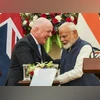
Prime Minister Narendra Modi and New Zealand's Prime Minister Christopher Luxon in New Delhi. (Photo: PTI)
Shreya Nandi New Delhi
7 min read Last Updated : Mar 25 2025 | 4:17 PM IST
At first glance, striking a trade deal with a country whose population is smaller than Pune’s might seem trivial. However, at a time when United States President Donald Trump has waged an unprecedented tariff war, targeting both allies and adversaries alike, India and New Zealand reviving negotiations for a comprehensive free trade agreement (FTA) after a decade long hiatus appears less surprising. 
New Zealand Prime Minister Christopher Luxon, who was in New Delhi last week, even said he looked forward to concluding the trade deal in a record 60 days, indicating Wellington’s urgency in finalising the deal at the earliest. 
With impending elections later this year in October, and New Delhi’s rising influence in the Indo Pacific region, the timing of the trade pact with India is critical for the island nation. 
Another factor influencing the decision of both nations to sign an FTA is rising protectionism around the world, sparked by Washington’s trade policies. Global trade is up for a major reset due to the geopolitical churn, leading countries to increasingly eye bilateral agreements as a workaround. 
India revamped its foreign trade strategy post Covid-19 and started engaging more with the rest of the world through bilateral or regional arrangements. As a result, since 2021, India has signed four trade agreements: with Mauritius, United Arab Emirates (UAE), Australia, and the European Free Trade Association (EFTA) nations. 
FTAs with the United Kingdom (UK) and the European Union (EU) were launched in 2022, but those could not be concluded due to unresolved differences. However, with Trump taking over as the US President in January and with the rapidly-changing changing geopolitical landscape, both these long-pending FTAs have received a renewed political fillip. In fact, during the European Commission President Ursula von der Leyen’s visit to New Delhi last month, India and the trade bloc set an ambitious deadline to sign the FTA by the end of this year.
 
Renewed push for deals
 
Despite the slim timeline, experts said that concluding an FTA with New Zealand in two months is not impossible. Three years ago, India had finalised trade deals with Australia and the United Arab Emirates (UAE) in less than three months. 
Arpita Mukherjee, professor at the Indian Council for Research on International Economic Relations (Icrier) said that signing a trade deal with New Zealand will be possible in 60 days, depending on the scope, coverage, and depth of the agreement, as well as the political urgency on both sides. 
“There’s a rush to sign bilateral trade deals with the EU, UK, Australia and now even New Zealand because it will help India strengthen its position, considering the US’s plan to impose reciprocal tariffs on countries. That’s why India and New Zealand are trying to diversify and strengthen their supply chain,” Mukherjee said. 
To be sure, this is not the first time that India and NZ are trying to sign a trade deal. Both countries had entered into FTA negotiations 15 years ago, but talks stalled after 10 rounds of discussions. There has been no formal round of negotiation since February 2015. 
While thorny issues between New Delhi and Wellington delayed finalisation of the pact a decade ago, talks had also slowed down because both countries, along over a dozen others, were negotiating to be a part of the Regional Comprehensive Economic Partnership (RCEP) - a China-backed Asian trade bloc. India eventually walked out of the RCEP in 2019 after several years of negotiations. 
According to a Delhi-based think tank, a major challenge in the renewed talks will be the disparity in tariff structures: New Zealand’s average import tariff is only 2.3 per cent, with over half of its tariff lines already duty-free. 
This means that Indian goods already have substantial access to the Kiwi market. In contrast, India’s average tariffs are much higher and its government will have to make significant reductions in tariffs, making a traditional FTA less attractive for India, Global Trade and Research Initiative (GTRI) said in a report, adding that as talks resume, both countries will need to find common ground on these issues to move forward successfully. 
 
Trade issues
 
India’s exports of total goods and services to New Zealand stood at $752 million in 2024, while imports of goods and services stood at $791 million. Merchandise exports were $538 million in 2024, while imports stood at $335 million. 
India’s key imports from New Zealand include iron and steel, aluminium, scrap metals, logs and forestry products, wood pulp, wool and apples, kiwi fruit, lamb, and nuts, among other items. On the other hand, India’s key exports include medicines, precious metals and gems, textiles and non-knitted apparel, agricultural equipment and machinery, among other things. 
New Zealand has been pushing for greater market access for agriculture products, including dairy, alcoholic beverages, such as wine, through a potential FTA. However, India has always maintained that dairy products such as milk, butter, cheese, are a ‘red line’ for India due to political sensitivities and that giving greater market access for these products may not be possible.
Although New Zealand is well aware of the sensitivities on the Indian side, it will still want the FTA to include dairy.  “I don’t want to give up on dairy. We are going to try and find a way to make dairy work. Having done a lot of business in India in my past life, I can tell you it’s pretty brutal negotiations but we are up for that,” Luxon told Radio New Zealand in an interview last week. 
Despite the public pressure, Indian dairy industry lobby group India Dairy Association’s (IDA) President RS Sodhi said that their consistent stand has been to keep dairy out of the negotiations. He said as far high-value dairy items are concerned such as exotic cheese, their imports are still allowed but at higher tariffs. “I believe that they (the high tariffs) will continue to remain so,” Sodhi said. 
Wellington’s other area of interest is wine, where New Delhi imposes a 150 per cent import duty, one of the highest in the world. Anant S Iyer, Director General of Confederation of Indian Alcoholic Beverage Companies (CIABC) said the industry is hoping that the Centre will follow the template used for the pact with Australia for any trade deal with New Zealand. This will ensure that the domestic wine industry doesn't end up being subjected to dumping after removal of non-tariff barriers on spirits.
Under the interim trade agreement with Australia, customs duty on Australian wines has been reduced, but in a staggered manner. That apart, the import of wine is also subjected to a cap or tariff quota. 
A trade expert, who did not wish to be named, said that India’s gain, in the case of market access, will be limited since the market is small. On the other hand, India’s main interest has been making gains in the services sector and pushing hard to get more work visas for skilled workers. 
India’s key services exports include IT and software services, telecommunications services to support New Zealand’s digital infrastructure, medical tourism, pharmaceutical research, as well as financial services. New Zealand services exports include education services, tourism services, and fintech services, among others. 
In 2026, both India and New Zealand will mark 100 years of sporting ties and are preparing to celebrate it with a visit of the Indian men’s Cricket team to New Zealand in November 2026. In the similar fashion, the stars seem to be lining up for an FTA which Prime Minister Narendra Modi described last week as a “match winning partnership” for both countries. 
(With inputs from Sanjeeb Mukherjee)
 

One subscription. Two world-class reads.

Already subscribed? Log in

Subscribe to read the full story →
*Subscribe to Business Standard digital and get complimentary access to The New York Times

Smart Quarterly

₹900

3 Months

₹300/Month

SAVE 25%

Smart Essential

₹2,700

1 Year

₹225/Month

SAVE 46%
*Complimentary New York Times access for the 2nd year will be given after 12 months

Super Saver

₹3,900

2 Years

₹162/Month

Subscribe

Renews automatically, cancel anytime

Here’s what’s included in our digital subscription plans

Exclusive premium stories online

  • Over 30 premium stories daily, handpicked by our editors

Complimentary Access to The New York Times

  • News, Games, Cooking, Audio, Wirecutter & The Athletic

Business Standard Epaper

  • Digital replica of our daily newspaper — with options to read, save, and share

Curated Newsletters

  • Insights on markets, finance, politics, tech, and more delivered to your inbox

Market Analysis & Investment Insights

  • In-depth market analysis & insights with access to The Smart Investor

Archives

  • Repository of articles and publications dating back to 1997

Ad-free Reading

  • Uninterrupted reading experience with no advertisements

Seamless Access Across All Devices

  • Access Business Standard across devices — mobile, tablet, or PC, via web or app

Topics :New ZealandUnited Arab EmiratesGlobal Trade

Next Story