
India set to become trusted bridge of connectivity via IMEC: Piyush Goyal
Goyal said that the IMEC is a powerful endorsement of the leadership and partnership of India, Middle East and East Europe
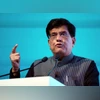 "India set to become trusted bridge of connectivity via IMEC: Piyush Goyal")
Explore Business Standard

Associate Sponsors
Goyal said that the IMEC is a powerful endorsement of the leadership and partnership of India, Middle East and East Europe
Union Minister of Commerce and Industry, Piyush Goyal, addressed the India-Middle East-Europe Economic Corridor (IMEC) High-Level Roundtable on Connectivity and Economic Growth in New Delhi on Wednesday, the Ministry of Commerce and Industry said in a release on Wednesday.
During the event, Goyal said that the IMEC is a powerful endorsement of the leadership and partnership of India, Middle East and East Europe a very forward and visionary concept that has caught the fancy of the world.
As per the statement, the Minister stated that IMEC is not merely a trade route, but a modern-day Silk Route -- a partnership of equals -- that fosters synergy, connectivity, and inclusive prosperity. "It will bring down logistics costs by up to 30 per cent, reduce transportation time by 40 per cent, and create seamless trade linkages across continents," he said.
He added, "We will not only be linking trade; we will be linking civilisations and cultures -- from Southeast Asia to the Gulf, from the Middle East to Central Europe."
Highlighting its potential reach, Goyal added that IMEC could even enhance connectivity to Africa through the Middle East. The corridor would include railways, roadways, energy pipelines, and clean energy infrastructure, including undersea cables. "India is already in discussions with Singapore on clean energy transmission. We are also engaged in dialogue with Saudi Arabia and the UAE," he shared.
As per the statement, Goyal underscored the corridor's emphasis on sustainability and digital connectivity. "This initiative respects sovereignty and territorial integrity. It is not about dominance or creating economic unions. It is a partnership built on mutual trust, inclusivity and sustainability," he said.
Goyal further outlined five key suggestions as a way forward for the IMEC initiative, as per the statement by the Ministry of Commerce and Industry. This included, first, Goyal stressed the importance of viewing IMEC through the lens of a Public-Private Partnership (PPP). He emphasised that leaving the initiative solely to the government would limit its efficiency and financial viability. Instead, he called for a collaborative model where the private sector leads, bringing to the table its real-world expertise, needs, and innovative capabilities. This approach, he noted, would ensure smarter and more cost-effective planning, as the private sector can propose solutions that reflect practical utility. It would also allow policymakers to think systematically while the private sector introduces flexibility and innovation, ensuring the corridor remains viable, efficient, and sustainable in its execution.
Second-- Goyal highlighted the need to focus on Regulatory Connectivity, going beyond just physical infrastructure. He advocated for greater alignment in trade processes, customs procedures, and paperwork among participating nations. He cited India's ongoing regulatory collaboration with the UAE as an example and pointed out that the successful implementation of the corridor would require seamless cross-border movement without excessive checkpoints. Interoperable systems, digitisation, electric vehicle charging ecosystems, and synchronized regulations would be key to unlocking economies of scale. He suggested that common digital payment systems, such as India's Unified Payments Interface (UPI), could serve as a model for enabling seamless financial transactions. With periodic settlement in globally accepted reserve currencies, such mechanisms could reduce transactional friction and banking costs. He proposed that such innovations, combined with virtual trade corridor frameworks like the India-UAE initiative, could be extended through IMEC. These would support broader agreements such as FTAs with GCC and EU countries and bolster joint work in green hydrogen, renewable energy, and supply chain resilience.
As per the statement, in the suggestion, Goyal underlined the need for Innovative Financing Models to support both the development of the corridor and the trade it will generate. He called for active involvement of multilateral financial agencies and suggested exploring instruments like green bonds and the creation of long-term "IMEC Bonds", to fund this transcontinental infrastructure in a sustainable and future-proof manner.
The fourth suggestion recommended by the Minister was active engagement with industry bodies and trade associations, asserting that their insights are essential for designing a corridor that aligns with the real needs of businesses. Such collaboration would help identify existing bottlenecks, promote best practices, and better integrate economies by removing trade frictions.
Lastly, Goyal proposed bringing in Think Tanks and Academia to the visioning and design process. These institutions, he noted, bring creativity, research strength, and long-term thinking. Their involvement would support policy advocacy, contribute to out-of-the-box solutions, and assist in capacity-building efforts along the corridor. He called this a well-rounded package of five initiatives that could help IMEC evolve into a robust, viable, and inclusive project.
The statement noted that Goyal reiterated India's clear and committed vision, and said the country is ready to act as a trusted, reliable bridge connecting regions and catalysing global cooperation, under the guiding spirit of Vasudhaiva Kutumbakam -- the world is one family, the ministry added.
(Only the headline and picture of this report may have been reworked by the Business Standard staff; the rest of the content is auto-generated from a syndicated feed.)
First Published: Apr 17 2025 | 6:48 AM IST

