As 2025 comes to an end, India’s foreign policy calendar this year was defined less by summit theatrics and more by grainy arguments over tariffs, carbon taxes and supply chain rules. Across Washington, Brussels, Riyadh and beyond, New Delhi spent the year trying to lock in market access, hedge against “weaponised” trade and present itself as a reliable node in re-wired global supply chains, especially after the shock Trump tariffs.
On November 28, Union Commerce and Industry Minister Piyush Goyal said at the FICCI Annual General Meeting that India is now talking to “about 50” partners on free trade agreements or similar pacts, including the United States, European Union, Gulf Cooperation Council, Eurasian bloc, Asean, South Korea, Israel, Canada, South Africa and Mercosur (South America).
His warning that trade is being used as a weapon captures the year’s backdrop, a world of new tariffs, carbon border taxes and splintered blocs where India no longer relies on old assumptions.
India-UK CETA: What the deal delivers
On July 24, the India-United Kingdom Comprehensive Economic and Trade Agreement (CETA) was signed. The pact delivers tariff cuts, wider market access and coverage across goods, investment, procurement, services and mobility.
On goods, 99 per cent of Indian exports to the UK will face zero duties, including textiles, leather, engineering goods, marine products, gems and jewellery. India agreed to reduce tariffs on nearly 90 per cent of UK goods. Duties on British whisky and gin will fall from 150 per cent to 75 per cent immediately, reaching 40 per cent over ten years. Import duties on UK-made cars will fall from over 100 per cent to 10 per cent under a quota regime, with provisions for electric and hybrid vehicles.
Beyond goods, the treaty includes chapters on services, digital trade, intellectual property, public procurement and investment. New mobility rules include a “social security contributions” agreement avoiding dual payments for professionals on temporary assignments.
India-EFTA: A tangible win actually takes effect
Another success story for India in 2025 was the Trade and Economic Partnership Agreement (TEPA) with EFTA (European Free Trade Association) bloc - which includes Switzerland, Norway, Iceland and Liechtenstein. Signed in March 2024, TEPA came into force on October 1 this year, making it India’s first FTA with four developed European economies.
As per the treaty, EFTA members made a binding pledge to mobilise $100 billion investment in India over 15 years and generate one million direct jobs. This was the first such written commitment in any Indian trade deal.
On tariffs, EFTA offered concessions on 92.2 per cent of tariff lines, covering 99.6 per cent of India’s exports. India opened up 82.7 per cent of tariff lines, covering 95.3 per cent of EFTA exports, but phased concessions and exempted sectors such as dairy, soya, coal, pharmaceuticals and selected food products.
The government has showcased TEPA as its “model” template with access to high-income markets alongside time for domestic industry to adjust. Whether promised investment and jobs follow will be tested in later years.
India–New Zealand FTA: New avenues for exporters
On December 22, India and New Zealand concluded negotiations on an FTA after roughly nine months of talks. The agreement will slash or eliminate tariffs on around 95 per cent of New Zealand’s exports to India and offer duty-free access for all Indian goods to the Kiwi market, while also opening up services, investment and mobility provisions that aim to spur jobs and deepen economic ties.
New Zealand has pledged about $20 billion in investment over the next 15 years, and both sides expressed confidence the deal could double bilateral trade over the next five years.
While India expressed in the FTA being mutually beneficial for the two sides, some political quarters in New Zealand vehemently opposed the pact. Among the critics was New Zealand's Foreign Affairs Minister Winston Peters, who called it a "low-quality" deal, mainly over the exclusion of dairy and new employment visas for Indians.
India–Oman CEPA: New Delhi’s Gulf playbook
India and Oman signed a Comprehensive Economic Partnership Agreement (CEPA) on December 18. The deal covers bilateral trade of over $10 billion, with Oman granting zero-duty access on 98.08 per cent of its tariff lines, covering 99.38 per cent of India’s exports, including gems and jewellery, textiles, leather, engineering goods, pharmaceuticals and automobiles. India will liberalise 77.79 per cent of its tariff lines, covering nearly 95 per cent of imports from Oman, while protecting sensitive sectors.
The CEPA also expands services access across IT, business, health and education, raises intra-corporate transferee quotas from 20 per cent to 50 per cent, and extends service suppliers’ stay to up to four years, underscoring a strong push on skilled mobility.
Besides Oman, India confirmed it is negotiating an FTA with the Gulf Cooperation Council (GCC) and exploring a similar pact with Qatar. A political dialogue in Riyadh in September reviewed implementation of the India-GCC Joint Action Plan for 2024-28 and agreed on early commencement of FTA talks.
The GCC is India’s largest trade partner grouping, with bilateral trade of around $178 billion in 2024-25. With Qatar, India is aiming to double bilateral trade from $14.15 billion in FY25 to $28-30 billion by 2030. Commerce Minister Piyush Goyal confirmed framework finalisation during his October 2025 Doha visit, targeting a deal by mid-2026.
Trade reset with US: Trump tariffs trouble New Delhi
While the FTAs and CEPA were a success for New Delhi, the trade talks with the United States illustrated the messiness of modern diplomacy. After Washington sharply raised duties on Indian imports under President Donald Trump’s 'reciprocal tariffs' policy, some products have faced effective import duties of up to 50 per cent since late August.
India and the US launched bilateral trade agreement talks in March this year. By November, six rounds had been held, with both capitals describing reciprocal tariffs as the key issue for the first tranche, alongside oil trade. A separate round was held in New Delhi from December 10-12 to finalise an initial package and resolve tariff disputes. However, that too didn't yield any result.
Officials hope the effort lays ground for lifting bilateral trade towards $500 billion by 2030, from about 191 billion dollars at present, under 'Mission 500', launched in February this year. However, despite the stakes, negotiators have avoided promising timelines.
EU negotiations: Racing against the clock of CBAM
This year, talks with the European Union ran on a denser agenda. India and the EU spent 2025 pushing to conclude a comprehensive FTA, an investment protection pact and a geographical indications agreement.
An EU delegation led by Sabine Weyand, director-general for trade, came to New Delhi in November and again in December, with the aim to close the deal by end-2025. Although, sticking points include market access for automobiles and steel, the EU’s Carbon Border Adjustment Mechanism (CBAM), rules of origin and services restrictions.
The numbers underline the stakes. The EU is already India’s largest trading partner in goods, with trade worth roughly $136.5 billion in 2024-25. Indian exports to the bloc stood at $75.85 billion, imports at $60.68 billion, with the EU accounting for about 17 per cent of India’s exports.
Russia and Eurasia: Balancing multiple tracks
Trade diplomacy was not confined only to Western economies and West Asia. During the latest India-Russia summit, Prime Minister Narendra Modi and Russian President Vladimir Putin discussed plans to raise bilateral trade to $100 billion by 2030 from an estimated $69 billion in the year ended FY25. They also signalled intent to move ahead on a free trade agreement between India and the Eurasian Economic Union.
But India’s oil purchases from Russia and associated Western sanctions also fed into higher US tariffs, showing how interlinked these negotiations have become.
What 2025 revealed about India’s trade diplomacy
Across the EFTA pact’s entry into force, the bargaining with Washington, the race with Brussels, the Gulf track and Eurasian discussions, one pattern emerged this year: New Delhi now treats trade agreements as instruments of foreign policy rather than narrow technical exercises.
However, officials remain wary of premature celebration. Several marquee deals remain unfinished. Each carries domestic political costs where farmers or small manufacturers fear import surges or tighter climate rules. Yet 2025 has made one thing clearer, that in a world of shifting tariffs, carbon borders and contested supply chains, India wants to be inside the room where trade rules are written.

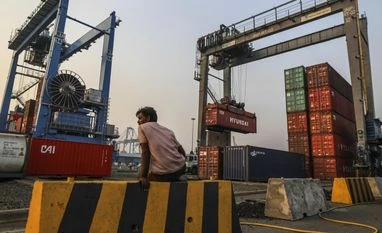 "From UK FTA to US tariff duels: What 2025 revealed about India's tradecraft")


