MMRDA plans ₹1.05 trillion integrated tunnel road network across Mumbai

The 70-km underground corridor will link Coastal Road, BKC, and the airport, creating a third mode of travel beneath the city
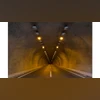
Kharghar-Turbhe Tunnel
MMRDA said the network is expected to divert through-traffic underground, reduce congestion on surface roads, and reclaim valuable urban space. | Representative Image
Prachi Pisal Mumbai
3 min read Last Updated : Nov 09 2025 | 11:23 PM IST
The Mumbai Metropolitan Region Development Authority (MMRDA) has begun work on a detailed project report (DPR) for an integrated tunnel road network worth ₹1.05 trillion across the Mumbai Metropolitan Region (MMR).
 
The proposed project aims to ease congestion and improve connectivity across the city.
 
According to MMRDA, the initiative represents a significant step towards introducing Mumbai’s “third mode” of travel —alongside its existing surface road and metro rail systems.
 
MMRDA is an apex body for planning and coordination of development activities in the MMR.
 
The underground corridor is proposed as a high-capacity mobility network linking the Mumbai Coastal Road, Bandra-Kurla Complex (BKC) high-speed rail station, and Chhatrapati Shivaji Maharaj International Airport (CSMIA).
 
It is also expected to help decongest major routes such as the Western Express Highway (WEH) and SV Road.
 
Spanning about 70 km, the tunnel system will be developed in three phases and designed to complement Mumbai’s surface and metro infrastructure. MMRDA said the multi-modal network would enhance transport efficiency, reduce air pollution, and cut travel time.
 
The first phase, stretching around 16 km, will connect Worli Sea Link, BKC, and the Airport Loop while easing congestion on WEH and SV Road. This phase, estimated to cost Rs 24,000 crore, will integrate with the Mumbai–Ahmedabad high-speed rail corridor.
 
The second phase, covering about 10 km, will link the Eastern Express Highway (EEH) and WEH to reduce cross-city congestion. It is estimated to cost Rs 15,000 crore.
 
The third phase, a 44-km north–south corridor, will provide a continuous underground route across the city for both passenger and freight traffic. This phase is expected to cost Rs 66,000 crore.
 
Given the city’s high population density and limited land availability, the underground network is being positioned as a sustainable solution that expands capacity without disrupting surface-level infrastructure. The project will be implemented in phases, based on traffic needs and future demand.
 
MMRDA said the network is expected to divert through-traffic underground, reduce congestion on surface roads, and reclaim valuable urban space.
 
On September 30, MMRDA chairperson and Maharashtra deputy chief minister Eknath Shinde approved the appointment of a consultant for the techno-economic feasibility study and DPR preparation for the first phase. The tender was floated on October 10, with the pre-bid meeting held on October 17. Bids are scheduled to open on November 17.
 
Chief Minister Devendra Fadnavis said the proposed network marks a major leap in achieving seamless, multi-level connectivity across Mumbai.
 
“Mumbai’s transformation into a global economic powerhouse depends on its ability to move people and goods efficiently,” he said.
 
Shinde added that the initiative reflects Mumbai’s shift toward multi-layered, future-ready infrastructure planning. “Integration with the Coastal Road, metro corridors, and the bullet train will make ‘Mumbai in Minutes’ a reality,” he said.
 
MMRDA Metropolitan Commissioner Dr. Sanjay Mukherjee said the DPR will assess the project’s technical feasibility, environmental impact, and economic viability. “Once the DPR is finalised and approved, the project will be implemented in phases in line with traffic requirements and the city’s growth in mobility demand,” he said.
 
The appointed consultant will evaluate geological, environmental, and socio-economic factors, design tunnel alignments, and assist MMRDA in bid process management.
 
Once completed, MMRDA said, the integrated tunnel network is expected to serve as a subterranean expressway, reducing congestion, cutting emissions, and enabling faster travel between key business and residential districts.

One subscription. Two world-class reads.

Already subscribed? Log in

Subscribe to read the full story →
*Subscribe to Business Standard digital and get complimentary access to The New York Times

Smart Quarterly

₹900

3 Months

₹300/Month

SAVE 25%

Smart Essential

₹2,700

1 Year

₹225/Month

SAVE 46%
*Complimentary New York Times access for the 2nd year will be given after 12 months

Super Saver

₹3,900

2 Years

₹162/Month

Subscribe

Renews automatically, cancel anytime

Here’s what’s included in our digital subscription plans

Exclusive premium stories online

  • Over 30 premium stories daily, handpicked by our editors

Complimentary Access to The New York Times

  • News, Games, Cooking, Audio, Wirecutter & The Athletic

Business Standard Epaper

  • Digital replica of our daily newspaper — with options to read, save, and share

Curated Newsletters

  • Insights on markets, finance, politics, tech, and more delivered to your inbox

Market Analysis & Investment Insights

  • In-depth market analysis & insights with access to The Smart Investor

Archives

  • Repository of articles and publications dating back to 1997

Ad-free Reading

  • Uninterrupted reading experience with no advertisements

Seamless Access Across All Devices

  • Access Business Standard across devices — mobile, tablet, or PC, via web or app

Topics :Mumbaimetro projectsIndian EconomyMMRDA

Next Story



