Bridging the vast trade imbalance between the two countries will sit at the heart of Russian President Vladimir Putin’s two-day state visit to New Delhi from Thursday, with both sides set to explore lowering duties and easing non-tariff barriers. Agreements are also expected across sectors ranging from the mobility of Indian skilled and semi-skilled workers to Russia, to cooperation in health care.
Officials at the Ministry of External Affairs (MEA) on Tuesday described the India-Russia mobility agreement, finalised and due to be signed during Putin’s visit, as the “single most important development” since the previous India–Russia Annual Summit in 2024, when Prime Minister Narendra Modi travelled to Russia.
They pointed to Russia’s need for manpower. From just 10,000 a couple of years ago, as many as 100,000 Indians now work in Russia, while nearly 25,000 Indians are studying there, officials said. Further pacts are expected to deepen cooperation in academic research, culture and media relations.
In a video-streamed news conference on Tuesday afternoon, Kremlin Spokesperson Dmitry Peskov said Moscow wants to build an “architecture” that insulates its trade with India from pressure exerted by third countries. He said New Delhi’s procurement of Russian crude oil may dip “for a brief period” because of western sanctions, but insisted Russia is taking steps to secure supplies.
Peskov said addressing India’s concerns over a massive trade deficit, cooperation on small modular nuclear reactors, and the expansion of defence and energy ties could all feature prominently in Friday’s summit talks. He said Russia has “deep experience in performing under the regime of these illegal sanctions” on its oil and is exploring ways to keep India–Russia oil flows steady.
Putin will arrive in New Delhi on Thursday for the 23rd India-Russia Annual Summit -- his first visit to India since 2021, and his first since the outbreak of the Russia-Ukraine conflict. The trip has been designated a rare “state visit”; most previous summit trips, dating back to 2000, have been “working” or “official” visits. The timing is also notable as India confronts 50 per cent US tariffs, including a 25 per cent punitive levy for New Delhi’s purchase of Russian crude oil.
MEA officials said the delegations led by Putin and Modi will take up bilateral defence ties and cooperation in the civil nuclear sector, though no major defence agreements are expected to be announced.
India’s imports of Russian crude oil have slipped in recent weeks under the shadow of US tariffs, but officials noted that Moscow is widening its import basket from India. Since last month, Russia has begun importing potatoes and pomegranates from India, and is keen to increase imports of marine products. India, in turn, is looking to scale up fertiliser imports from Russia, currently at three to four million metric tonnes annually. India’s imports of Russian goods and services amount to roughly $65 billion, most of it crude oil, while Russia’s imports from India stand at around $5 billion.
A large business delegation covering infrastructure, transport, energy, construction, agro-products and fertilisers is accompanying Putin. Indian and Russian business leaders meet on Wednesday to explore ways to expand trade, with Russia signalling readiness to reduce duties and non-tariff barriers. Both sides are eager to clinch a free trade agreement between India and the Russia-led Eurasian Economic Union “as soon as possible”, which officials say could help boost India’s pharmaceutical exports.
At his press conference, Peskov said: “We should create an architecture of our relationship that must be free of any influence coming from any third countries. We have to secure our relationship; we have to secure our trade that brings mutual benefit. We have to secure our trade from pressure from abroad.” He also called for a new global trading system in which dollar-denominated payments are not used as a “political tool”, a theme likely to feature in the Modi-Putin talks. “We understand the pressure on India,” he added.
On defence ties, Peskov highlighted the joint production of BrahMos missiles as an example of high-technology collaboration. “We are developing quite a variety of very complicated systems. We are ready to share with India our experience,” he said. He indicated the Russia-Ukraine conflict will also loom large at the summit.
Indian officials said they had taken note of an editorial in a leading Indian newspaper written by three envoys of Western European countries, calling it “unacceptable” for foreign diplomats to advise India on its relations with a third nation.
In a related development, Russia’s Lower House of Parliament, the State Duma, on Tuesday ratified a key military pact with India ahead of Putin’s visit. The Reciprocal Exchange of Logistic Support (RELOS) agreement, signed on 18 February, was sent to the Duma last week for ratification by Prime Minister Mikhail Mishustin. RELOS lays out the procedures for deploying military formations, warships and aircraft between the two countries and the framework for mutual logistical support.

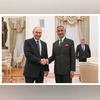 "To bridge trade gap, India and Russia may cut duties, ease barriers")

