
Rajasthan polls: Ashok Gehlot's failure cannot erase his past successes
The Gandhis wanted Gehlot to quit state politics and become the next national president of the Congress. But Gehlot succeeded in staying put
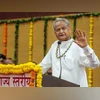 "Rajasthan polls: Ashok Gehlot's failure cannot erase his past successes")
WebinarsNew
Deep DiveNew
Explore Business Standard
The Gandhis wanted Gehlot to quit state politics and become the next national president of the Congress. But Gehlot succeeded in staying put
I sometimes think of leaving it, but the chief minister's post doesn't leave me, Ashok Gehlot famously said earlier this year, in part as a signal to the Congress top brass not to pick someone else for the job if the party wins the assembly polls.
Over the past several months Gehlot, 72, tried every trick up his sleeve - he has his magician father's blood running through his veins, after all - to retain the post.
Last year, MLAs loyal to him even defied the party high command by boycotting the Congress Legislature Party meeting summoned in Jaipur to possibly pave the way to the CM's post for Sachin Pilot, who in 2020 led a rebellion against the older colleague.
The Gandhis wanted Gehlot to quit state politics and become the next national president of the Congress. But Gehlot succeeded in staying put.
He then set himself on the task of trying to get the Congress back in a state that for the last three decades has never returned the same party to office twice in a row.
Gehlot introduced a slew of welfare measures, including cheaper cooking gas for the poor and a Rs 25-lakh medical insurance scheme. The old pension scheme was back for government employees.
And the Congress stalwart ensured that he was identified with each scheme. Had the Congress won, most observers feel, it would have been forced to pick Gehlot over Pilot again as CM.
But the kursi' did leave him this time. On Sunday evening, Gehlot conceded defeat even as the final results of the counting in Rajasthan were yet to come in but it was clear that the BJP was set to cross the majority-mark. Polling was held in 199 of the 200 seats in the assembly.
Gehlot's failure, however, cannot erase his past successes, attributed mainly to his mass connect.
He has been the state's chief minister thrice, in 1998-2003, 2008-13 and 2018-23. Only three other leaders have done this -- Mohan Lal Sukhadia of the Congress was the CM four times, while Haridev Joshi (Congress) and Bhairon Singh Shekhawat (BJP) were chief ministers thrice.
Gehlot began with student politics. He became the president of the Rajasthan unit of the National Student Union of India (NSUI) in 1974, a post he held up to 1979.
He has represented Jodhpur in the Lok Sabha five times. In Jodhpur's Sardarpura assembly segment, he had won five times in a row since 1999 before these elections -- and was on course for the sixth success.
Gehlot, the story goes, came to then prime minister Indira Gandhi's notice for his work with refugees from East Bengal. He remained in the good books of Rajiv Gandhi as well.
The party acknowledged his leadership as the All India Congress Committee (AICC) in-charge for Gujarat, when he led a tough fight on Prime Minister Narendra Modi's home turf in 2017. Next year, he was appointed AICC general secretary (organisation).
Earlier at the AICC, he has been in charge of the Seva Dal and the party's Uttar Pradesh and Delhi units.
Gehlot has been the Rajasthan Congress Committee president thrice, the first time when he was just 34.
In 1980, Gehlot became a Member of Parliament for the first of his five times. At the Centre, he has been the junior minister for Tourism and Civil Aviation. He has also led the Sports and Textiles ministries.
He is married to Sunita Gehlot and the couple has a daughter and a son.
His son Vaibhav Gehlot, who is the president of the Rajasthan Cricket Association, contested the 2019 Lok Sabha elections from Jodhpur but lost to BJP's Gajendra Singh Shekhawat, who later became Jal Shakti minister in the Modi government.
Gehlot and Shekhawat don't tire of running each other down. The outgoing CM has accused the Union minister of trying to topple his government, and of being involved in the Sanjivani Credit Cooperative Society scam', an allegation over which Shekhawat has taken him to court.
As the counting trends came in, Shekhawat alluded to Gehlot's early days as his magician father's assistant, and also to the politician's reputation for out maneuvering his rivals. The magic has ended and Rajasthan has come out of the spell of the magician, he said.
(Only the headline and picture of this report may have been reworked by the Business Standard staff; the rest of the content is auto-generated from a syndicated feed.)
First Published: Dec 03 2023 | 6:28 PM IST

