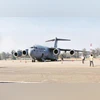
The use of a military aircraft by the US to bring civilian deportees back to India and shackling them during the long flight suggest that the bilateral relationship is not all roses. Foreign policy analysts say the new administration of US President Donald Trump has sent a message to India through this, and India’s cooperation shows it wants to shake off the label of being a major source of illegal immigration to the US.
The US flew back 104 unauthorised migrants, at an estimated cost of $1 million, on a C-17 plane to India on February 5. The US has deported “illegal aliens” to India year after year (more than 15,000 since 2009, according to Indian government data) — all on commercial or chartered flights. The massive C-17 generally carries military personnel, equipment, and cargo. India used a similar aircraft to send medical supplies to China and evacuate hundreds of Indians in 2020, following the Covid-19 outbreak.
This round of deportation — just days ahead of Prime Minister Narendra Modi’s planned visit to the US — led to an uproar in Parliament, with Opposition Members of Parliament demanding an explanation, especially about the treatment of the migrants, who are from Gujarat, Haryana, and Punjab. In his reply, External Affairs Minister S Jaishankar said restraining deportees was a standard US procedure and urged a crackdown on illegal migration networks in India.
“The strategic direction of the relationship will not be affected. But the perception has been affected,” Navtej Sarna, India’s former ambassador to the US, said on the incident’s bearing on India-US relations. The two countries will need to work together to manage public perceptions in the future, Sarna added.
Both governments have described the bilateral relationship as a “strategic partnership”. A new 10-year defence agreement is expected to be signed.
Even so, India should not let this incident slide; otherwise, more such instances could strain relations, Arvind Kumar, a professor of US studies at Jawaharlal Nehru University in New Delhi, said.
“India should negotiate from a position of strength. Therefore, it must not shy away from reacting to issues or even being proactive when needed,” Kumar said, adding that, moving forward, India should also be “guarded” in difficult dealings with the US.
The US has flown back unauthorised migrants in military aircraft to Colombia, Guatemala, and Ecuador. Mexico refused permission for a US C-17 plane with deportees to land. Trump first announced 25 per cent import tariffs on Mexico and Canada. Then, he gave the two countries a 30-day pause to enhance border security.
India, which has lowered import tariffs by 10 per cent on heavy-duty bikes, including the American-made Harley-Davidson, will be under pressure to make defence purchases from the US to avoid a trade war. India’s current surplus with the US, which is its second-largest trading partner, is ₹1.94 trillion, according to government data. India’s exports to the US include electrical and electronic items, gold, and textiles.
Since 2008, India has signed deals worth more than $20 billion to buy military aircraft (C-130J, C-17, and P-81), helicopters (Chinook, Seahawk, and Apache), naval missiles (Harpoon), and artillery weapons (howitzers), among other defence goods, from the US. The two militaries hold regular all-service exercises. In 2023, the two countries entered an agreement to collaborate on critical and emerging technologies.
“Trump has the discretion to apply waivers in key policy issues such as deportation,” Kumar said. “India is a friend of the US.”
Over time, India has drawn closer to the US with a shared wariness of China’s rise. US Secretary of State Marco Rubio said in a recent statement, released by the US embassy in India, that US-India ties “will be a defining relationship of the 21st century”.
The topics of discussion between Modi and Trump in the US over February 12-13 will include defence, trade, investment, technology, and Indo-Pacific security. Migration is expected to feature in the talks. Foreign Secretary Vikram Misri told reporters on February 7 that India has expressed its concerns to the US about the treatment of the Indian deportees.
The identities of almost 300 people are being verified by India as they await the next round of deportation from the US.
Pew Research Center estimated in 2022 that 750,000 unauthorised Indian immigrants were living in the US. India is the third-largest origin country, after Mexico and El Salvador, of unauthorised migration to the US.