The meetings between their respective foreign and commerce ministers since May, and the second meeting between Prime Ministers Narendra Modi and Mark Carney, which took place on Sunday evening in Johannesburg, have restored with some success the robustness that had marked India-Canada bilateral ties before the diplomatic spat in 2023-24.
Canada has also moved closer to “modernising” its citizenship-by-descent law, after a Bill to amend the Act received royal assent. The move is expected to pave the way for thousands of Indian-origin families to secure Canadian citizenship, and further boost people-to-people contacts between the two countries.
The new Canadian citizenship law will allow a Canadian parent to pass citizenship on to their children born or adopted outside Canada on or after the date the Bill comes into force, provided they have a substantial connection to Canada. This approach supports fairness for families while reinforcing the principle that real, demonstrated ties to Canada guide citizenship by descent, the Canadian government said on Friday.
Canada hosts one of the largest Indian diaspora abroad. Canada is home to a 2.9 million-strong Indian diaspora, including 1 million non-resident Canadians. Over 427,000 Indians are currently studying in Canada.
Modi-Carney meeting
At their meeting in Johannesburg on Sunday evening on the sidelines of the Group of 20 (G20) Summit, Modi and Carney appreciated the “renewed momentum” in ties since their June 2025 meeting in Kananaskis on the margins of the G7 Summit, and the launch of the “new road map” for bilateral engagement by their respective foreign ministers in October 2025.
Carney accepted Modi’s invitation to him to visit India soon. The two leaders welcomed the India-Australia-Canada trilateral technology and innovation partnership — the Australia-Canada-India Technology and Innovation (ACITI) Partnership that was announced in Johannesburg on Saturday.
Under the partnership, the three sides agreed to strengthen their cooperation in critical and emerging technologies, including nuclear energy, diversification of supply chains, and artificial intelligence (AI). The initiative will lay stress on green energy innovation and building resilient supply chains, including in critical minerals. The two leaders agreed that officials should convene in the first quarter of 2026 to take the initiative forward.
Modi and Carney also agreed to begin negotiations on a “high-ambition” Comprehensive Economic Partnership Agreement (CEPA), aimed at doubling bilateral trade to $50 billion by 2030. The two sides noted the ongoing discussions on expanding civil nuclear collaboration, including through long-term uranium supply arrangements. India and Canada had had trade worth $23.66 billion last year, according to the Ministry of External Affairs (MEA).
Canada and India had been negotiating a trade deal before diplomatic relations plummeted in September 2023 after then Canadian Prime Minister Justin Trudeau and other officials said there was evidence the Indian government orchestrated the killing of a Sikh activist in the Vancouver region. India had rejected the allegations. Bilateral relations have looked up after Carney was elected his country’s Prime Minister.
Speaking to reporters just ahead of his meeting with Modi, Carney said it was important to get better trade access to “one of the world’s largest and fastest-growing economies”. The two countries’ law enforcement and national security agencies are also continuing to have conversations, he said.
Canada, which sells much of its exports to the US, is trying to diversify markets because of protectionism from Washington. Carney has set an ambitious goal of doubling non-US exports by 2035. At his press conference in Johannesburg, Carney said the world can make progress on a range of issues without the US, and that consensus reached at a G20 leaders’ meeting in Johannesburg this weekend carries weight despite a boycott by US President Donald Trump’s administration.
“The Summit brought together nations representing three-quarters of the world’s population, two-thirds of global gross domestic product (GDP), and three-quarters of the world’s trade, and that’s without the US formally attending,” Carney told a press conference in Johannesburg on Sunday. “It’s a reminder that the centre of gravity in the global economy is shifting,” he added.
The Canadian PM spoke of his efforts to strengthen ties with nations ranging from South Africa to India and China. “We’re signing new deals and finding new investors to fuel our plans for Canada’s economic ambition. We’ll expand trade and catalyse investment in increased partnerships across a range of areas from AI to energy in the Indo-Pacific and Europe,” he said.
On August 28, the two sides jointly announced the reinstating of high commissioners. The national security advisers (NSAs) of the two countries met in New Delhi on September 18 to advance India-Canada security cooperation, and senior diplomats from the two sides met on September 19. Indian External Affairs Minister S Jaishankar and his Canadian counterpart Anita Anand met in New York on the sidelines of the UN General Assembly on September 29. Anand travelled to India from October 12 to 14 for foreign office consultations between the two sides.
The two sides have also decided to re-establish the Canada-India Ministerial Energy Dialogue (CIMED), promote two-way trade in oil and natural gas, hold the first Critical Minerals Annual Dialogue on the margins of the Prospectors and Developers Association Conference in Toronto in March 2026, and relaunch the Joint Science and Technology Cooperation Committee (JSTCC).

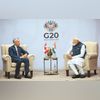 "PM Narendra Modi, Mark Carney hail renewed momentum in bilateral ties")



