India unlikely to extradite former PM Sheikh Hasina to Bangladesh

New Delhi doesn't want to send 'wrong message' to the world that it doesn't 'stand by friends'
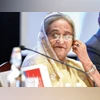
Sheikh Hasina
Sheikh Hasina, the former prime minister of Bangladesh
Satarupa Bhattacharjya New Delhi
3 min read Last Updated : Mar 26 2025 | 9:21 PM IST
India is unlikely to accept Dhaka’s request to extradite Sheikh Hasina, the former prime minister of Bangladesh, who was ousted in a student-led movement and fled her country in August last year. She has since been living in self-exile in New Delhi.
 
An Indian government official, with knowledge of the matter, told Business Standard that if India were to agree, a wrong message would go to the world, especially to other countries in the region — “friends and foes alike”.
 
The official, who spoke on the condition of anonymity, said: “What signal would we be sending — that we don’t stand by our friends?”
 
Other than India’s historical relationship with Bangladesh and China’s reach in South Asia, Pakistan’s influence, more apparent since Hasina’s fall, has become a concern for New Delhi.
 
“Any perceived act of weakness would be detrimental to India’s position,” the official said.
 
In December, the transitional government in Dhaka made a formal request to India for Hasina’s extradition. India has not responded yet.
 
The transitional government, which has alleged human rights violations by Hasina during her 15-year tenure, including her attempt to quell last year’s protests with brutal force (hundreds were killed), has requested Interpol, the world police network, to issue a notice for her arrest.
 
Previously, Hasina lived in India for six years after her father Sheikh Mujibur Rahman and most of her other family members were assassinated in a coup in 1975.
 
Riva Ganguly Das, India’s former ambassador to Bangladesh, said: “The world will judge us by how we treat our friends.”
 
Asked about the legal aspect of an existing treaty between India and Bangladesh, she pointed to the section under which extradition could be refused if the offence for which it is requested is of a political nature.
 
India is worried about the lack of political stability in Bangladesh, where the transitional government is being led by Chief Adviser Muhammad Yunus, a Nobel Peace Prize winner.
 
“It is in nobody’s interest that the instability continues. The people of Bangladesh want an election,” Das said.
 
However, it is unclear when Bangladesh’s next election would be held.
 
The transitional government has sought a meeting between Yunus and Prime Minister Narendra Modi on the sidelines of a conference of South and Southeast Asian countries in Bangkok in April. The Indian government has not responded yet. Foreign Secretary Vikram Misri visited Dhaka in December.
 
Yunus is expected to meet Chinese President Xi Jinping in Beijing this week. It is unclear if Yunus would discuss the topic with Xi. But India is unlikely to change its position on Hasina.
 
China analyst and member of India’s National Security Advisory Board Jayadeva Ranade said, “We are not going to ditch a friend. It will be effectively sentencing her to death. That will be unacceptable even to the international community.”
 
The Indian government is also concerned about Pakistan’s influence that goes beyond Islamist groups in Bangladesh.
 
“More than China, it is Pakistan that India would be worried about, from a security perspective, in the changed scenario,” Das said.
 
India and Bangladesh share a border of some 4,000 km. India has significantly tightened its border control since August.
 
“The instability in Bangladesh poses a security risk for India,” Ranade said.
 
India is Bangladesh’s largest trading partner in South Asia, with bilateral trade at $14.01 billion in 2023-24, according to Indian government data. But talks on economic and water-sharing (Teesta River) agreements are currently stalled.
 

One subscription. Two world-class reads.

Already subscribed? Log in

Subscribe to read the full story →
*Subscribe to Business Standard digital and get complimentary access to The New York Times

Smart Quarterly

₹900

3 Months

₹300/Month

SAVE 25%

Smart Essential

₹2,700

1 Year

₹225/Month

SAVE 46%
*Complimentary New York Times access for the 2nd year will be given after 12 months

Super Saver

₹3,900

2 Years

₹162/Month

Subscribe

Renews automatically, cancel anytime

Here’s what’s included in our digital subscription plans

Exclusive premium stories online

  • Over 30 premium stories daily, handpicked by our editors

Complimentary Access to The New York Times

  • News, Games, Cooking, Audio, Wirecutter & The Athletic

Business Standard Epaper

  • Digital replica of our daily newspaper — with options to read, save, and share

Curated Newsletters

  • Insights on markets, finance, politics, tech, and more delivered to your inbox

Market Analysis & Investment Insights

  • In-depth market analysis & insights with access to The Smart Investor

Archives

  • Repository of articles and publications dating back to 1997

Ad-free Reading

  • Uninterrupted reading experience with no advertisements

Seamless Access Across All Devices

  • Access Business Standard across devices — mobile, tablet, or PC, via web or app

Topics :Sheikh HasinaBangladeshDhaka

Next Story



