
Massive air strike destroys one of Ukraine's largest power plants
Speaking in Moscow, Russian President Vladimir Putin cast the attacks on Ukrainian energy facilities as a response to Ukrainian strikes that targeted Russian oil refineries
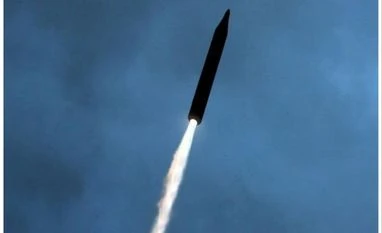 "Massive air strike destroys one of Ukraine's largest power plants")
Explore Business Standard

Associate Sponsors
Co-sponsor
Speaking in Moscow, Russian President Vladimir Putin cast the attacks on Ukrainian energy facilities as a response to Ukrainian strikes that targeted Russian oil refineries
A massive missile and drone attack destroyed one of Ukraine's largest power plants and damaged others, officials said Thursday, part of a renewed Russian campaign targeting energy infrastructure.
The Trypilska plant, which was the biggest energy supplier for the Kyiv, Cherkasy and Zhytomyr regions, was struck numerous times, destroying the transformer, turbines and generators and leaving the plant ablaze. As the first drone approached, workers hid in a shelter, saving their lives, said Andrii Gota, chairman of the supervisory board of the state company that runs the plant, Centrenergo.
They watched the plant burn, surrounded by dense smoke and engulfed in flames. It's terrifying, said Gota. Hours later, rescuers were still dismantling the rubble.
Speaking in Moscow, Russian President Vladimir Putin cast the attacks on Ukrainian energy facilities as a response to Ukrainian strikes that targeted Russian oil refineries.
The Trypilska plant supplied electricity to 3 million customers but none lost power because the grid was able to compensate since demands are low at this time of year. Still, the consequences of the strikes could be felt in the coming months, as air conditioning use ramps up with summer.
At least 10 other strikes overnight damaged energy infrastructure in Kharkiv, Ukraine's second-largest city. Foreign Minister Dmytro Kuleba said more than 200,000 people in the region, which has been struck repeatedly, were without power.
Ukraine's largest private energy operator, DTEK, described the slew of strikes as one of the most powerful attacks this year, while Energy Minister Herman Halushchenko told reporters it was a large scale, enormous, missile attack that affected our energy sector very badly.
Russia has recently renewed strikes on Ukrainian energy facilities, and attacks last month blacked out large parts of the country a level of darkness not seen since the first days of the full-scale invasion in 2022.
The volume and accuracy of the attacks have alarmed the country's defenders and left officials scrambling for better ways to protect energy assets. The strikes have also tested Ukraine's ability to make quick repairs.
Ukraine's leaders have pleaded for more air defence systems to ward off such attacks, but those supplies have been slow in coming.
Today's situation demonstrates that there's nothing left to shoot down the missiles, Gota said.
(Only the headline and picture of this report may have been reworked by the Business Standard staff; the rest of the content is auto-generated from a syndicated feed.)
First Published: Apr 12 2024 | 3:33 PM IST

