
New Indonesian President Subianto visits China in first overseas trip
Xi vowed support for Subianto's administration, thanking him for visiting China first and saying he believed Indonesia will adhere to an independent development path
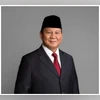 "New Indonesian President Subianto visits China in first overseas trip")
Explore Business Standard
Xi vowed support for Subianto's administration, thanking him for visiting China first and saying he believed Indonesia will adhere to an independent development path
Indonesian President Prabowo Subianto pledged to maintain close ties with China during a meeting with Chinese leader Xi Jinping in Beijing on Saturday, his first overseas stop since he took office three weeks ago.
Subianto is seeking to strengthen relations with China, Indonesia's largest trading partner and one of its most important foreign investors. This is his second visit to Beijing this year, following a visit in April as president-elect, the first overseas trip he made after winning the Indonesian presidential election in February.
Indonesia considers China not only as a great power but as a great civilization, Subianto said at the meeting, adding that the two countries had had close relations for centuries. Therefore, I think it is only natural that now in the present situation, geopolitical and geoeconomic, that Indonesia and China have become very close partners and in many, many fields.
Xi vowed support for Subianto's administration, thanking him for visiting China first and saying he believed Indonesia will adhere to an independent development path, continue to make new achievements in the journey of achieving national prosperity and national rejuvenation, and play an important role on the international and regional stage.
Earlier on Saturday, Subianto met with other top Chinese leaders, including Premier Li Qiang and Zhao Leji, who is chairman of the National People's Congress and considered the No. 3 official in the ruling Communist Party.
Subianto is on the first stop on a multi-country tour. He is scheduled to visit five other nations, including the US and the UK, suggesting that Indonesia will continue to pursue its longstanding stance of neutrality between Beijing and Washington.
Subianto, 73, is a wealthy ex-general with ties to both Indonesia's popular outgoing president and the country's dictatorial past. He presented himself as heir to the immensely popular President Joko Widodo, the first Indonesian president to emerge from outside the political and military elite. Subianto vowed to continue the modernisation agenda that has brought rapid growth and vaulted Indonesia into the ranks of middle-income countries.
Indonesia's economic ties with China flourished during Widodo's decade in office. China became Indonesia's largest trading partner and plowed billions into major infrastructure projects such as the Jakarta-Bandung high-speed railway, which opened last October, and Cirata, Southeast Asia's largest floating solar power project, on a reservoir in West Java, 130 km (80 miles) from the capital, Jakarta.
Subianto said during the meeting with Xi that he will preside over the signing of over $ 10 billion worth of deals during a meeting between Chinese companies and the Indonesian Chamber of Commerce and Industry.
Subianto is singling a more active foreign policy for Indonesia, visiting over 20 countries as president-elect. Days after his inauguration, Indonesia expressed interest in becoming a full member of the BRICS bloc of developing economies that includes Brazil, Russia, India, China and South Africa.
Indonesia has maintained a relatively neutral stance amid rising tensions between China and its Southeast Asian neighbours over territorial disputes in the South China Sea. China, the Philippines, Vietnam, Malaysia, Taiwan and Brunei have overlapping claims in the resource-rich and busy waterway.
The Philippines has boosted security ties with Washington since President Ferdinand Marcos Jr took office in 2022, shifting back from the more China-friendly policy of his predecessor, Rodrigo Duterte. China and the Philippines have been engaging in repeated high-seas confrontations since last year, sparking fears of a larger conflict that could put China and the US on a collision course.
Though Indonesia's leaders say they do not have a formal territorial dispute with China over the South China Sea, China's nine-dash line, which it uses to roughly demarcate its claim to most of the South China Sea, overlaps with a section of Indonesia's exclusive economic zone that extends from the Natuna Islands.
Last month, Indonesian patrol ships repeatedly drove away a Chinese coast guard vessel from a survey vessel in the disputed area, according to Indonesian authorities. Jakarta has become increasingly protective of its rights in the region as Chinese ships have regularly entered the area Indonesia calls the North Natuna Sea, fueling tensions between the countries.
(Only the headline and picture of this report may have been reworked by the Business Standard staff; the rest of the content is auto-generated from a syndicated feed.)
First Published: Nov 09 2024 | 5:53 PM IST

