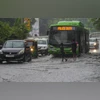
The monsoon season has just begun, yet several major cities — including Bengaluru, Mumbai, Chennai, Kolkata, Guwahati and Pune — have already experienced severe waterlogging, fallen trees and vehicle damage.
Recent studies reveal that the frequency of heavy downpours has increased drastically in recent years. “Some of the states have seen rainfall increase by up to 30 per cent over the last decade compared to the previous 30-year average,” says Shashi Kant Dahuja, Executive Director and Chief Underwriting Officer, Shriram General Insurance.
Even if you have a comprehensive motor insurance policy, it may not provide sufficient protection against monsoon-related risks.
Monsoon damages
Motor vehicles face various risks during the monsoon due to flooding and poor visibility. “The most common damages include interior damage caused by the ingress of flood water and engine seizure. The battery and electrical parts can get damaged. In addition, poor visibility and falling trees can cause further damage,” says Gaurav Arora, Chief – Insurance, Underwriting and Claims for Property and Casualty, ICICI Lombard.
“Incidents of vehicles stalling in waterlogged areas and pothole-induced damage to tyres and suspension systems see a sharp uptick,” says Sachin Joshi, President – Claims, Operations and Customer Service, Liberty General Insurance.
Residential basements and underground parking areas are particularly vulnerable to water accumulation after heavy rainfall.
“The most vulnerable components include the engine and the gearbox, which are at high risk of hydrostatic lock if a vehicle is driven through flooded areas. Electrical systems — including wiring, the alternator, and onboard sensors — are also highly susceptible to moisture-related failures. The braking system and in-cabin electronics, like infotainment units, often experience performance issues due to damp conditions,” says Joshi.
Here are specific add-ons vehicle owners need to purchase to fully protect their car from monsoon-related damages.
Engine protection cover
Standard comprehensive policies exclude repair or replacement of engine parts, which tend to be costly. “The engine protection cover can rescue you by compensating for the replacement and repair of the car’s engine,” says Dahuja. This add-on cover costs about 5–10 per cent of the own damage premium.
The most critical mistake car owners make when their vehicle is waterlogged is attempting to start the engine. This must be avoided. “This can lead to severe engine damage and is often classified as contributory negligence by the insured. It can possibly lead to rejection of the entire claim,” says Mayur Kacholiya, Head – Motor Product, Go Digit General Insurance.
Zero depreciation cover
Typically, insurers deduct depreciation when settling claims. “With this add-on, policyholders receive the full claim amount for repair or replacement of parts like bumpers, plastic panels, and electrical components,” says Joshi. It costs about 15–20 per cent of the own damage premium.
Roadside assistance cover
Breakdowns are common during the monsoon, given waterlogged roads, slippery conditions and electrical failures. “The roadside assistance add-on offers on-site repairs, towing, alternative travel options, battery jump-starts, fuel procurement, and so on,” says Arora.
Joshi emphasises that this add-on is particularly invaluable in urban areas with heavy rainfall and traffic congestion, where getting immediate assistance can prove challenging. It is not a very expensive cover (₹500–₹1,500).
Battery protection cover
Heavy rainfall and prolonged exposure to moisture can impair the battery’s performance or lead to failure. “The battery protect add-on covers the cost of repair or replacement due to consequential damage arising from water ingression or short-circuiting,” says Arora. He considers this add-on a strategic investment, especially for electric vehicle owners.
Return to invoice cover
Monsoons can cause irreparable damage to vehicles through submersion or falling trees. “While standard insurance pays out the depreciated insured declared value (IDV) for a total loss, taking a return to invoice cover ensures you receive the full invoice value of your vehicle,” says Arora.
Suppose the invoice value of your vehicle was ₹10 lakh. After three years, its IDV would be ₹6–7 lakh. “A return to invoice cover ensures you receive the full invoice value instead of the IDV, enabling you to replace the vehicle without significant out-of-pocket expense,” says Arora. It costs about 10 per cent of the comprehensive policy premium.
Fast-track your insurance claim
· Use the insurer’s app to log in and follow prompts to file a claim
· Alternatively, call the customer care number for assistance
· Providing photographic and video evidence can speed up claim assessment and approval
· Documentation required includes the vehicle’s Registration Certificate (RC) and a valid driving licence of the person operating the vehicle