
Astronauts with diabetes may soon travel safely to space, finds study
According to study, everyday diabetes tools used by millions on Earth can be used comprehensively to provide end-to-end diabetes monitoring from space to ground and back to space
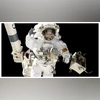 "Astronauts with diabetes may soon travel safely to space, finds study")
WebinarsNew
Deep DiveNew
Explore Business Standard
According to study, everyday diabetes tools used by millions on Earth can be used comprehensively to provide end-to-end diabetes monitoring from space to ground and back to space
Astronauts with diabetes may soon be able to undertake space missions safely, a study conducted during Shubhanshu Shukla's travel to the International Space Station has found.
The Suite Ride experiment, conducted by UAE-based healthcare firm Burjeel Holdings during the Axiom-4 mission, found that everyday diabetes tools used by millions on Earth can be used comprehensively to provide end-to-end diabetes monitoring from space to ground and back to space.
"This historic advancement opens the door to future astronauts with diabetes and provides new solutions in remote healthcare," a statement from Burjeel Holdings said.
The results of the study were announced at the Burjeel Institute for Global Health, New York, in the presence of Shamsheer Vayalil, founder of Burjeel Holdings and Tejpaul Bhatia, CEO, Axiom Space.
As per the research results, continuous glucose monitors (CGMs), a wearable medical device tracking blood sugar levels in real time, and insulin pens can operate reliably in the extreme conditions of space.
Early results suggest that CGM devices can perform with accuracy comparable to Earth-based readings, enabling real-time glucose monitoring of astronauts in microgravity and communication of readings to the ground.
"We are proud to contribute to a future where space exploration and healthcare breakthroughs serve not just astronauts but millions of people on Earth living with diabetes," Shamsheer Vayalil, founder and chairman of Burjeel Holdings, said.
"Besides opening the door for astronauts with diabetes, these findings will also transform the way we deliver care here on Earth. From 250 miles above Earth to 25 miles offshore on oil rigs, we are advancing new models of remote care," Mohammad Fityan, Chief Medical Officer at Burjeel Medical City and Clinical Lead of the Burjeel ?Ax-4 Space Health Research, said.
Insulin pens flown to the space station are now undergoing post-flight testing to evaluate the integrity of the formulation, the statement said.
Shukla and three other astronauts undertook an 18-day mission to the International Space Station from June 25 to July 15 this year during which they conducted over 60 experiments in micro-gravity conditions.
Envisioned by Vayalil, the Suite Ride research focused on diabetes monitoring and management in microgravity, during the Axiom Mission-4 (Ax-4).
According to the WHO, in India there are an estimated 77 million people above the age of 18 years suffering from Type 2 diabetes and nearly 25 million are pre-diabetics or at a higher risk of developing diabetes in near future.
Last year during the Galactic-07 mission, an experiment demonstrated that commercially available insulin pens can dispense accurate doses in microgravity, adhering to International Organisation for Standardisation (ISO) guidelines.
"This isn't just about space exploration. It's about inspiring people everywhere and that their goals of pursuing space exploration don't end at diagnosis,"Gavin D'Elia, Global Head of Pharma, Axiom Space, said.
"Together, we're advancing the potential to fly the first astronaut with diabetes, innovations in diabetes monitoring and remote healthcare," D'Elia said.
According to Burjeel, the Suite Ride experiment delivered several historic firsts, including the first continuous glucose monitoring of crew aboard the space station, first insulin pens ever flown to the station, and first validation of glucose monitoring across multiple measurement methods on the space station.
(Only the headline and picture of this report may have been reworked by the Business Standard staff; the rest of the content is auto-generated from a syndicated feed.)
First Published: Sep 26 2025 | 11:41 AM IST


 Connect with us on WhatsApp