Death in a bottle: Toxic cough syrups once again prove fatal for children

Toxic cough syrups have once again proven fatal for children. This time, the tragedy has happened in India. Here's a look at why this sordid tale never seems to let up
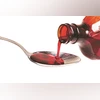
cough syrup
Cough syrup deaths in Chhindwara expose deep cracks in India’s drug regulation system, as toxic formulations and lax oversight trigger nationwide concern.
Sanket Koul New Delhi
10 min read Last Updated : Oct 14 2025 | 10:15 PM IST
It is a sunny Saturday morning in Northeast Delhi’s Dilshad Garden with a crowd of fifteen to twenty people thronging a pharmacy in the colony’s main market. Among the customers holding up prescriptions are the parents of a six-year old boy, their hands flailing. The boy is suffering from a bout of cough and cold. 
“Bhaiya, yeh syrup sahi toh hai na? (Is this syrup okay?)” asks the mother, to which the pharmacist answers in the affirmative. “A lot of parents have started to ask this question now,” Mahesh, who works at the pharmacy, said. 
Two weeks have passed since the initial news of children dying due to kidney failure caused by contaminated cough syrups surfaced in Madhya Pradesh’s Chhindwara district. 
As the toll mounted – it is at least 22 now – authorities blamed the presence of high amounts of diethylene glycol (DEG), an industrial solvent, in the cough syrup, sparking a nationwide scare. The toxic syrup, Coldrif, was allegedly manufactured by Tamil Nadu-based Sresan Pharmaceuticals. 
DEG is a cheap and colourless industrial chemical most commonly used in making products like brake fluids and paints, a drug inspector with the Delhi Drugs Control Department said. 
Coldrif, one of the 19 drugs sampled in Chhindwara, contained 48.6 per cent DEG, which is 480 times the prescribed limit of 0.1 per cent, according to a report by the Tamil Nadu food and drug administration (FDA).  Other than Coldrif, two more syrups - Respifresh TR and Relife - manufactured in Gujarat were found to have DEG marginally above the prescribed levels. “The remaining 16 samples were found to be clean,” sources in the health ministry said. 
“DEG is sometimes mistakenly or illegally used by some manufacturers in medicines as a substitute for propylene glycol (a solvent that helps dissolve drugs into liquid form),” the drug inspector quoted above added.
 
The tragedy has sparked questions on India’s drug regulatory and surveillance system, its testing capacity, and the close ties between doctors and pharma firms. But this is not the first time that India has been embroiled in a similar controversy. As a leading producer of cheap generic drugs, India has positioned itself as the ‘pharmacy of the world’. But it has faced hard questions about the quality of its drugs after a series of tragedies.  
 
In 2022, the deaths of at least 82 children in The Gambia and Uzbekistan were attributed to Indian cough syrups. Similarly, 12 deaths due to intake of contaminated cough syrups were reported in Jammu in 2020.
 
The World Health Organisation (WHO) has issued an alert over the three Indian cough syrups, urging national regulatory authorities worldwide to immediately notify them if they are detected in their country. Similarly, the United States Food and Drug Administration clarified though the syrups have not been shipped to the US, the agency has asked manufacturers to remain vigilant ensuring drugs that are marketed in the US are of the highest quality and safe.
 
Cracks in the system
 
Experts suggest that the episodes reveal a lack of coordination between the Central Drugs Standard Control Organisation (CDSCO) and the state regulatory bodies. 
 
In the case of Coldrif, the central regulatory body claimed that it was not asked to conduct inspections, which are jointly held with state authorities, at Sresan Pharma sites. Official sources added that the firm was given a license in 2011, but when this was renewed by the state FDA in 2016-17, the CDSCO was not informed.
 
A recent site inspection audit conducted in Tamil Nadu after the Chhindwara incident threw up 364 observations, 38 of which were very critical, according to the Tamil Nadu FDA’s report.
 
Many of these pharma firms are micro, small and medium enterprises (MSMEs) that claim they don’t have the resources to comply with central guidance on good manufacturing practices (GMP), which in turn are based on guidelines issued by the WHO. Sresan Pharma too is an MSME. Of the 10,500 pharma manufacturing units in India, around 8,000 are MSMEs, or those with an annual revenue of up to Rs 250 crore.
 
On paper, all drugmakers in India are supposed to follow GMPs, by an order passed in December 2023. The government set a deadline for all pharma firms to comply with the revised Schedule M of the Drugs and Cosmetics Rules, which specifies GMPs, by December 2024. This was later extended till December 31, 2025, for MSMEs.
 
Even so, only 1,600 to 1,700 MSME units have applied for the extension, and expectations are that the rest will be shut down, according to experts. Drug Controller General of India (DCGI) Rajeev Raghuvanshi, too, has previously pointed to the need to weed out manufacturing units that do not comply with Schedule M. However, experts also point out that the pharmaceuticals lobby is strong and  influential.
 
Another problem is lack of capacity. While the CDSCO has suggested pan-India risk-based investigations of pharma companies, the central and state regulatory authorities remain hugely understaffed. 
 
In December 2023, for instance, the ministry of chemicals and fertilisers informed the Lok Sabha that 303 posts out of a sanctioned strength of 504 drug inspectors were vacant at CDSCO alone. While the numbers for states are not immediately available, of Maharashtra’s 200 approved post, only 48 are in place, according to media reports. 
 
As far back as in 2003, the Mashelkar Expert Committee on drug regulatory reforms recommended that India should have at least one drug inspector for every 50 manufacturing units, and one inspector for every 200 sales units. In 2013 a parliamentary committee report reiterated these findings.  
 
This would require an estimated 3,200 drug inspectors across the country based on the 2013 figures, yet their total strength was just 1,467 as of September 2015.
 
Yet another issue is the lack of testing capacity. “There are only seven central drug testing labs in the country, which can test only around 100,000 to 120,000 samples a year,” Rishi Agrawal, cofounder and chief executive officer at TeamLease RegTech, a compliance management software firm, said.
 
Executives said smaller pharmaceutical firms, particularly unorganised or marginally compliant ones, resort to contaminants such as DEG in cough syrups to cut corners on production costs, driven by razor-thin margins in a hyper-competitive, low-regulation domestic market.
 
Agrawal added that substituting DEG saves Rs 100 to 200 per 100-liter batch (for 1,000 bottles), translating to a Rs 50,000 to 1 lakh profit boost per run at rural wholesale margins of 20 to 30 per cent. 
 
“For a firm producing 10,000-plus bottles monthly, this yields Rs 5 to 10 lakh extra revenue—critical for survival amid 40 per cent industry failure rates,” Agrawal said.
 
Rural poverty
 
While testing for contaminants such as DEG and ethylene glycol (EG) is mandatory for exports from 2023, it is not so for domestic sales, which creates a "regulatory gap" – something flagged by WHO.
 
In rural areas like Chhindwara, up to 75 per cent of primary care is handled by untrained rural medical practitioners (RMPs) or unqualified chemists who prescribe syrups liberally for common coughs and colds, often without diagnostics. “Public clinics are understaffed, distant, or closed, pushing families toward quick fixes. Air pollution exacerbates respiratory issues, increasing demand,”Agrawal said.
 
Rural distribution networks are fragmented, allowing substandard products to circulate undetected. Low-income families in these areas (e.g., Chhindwara's mining communities) opt for affordable, locally available syrups prescribed by neighbourhood doctors.
 
In addition, the price gap between branded and generic cough syrups often ranges from 30 to 70 per cent, driven by factors like production scale, marketing, quality assurance, and regulatory compliance. For example, a 100 millilitre (ml) bottle of Corex DX (dextromethorphan-based) retails for Rs 120 to 150 in urban pharmacies compared to Coldrif syrup sold for Rs 25 to 40 per 100ml in rural MP markets.
 
Reforms in focus
 
The DCGI last week urged drug controllers in all states and Union territories (UTs) to ensure testing of both raw materials and finished formulations of pharmaceutical products before releasing them in the market.
 
However, experts point out that doing so would need improved testing capacities, ending the doctor-drugmaker nexus, and building a strong drug recall framework.
 
“There needs to be an increase in testing infrastructure in the country as well as centralised digital, tamper-proof record-keeping for every batch that gets approved,” an industry executive said.  
 
Similarly, experts added that the conflict of interest created by the nexus between certain physicians, drugmakers and retailers, especially in Tier 2 and 3 cities, and rural areas, needs to be broken.  
 
“There are several cases where doctors may prescribe drugs of a certain company, even if substandard, only because they are getting a commission. Similar arrangements have been found between certain physicians and pharmacists,” the drug inspector cited above said.
 
Agrawal added that a minimum threshold of GMPs should be made mandatory for manufacturers to release drugs in the market. “If cough syrups fail to meet those standards, they should not be allowed to be put in the market,” he said.
 
“Once sold, one can have no idea which distributor, chemist, or village has how many bottles of that medicine from that batch,” Agrawal said. 
 
Therefore, enforcing certain minimum standards before allowing a small manufacturer to just put anything out there would help. 
 
Another improvement could be the creation of service level agreements saying that a batch submitted for testing would be released within ‘x’ number of hours would also help expedite the process.
 
Demand-driven
 
The lack of regulatory oversight and testing capacity comes even as cough syrup sales have generally been high in India. 
 
According to data from market research firm Pharmarack, the 12-month Moving Annual Turnover (MAT) for syrups stands at Rs 3,423 crore for the period from October 2024 to September 2025, a 30 per cent increase from the Rs 2,627 crore recorded for the same period in 2021. The sales at MAT value have remained steady at a 5.44 per cent compound annual growth rate for the last five years. 
 
Among regions, the combined Bihar and Jharkhand market led the charts with cough syrup MAT sales figures of Rs 315 crore this year. The Madhya Pradesh and Chhattisgarh region had the third-highest sales figure for cough syrups, standing at Rs 215 crore. Disaggregated figures for paediatric solutions were not immediately available.
 
The Chhindwara tragedy is not likely to dampen sales of cough syrups: As winter sets in, the country will be seeing a seasonal spurt in cough and cold. “There may be some preliminary caution in this month, but cough is a seasonal ailment, which needs relief, for which you need to take cough syrup,” Sheetal Sapale, vice president (commercial) at Pharmarack said. 
 
Sapale added that the only change might be that consumers and physicians would opt for brands from established and well-known companies instead of smaller local players. 
 

One subscription. Two world-class reads.

Already subscribed? Log in

Subscribe to read the full story →
*Subscribe to Business Standard digital and get complimentary access to The New York Times

Smart Quarterly

₹900

3 Months

₹300/Month

SAVE 25%

Smart Essential

₹2,700

1 Year

₹225/Month

SAVE 46%
*Complimentary New York Times access for the 2nd year will be given after 12 months

Super Saver

₹3,900

2 Years

₹162/Month

Subscribe

Renews automatically, cancel anytime

Here’s what’s included in our digital subscription plans

Exclusive premium stories online

  • Over 30 premium stories daily, handpicked by our editors

Complimentary Access to The New York Times

  • News, Games, Cooking, Audio, Wirecutter & The Athletic

Business Standard Epaper

  • Digital replica of our daily newspaper — with options to read, save, and share

Curated Newsletters

  • Insights on markets, finance, politics, tech, and more delivered to your inbox

Market Analysis & Investment Insights

  • In-depth market analysis & insights with access to The Smart Investor

Archives

  • Repository of articles and publications dating back to 1997

Ad-free Reading

  • Uninterrupted reading experience with no advertisements

Seamless Access Across All Devices

  • Access Business Standard across devices — mobile, tablet, or PC, via web or app

Topics :Madhya PradeshCough syrupIndian pharmaCDSCODrug related deathsfake medicinesWHOHealth Ministry

Next Story


